Last updated November 21, 2026
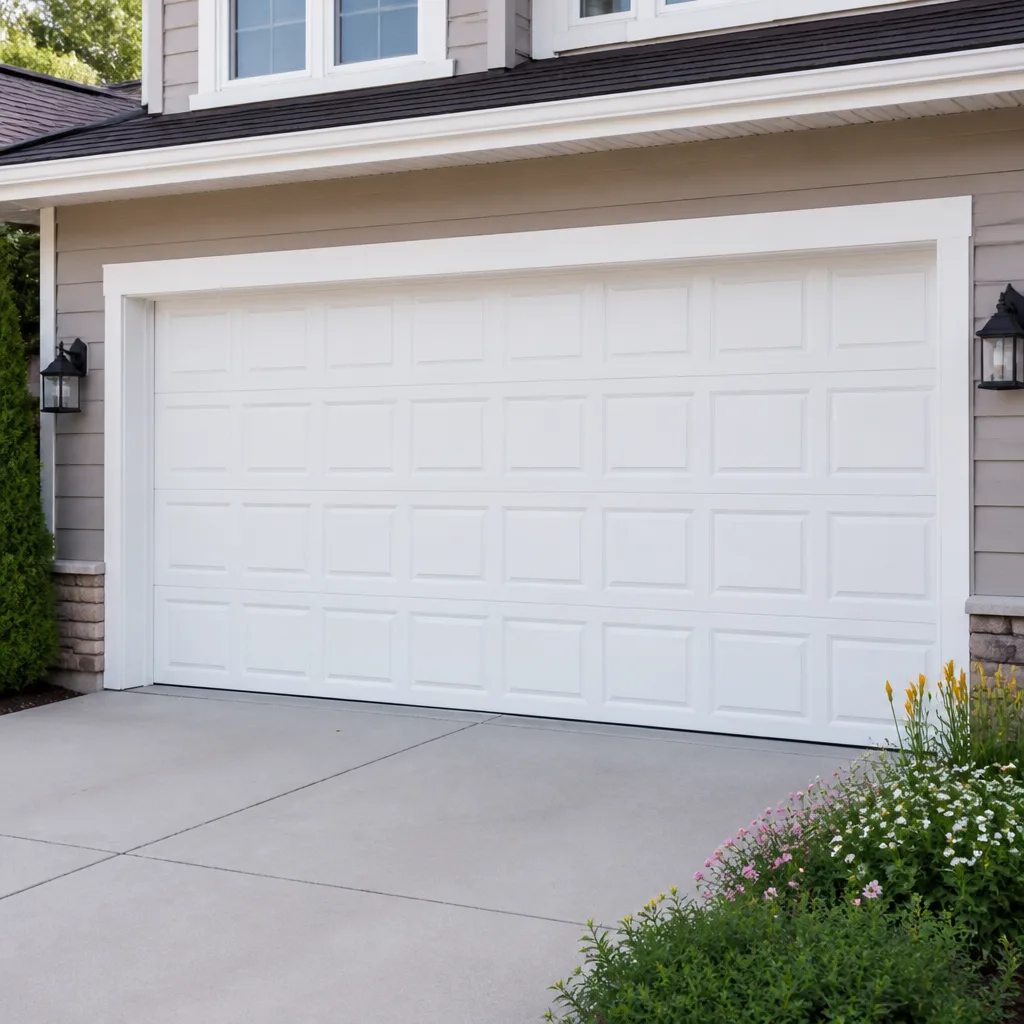 Raised-panel steel
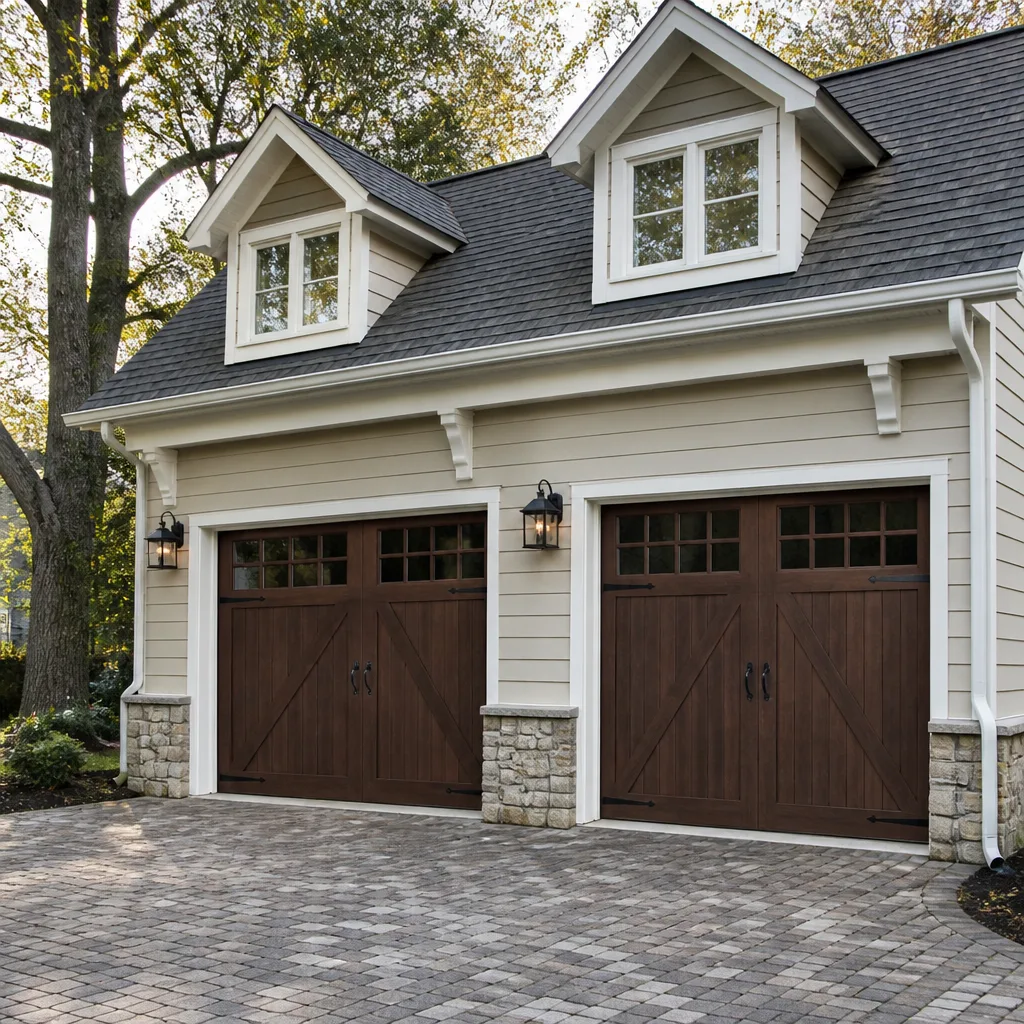 Carriage house
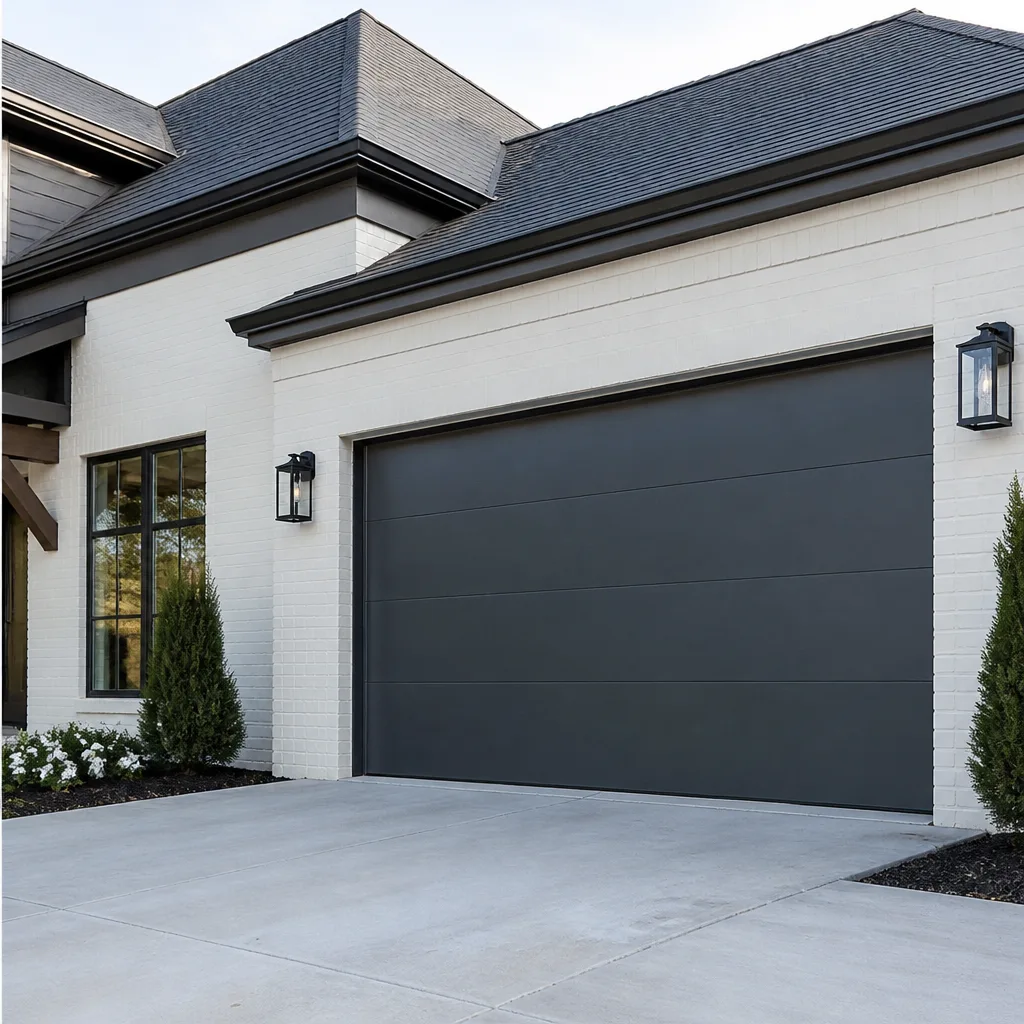 Modern flush
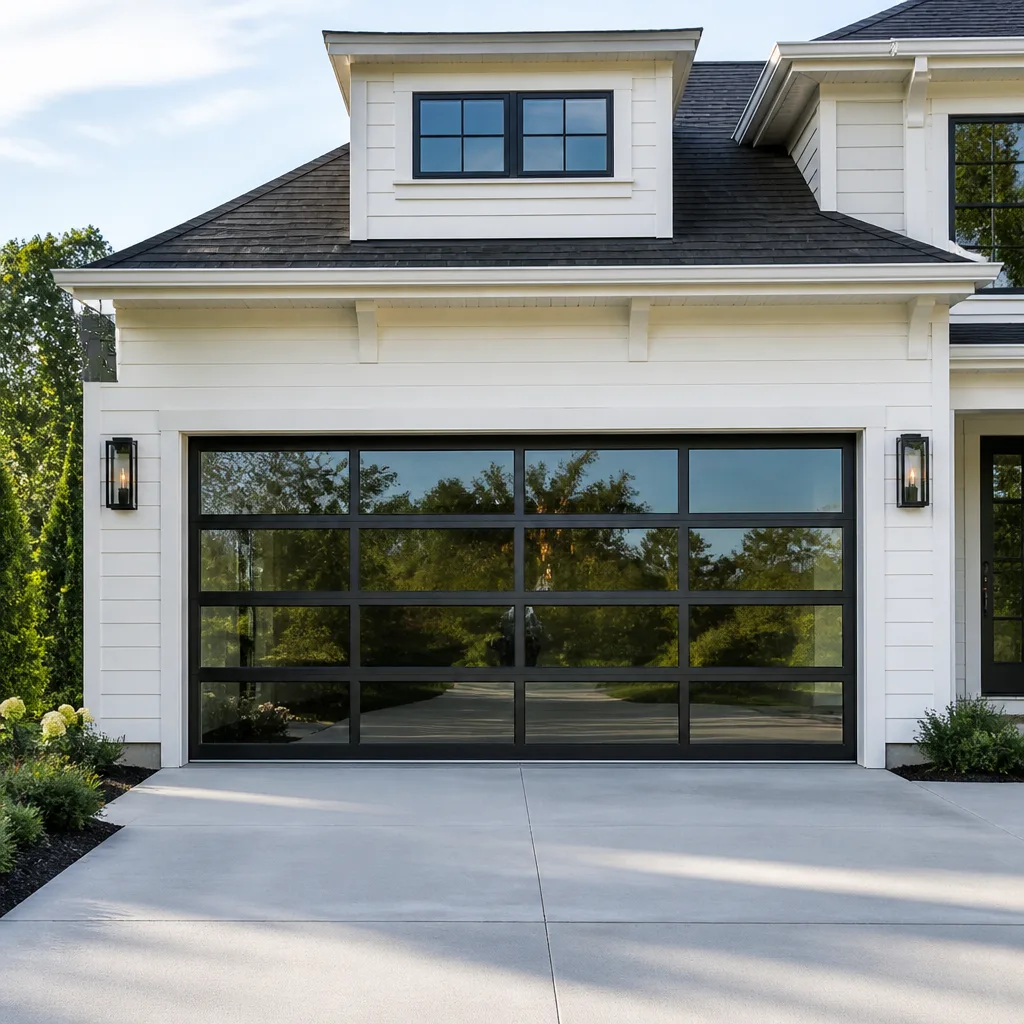 Full-view glass
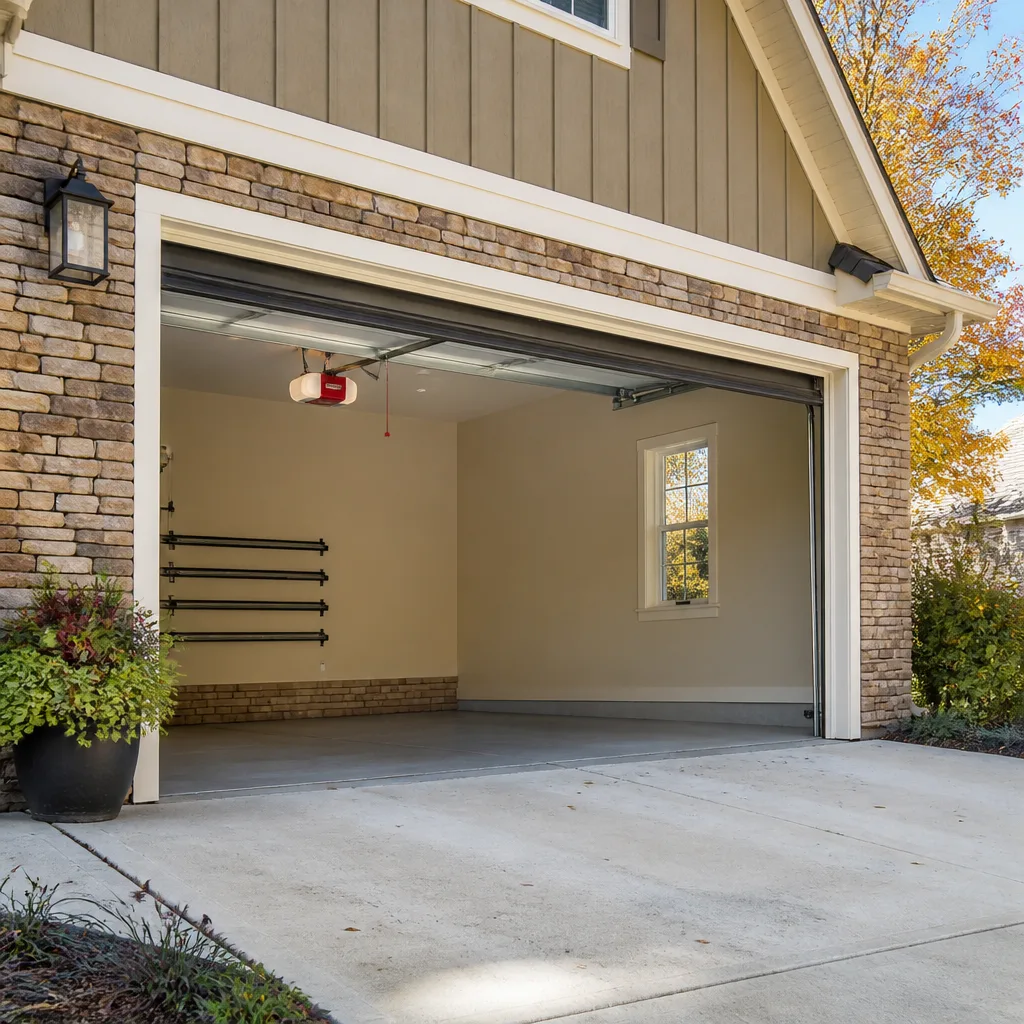 LiftMaster openers
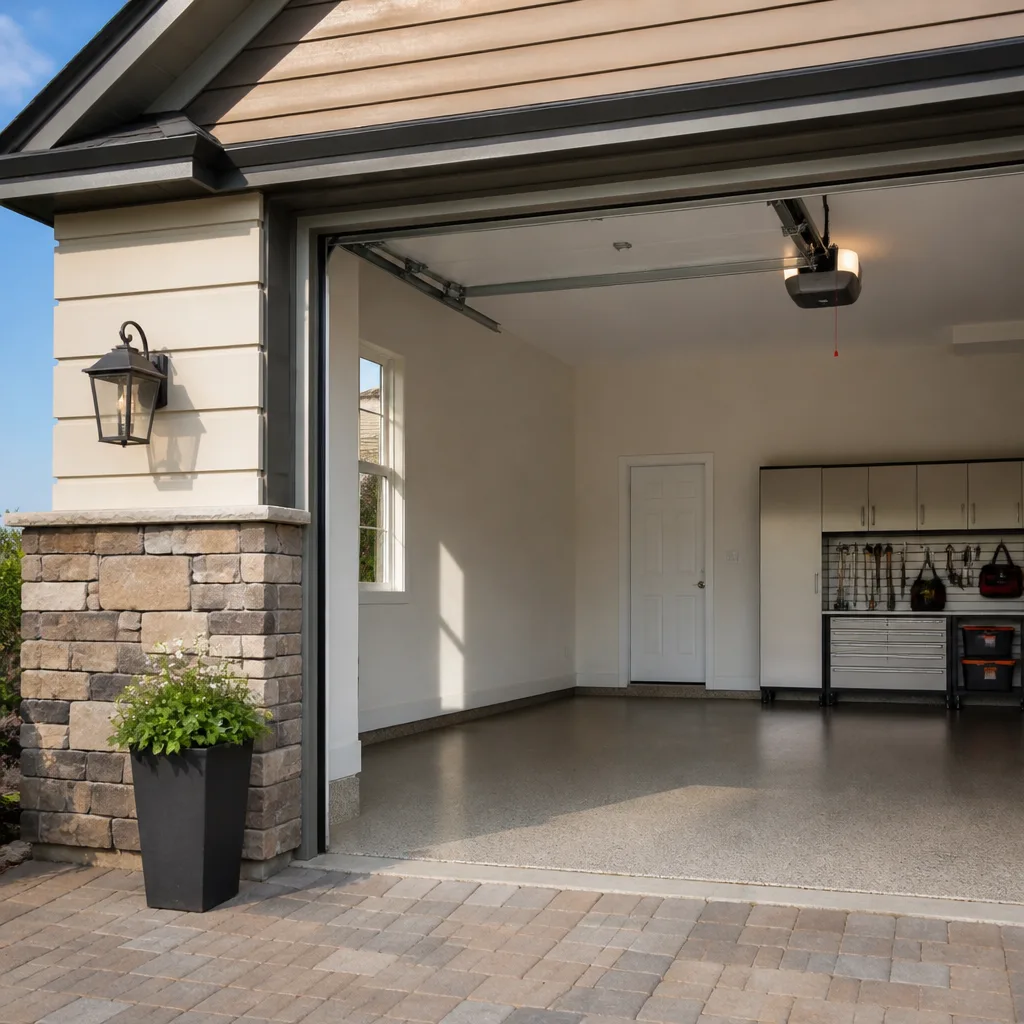 Chamberlain openers
Full 25-point door and opener safety check with every visit - springs, cables, rollers, tracks, and your LiftMaster or Chamberlain opener included
You get a price before we start. It does not change when the pro arrives.
Get your free estimateGarage Door Repair Troubleshooting in New Haven: Common Problems and How to Fix Them
The door that “just stopped working” almost never stopped for one reason. It stopped because a secondary symptom went unnoticed for weeks and finally crossed a threshold. A door that had been dragging on one side for a month, an opener that had been straining against a stiff spring since the weather turned, a photo-eye that had been knocked a half-inch out of line by a recycling bin – these are the small failures that pile up until the door quits entirely. This guide maps symptoms to root causes the way a technician actually diagnoses them, so you can narrow down what’s wrong before anyone arrives.
Quick Answer
Most garage door failures in New Haven come down to four mechanical categories: spring tension, track alignment, opener signal, and panel integrity. A door that won’t open is usually a spring or opener failure, a door that opens crooked is almost always track or roller damage, and a door that won’t close is typically a sensor or limit-switch issue. Match the symptom to the category first, and you’ll know what kind of repair you’re facing before you call anyone.
Styles & brands we work with
- Raised-panel steel
- Carriage house
- Modern flush
- Full-view glass
- LiftMaster openers
- Chamberlain openers
Table of Contents
- The Four Categories Every Garage Door Failure Falls Into
- The Symptom-to-Category Diagnostic Tree
- How New Haven Weather Drives Specific Failure Modes
- What Homeowners Can Safely Adjust Themselves
- The Order-of-Operations Mistake
- When a “Working” Door Is Still in a Failure State
- Why Brand Matters in Diagnosis
- What Garage Door Repair Costs in New Haven
The Four Categories Every Garage Door Failure Falls Into
Before you touch the wall button or climb a ladder, sort the symptom into one of four categories. This is exactly how our technicians approach a call: identify the category, then narrow the diagnosis within it. It saves time and it prevents the most common homeowner mistake, which is attacking the wrong component.
Mechanical: springs, cables, and torsion hardware
The torsion spring system above the door carries the full weight of the panels. When a spring weakens or snaps, the door suddenly feels heavy to lift by hand, the opener strains or hums without moving the door, or you hear a sharp bang from the garage. Cables that have jumped a drum will cause the door to hang at an angle or drop on one side. This is the most dangerous category in the trade. A torsion spring under load can cause serious injury, and we strongly recommend against any homeowner handling one. Call for garage door spring repair and leave the winding bars to a trained technician.
Structural: tracks, rollers, hinges, and panels
A door that scrapes, binds, or opens crooked usually has a bent track, a seized roller, or a worn hinge. Look along the vertical tracks for dents or misalignment, and check that the rollers still spin freely. Panels that have been struck will often crack or separate at the stiles. Structural problems tend to announce themselves gradually, which makes them easy to ignore until the door jams.
Electrical: the opener and its sensors
If the motor runs but the door doesn’t move, if the wall button works but the remote doesn’t, or if the door reverses immediately, you’re in the electrical category. LiftMaster and Chamberlain systems, along with Genie and Craftsman units, all handle safety sensors, travel limits, and force settings differently. That’s why brand-specific diagnosis matters for garage door opener repair.
Cosmetic: panel integrity and weather seals
Dents, cracked panels, and worn bottom seals don’t usually stop a door, but a delaminated panel can lose structural rigidity and a worn seal lets water and cold air into the garage. In New Haven, a bottom seal that has split lets meltwater in during the freeze-thaw months, which is exactly when you don’t want it.
The Symptom-to-Category Diagnostic Tree
Start with what the door is actually doing. The symptom usually tells you which category to focus on before you look at a single part.
- The door won’t move and the opener hums or clicks: electrical or mechanical. Test by pulling the emergency release cord and lifting the door by hand. If it’s very heavy, the spring has failed – stop there and call for spring repair.
- The door moves a few inches and reverses: electrical. Check the photo-eye alignment and look for an obstruction in the sensor beam. Also check that the safety sensors are clean of dust and cobwebs.
- The door opens crooked or binds in one track: structural. Inspect the vertical and horizontal tracks for dents, and check the rollers for flat spots or seized bearings.
- The door closes partway then opens again: electrical or a limit switch. The down-limit is set too far, or the force setting is too low for the season.
- You hear a bang from the garage and the door won’t lift: mechanical. A spring has likely snapped. Do not try to force the opener to lift it.
- The remote works intermittently: electrical. Replace the battery first, then check the antenna wire on the opener unit and test the wall button.
- The door is visibly cracked or a panel has separated: cosmetic. Call for a panel assessment, especially if the door is more than fifteen years old.
How New Haven Weather Drives Specific Failure Modes
New Haven gets real winter, and that changes which failures show up when. The freeze-thaw cycle is the biggest driver. Water gets into the seam at the bottom of the door, freezes overnight, expands, and works the bottom seal loose over a season. The same cycle stiffens hinges, drains lubricant from rollers, and causes metal track to shift slightly as the ground under the slab heaves and settles. A door that was perfectly aligned in October can bind in February without anything being struck or broken.
Where you live in the city changes the pattern. Up toward Hamden Hill and the higher ground around West Rock, the temperature swings are sharper and the freeze-thaw cycles more aggressive, so track misalignment and bottom-seal failure show up earlier in the season. Closer to the harbor and the low-lying blocks near the Quinnipiac, the humidity is higher and steel hardware corrodes faster, which is why hinges and roller bearings seize before the springs show wear. Out toward East Rock and the older neighborhoods off Whitney Avenue, doors tend to be older, which shifts the balance toward panel fatigue and spring end-of-life rather than track shift.
Spring matters too. Once the weather warms and the door starts cycling more often, any spring that came through winter with reduced tension is going to fail in the first few weeks of regular use. That’s when we get the most spring calls in New Haven – not in the dead of winter, but in the first warm stretch when everyone starts using the door again.
What Homeowners Can Safely Adjust Themselves
There are a few things you can check and adjust safely. Everything else should go to a technician. Here’s the honest split.
Safe to handle yourself
- Photo-eye alignment. The two small sensors at the bottom of the tracks should have their indicator lights solid, not blinking. If one is blinking, gently nudge it until the light goes solid. Clean the lens with a dry cloth.
- Remote battery replacement. A weak battery causes most intermittent remote problems. Replace it and re-test before assuming the opener is failing.
- Visual inspection of tracks and rollers. Look for dents, debris, and seized rollers. Don’t try to bend a track back into shape – a misaligned track needs proper adjustment.
- Lubrication of hinges and rollers with a garage-door-specific lubricant. Don’t use WD-40 on the springs or tracks; it attracts dust.
- Clearing obstructions from the door path and the sensor beam. Bins, brooms, and stored items are the most common cause of a door that won’t close.
Not safe – call a technician
- Any spring work. Torsion and extension springs are under extreme tension. A spring that lets go while you’re handling it can cause serious injury. This is the one category where we don’t offer homeowner guidance beyond “don’t.”
- Cable replacement or re-spooling. Cables are under the same tension as springs and can whip if they slip a drum.
- Opener force and travel-limit adjustments when you’re not sure what you’re doing. A force setting that’s too high masks a mechanical problem and can damage the motor or the door.
- Track replacement or realignment – a bent track that’s forced back into place usually fails again within weeks.
- Panel replacement on a door that’s still under manufacturer load.
The Order-of-Operations Mistake
Here’s the mistake we see most often: the door stops working, the homeowner assumes it’s the opener, and they spend an hour resetting the unit, cycling the breaker, and re-pairing the remote. Nine times out of ten, the opener was never the problem. The spring failed, the opener tried to lift a door it was never designed to lift alone, and the motor went into overload protection. Resetting the opener doesn’t fix a broken spring. It just makes the motor try harder against a door that’s now dead weight.
That’s not just wasted time. A motor that’s been forced to lift a door with a failed spring can burn out its gear assembly or strip the drive belt. Then you’re paying for spring repair and an opener repair on the same visit.
The correct order is always mechanical first, then electrical:
- Pull the emergency release cord and try to lift the door by hand. If it’s heavy, the spring or cable is the problem. Stop.
- If the door lifts easily by hand and stays up, the mechanical system is probably fine. Now check the opener.
- Check the photo-eyes and the wall button before you touch the opener’s settings.
- Only after the mechanical system is confirmed healthy should anyone adjust force, travel limits, or remote pairing.
That sequence is the single biggest time-saver in garage door troubleshooting, and it’s the first thing our technicians do on a diagnostic call in New Haven.
When a “Working” Door Is Still in a Failure State
A door that opens and closes is not necessarily a healthy door. Some failures are already in progress and just haven’t crossed the threshold yet. If you notice any of these, the door is likely to stop within days or weeks, and it’s better to schedule a repair than to wait for it to fail at a bad moment.
- The door hesitates or stutters at the same point in its travel every time. That’s a binding track or a worn roller.
- The opener sounds louder than it used to. A strained motor is usually fighting a mechanical problem.
- The door doesn’t sit flush when closed, or there’s a visible gap along one side. That’s a track or cable issue.
- You can see a gap between spring coils or the spring looks stretched compared to how it used to sit. That spring is losing tension.
- The door reverses randomly or the photo-eye light flickers. Something in the safety circuit is failing.
- The bottom seal is split or hanging loose. In New Haven, that’s a water-intrusion problem waiting for the next thaw.
- The door has been struck and the panel looks fine but the door is slightly crooked. Panel damage often hides behind a straight-looking exterior.
If you’re seeing any of these, call for a diagnostic before the door fails entirely. A repair now is almost always less expensive than a repair plus opener damage later.
Why Brand Matters in Diagnosis
Garage door openers are not interchangeable, and the brand on your unit changes how a technician reads the symptom. A LiftMaster or Chamberlain unit with a blinking LED error code is telling you something different from a Genie or Craftsman unit doing the same thing. LiftMaster and Chamberlain share a lot of architecture, so a technician familiar with one reads the other quickly. Genie and Craftsman use different logic boards and different sensor protocols, which means a generic “reset the opener” instruction from a video can make things worse.
At New Haven Garage Door Repair Co, we work on your brand. Our technicians are factory-familiar with LiftMaster, Chamberlain, Genie, Clopay, Amarr, Wayne Dalton, Craftsman, and Raynor, which means we diagnose by brand-specific behavior instead of guessing. If your opener is a smart-home-connected model from LiftMaster or Chamberlain, we can also check the app pairing, Wi-Fi module, and firmware behavior alongside the mechanical system. And on the door side, Clopay and Amarr panels have their own failure patterns – Clopay’s panel construction fails differently from a Wayne Dalton or Raynor door, and knowing which door you have saves diagnostic time.
When your door fails and you don’t know the brand, don’t worry about it. Call us and we’ll identify it on arrival. But if you do know it, mention it when you book – it helps us bring the right parts and get you back to working order faster.
What Garage Door Repair Costs in New Haven
Every job is different, but the ranges below are typical for the New Haven market. These are estimates, and the written quote you receive before any work starts is the price that applies.
| Repair | Typical range |
|---|---|
| Spring repair (one spring) | $180 – $340 |
| Spring repair (matched pair) | About twice the single-spring figure |
| Cable repair or re-spool | $150 – $280 |
| Track realignment | $120 – $200 |
| Roller replacement (full set) | $100 – $180 |
| Opener repair | $120 – $320 |
| Photo-eye or sensor repair | $90 – $175 |
| Panel replacement | $200 – $600 depending on door model |
| New door installation | Quoted after an on-site measure |
Two things drive the range: the age and brand of the door and the condition of the surrounding hardware. An older door often needs more than the one part that failed. A door that’s been neglected for a few seasons tends to need springs plus rollers plus a track adjustment in the same visit. We quote the price before the work starts, and we don’t add items once the door is apart.
If you’re comparing a repair to a replacement, the rule of thumb is that if the repair cost approaches half the price of a new door and the door is already past its expected service life, it’s worth pricing a new installation instead. We’ll give you both numbers honestly rather than steering you toward the bigger job.
Common Mistakes to Avoid
- Assuming every failure is the opener. Most garage door problems in New Haven are mechanical, and resetting the opener first wastes time and can damage the motor. Check the springs and tracks before you touch the opener settings.
- Spraying WD-40 on the springs and tracks. It attracts dust and grit, which accelerates wear. Use a garage-door-specific lubricant and leave the springs alone.
- Ignoring a bent track. A track that gets forced back into shape usually bends again within weeks. Tracks should be replaced or properly realigned, and the difference shows within a season.
- Waiting through the freeze-thaw season. A bottom seal that’s split in December lets meltwater in all winter. Fix it before the first hard freeze and you’ll avoid the water intrusion.
- Attempting a spring replacement yourself. Torsion springs are under extreme tension and a failure can cause serious injury. This is not a homeowner project in any season.
- Replacing one spring when the pair is worn. Springs are matched to the door weight, and both are usually at the same point in their life. A matched pair replaced together costs about twice a single spring and lasts.
- Choosing a repair company on price alone. A low ball quote that turns into add-ons once the door is apart costs more than the written quote you got from a company that inspected first.
See the difference
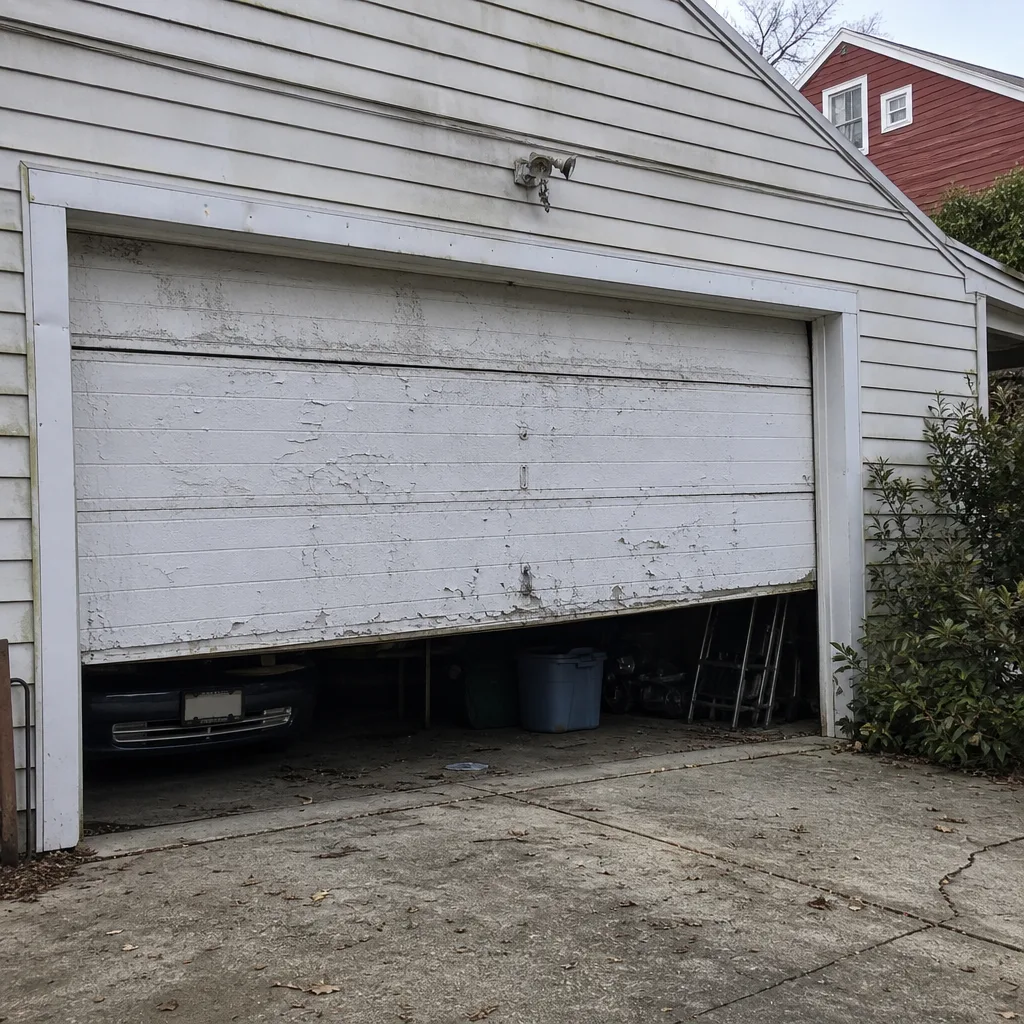 Before
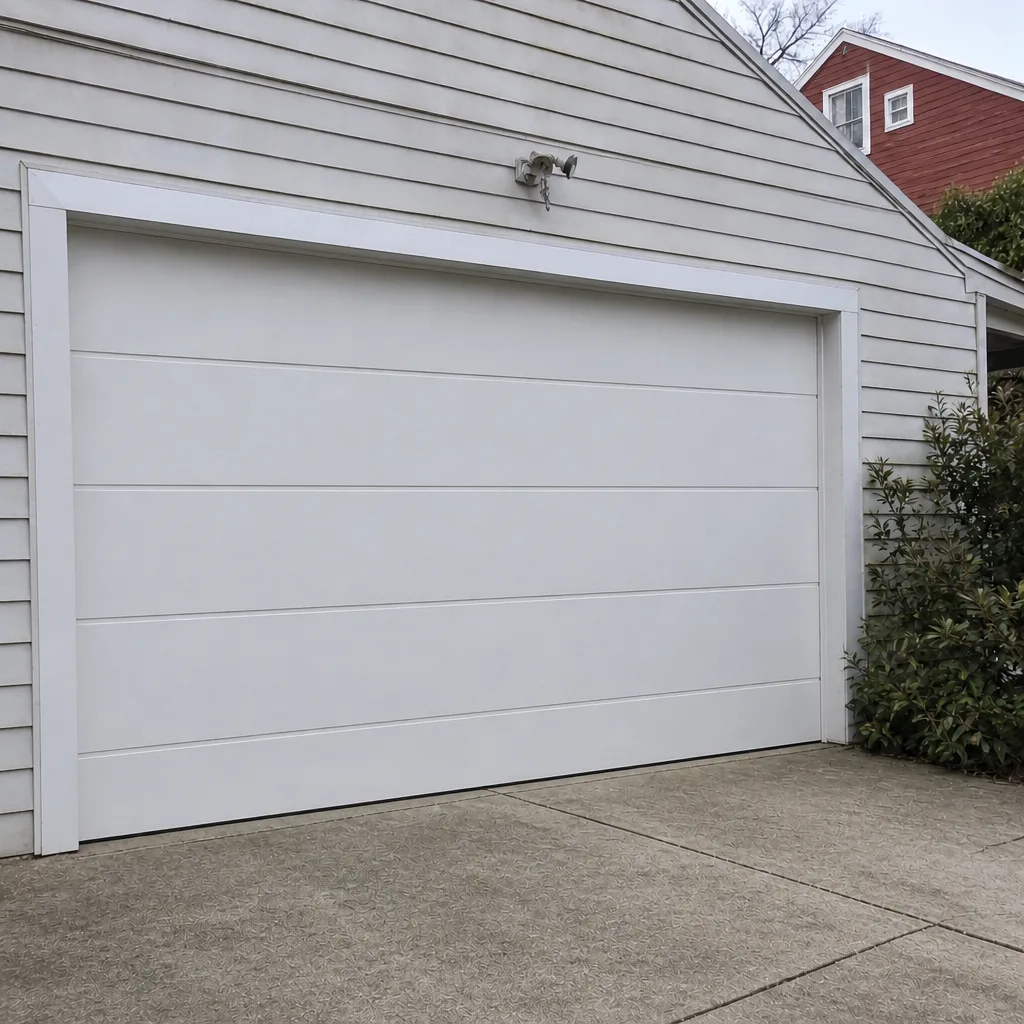 After
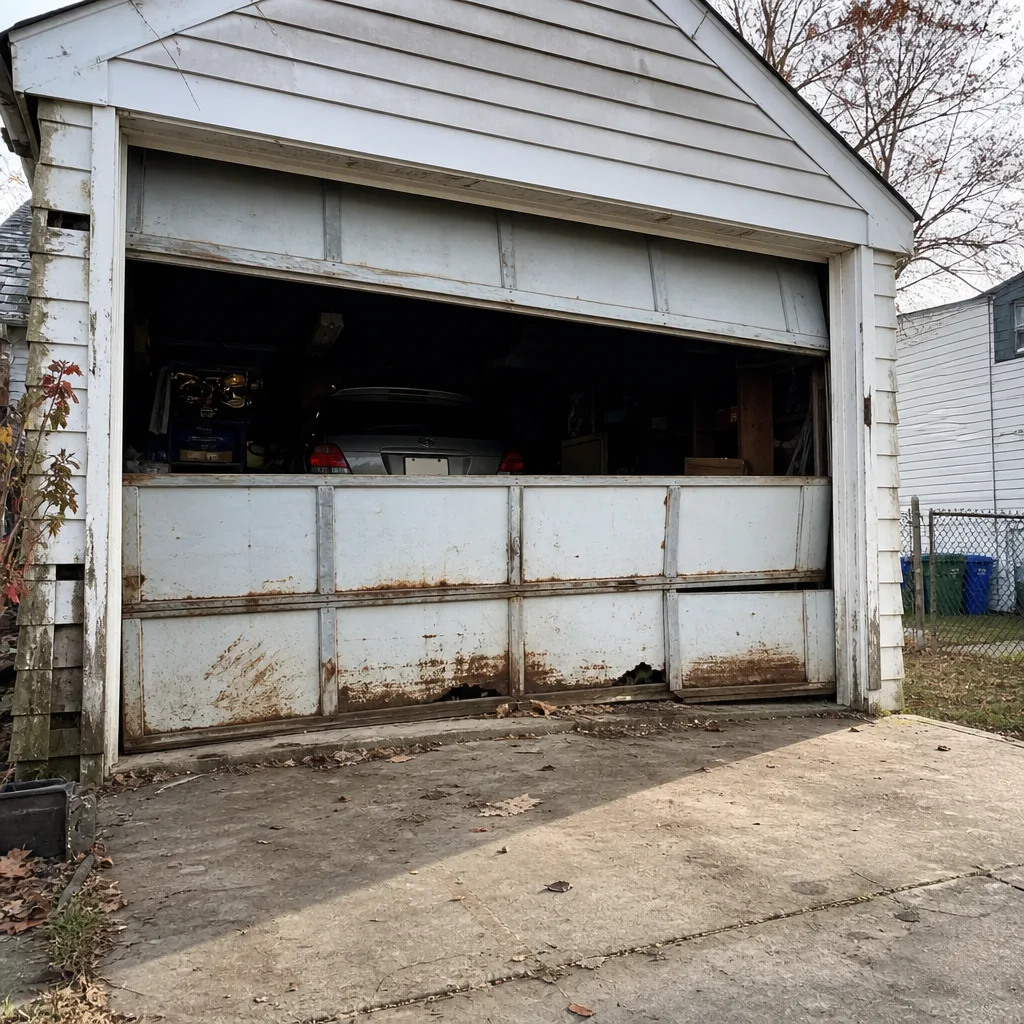 Before
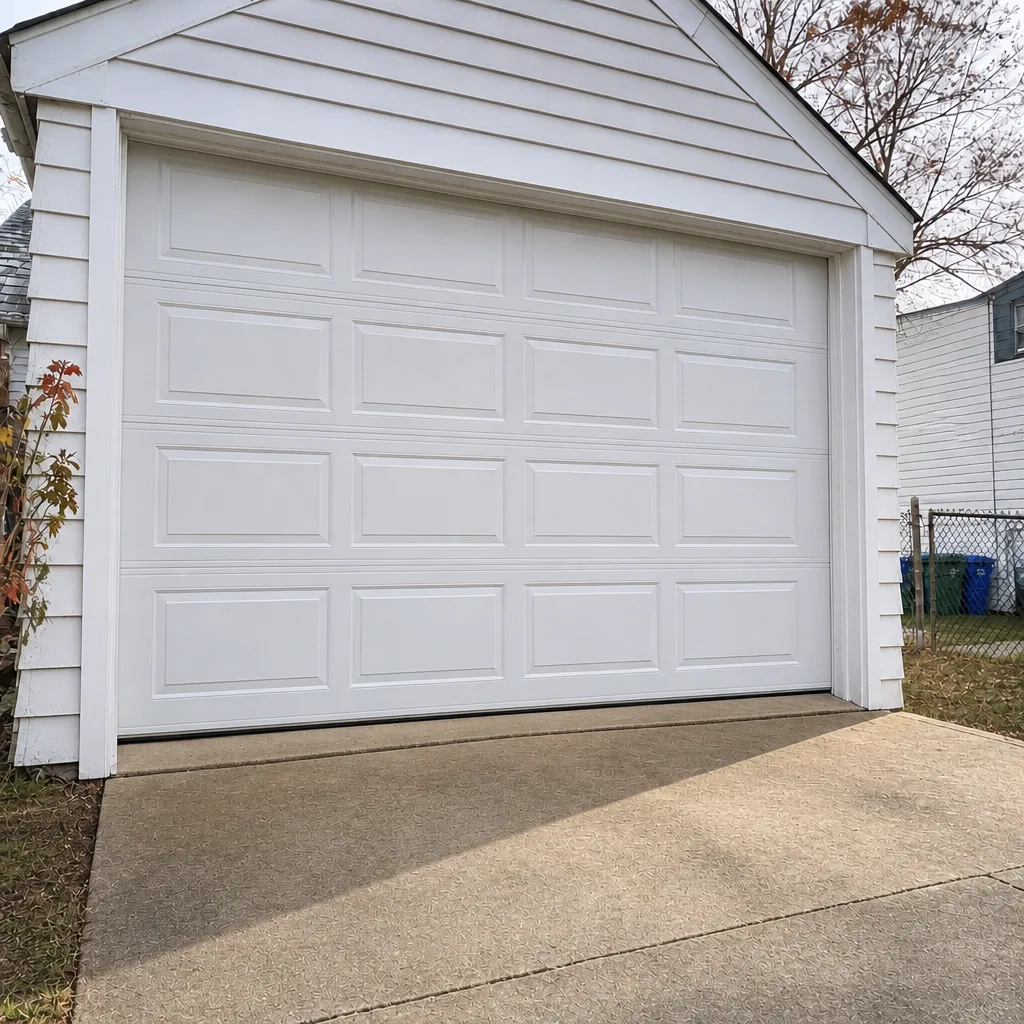 After
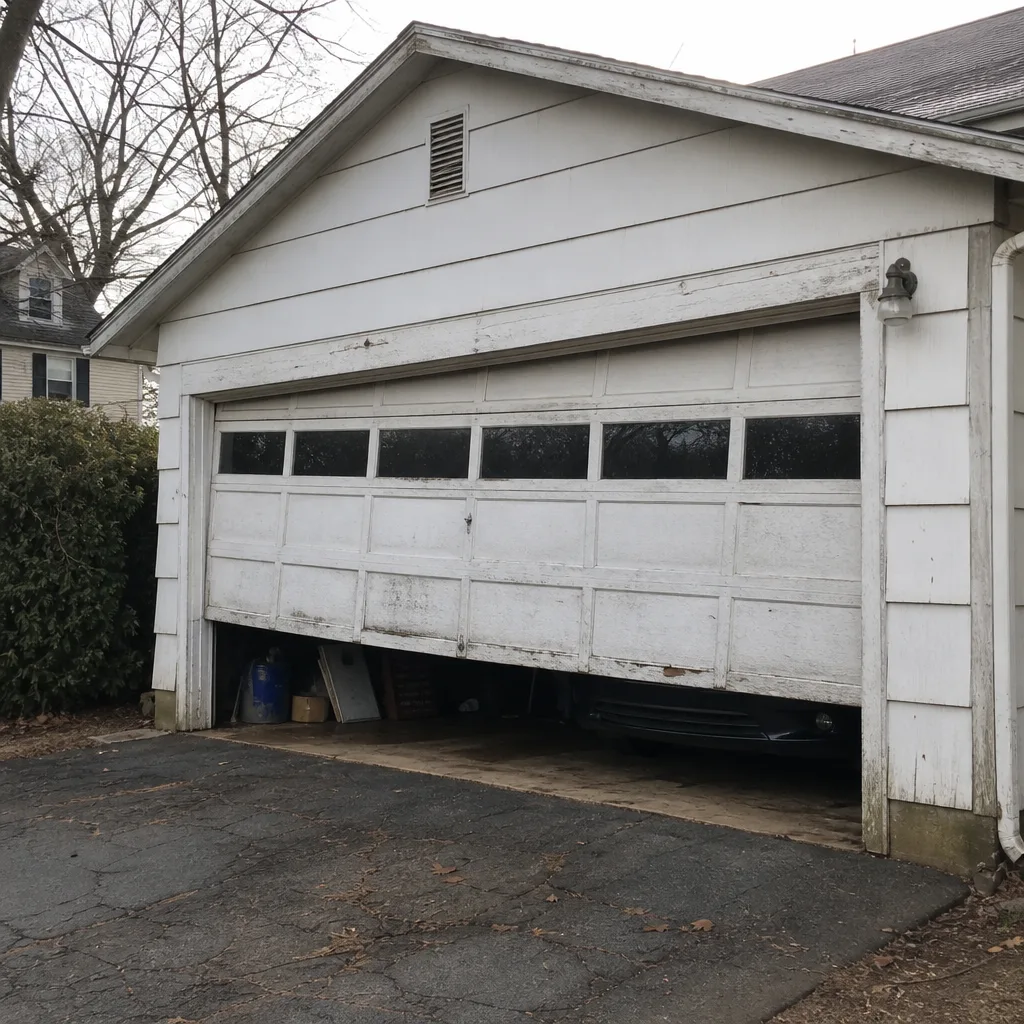 Before
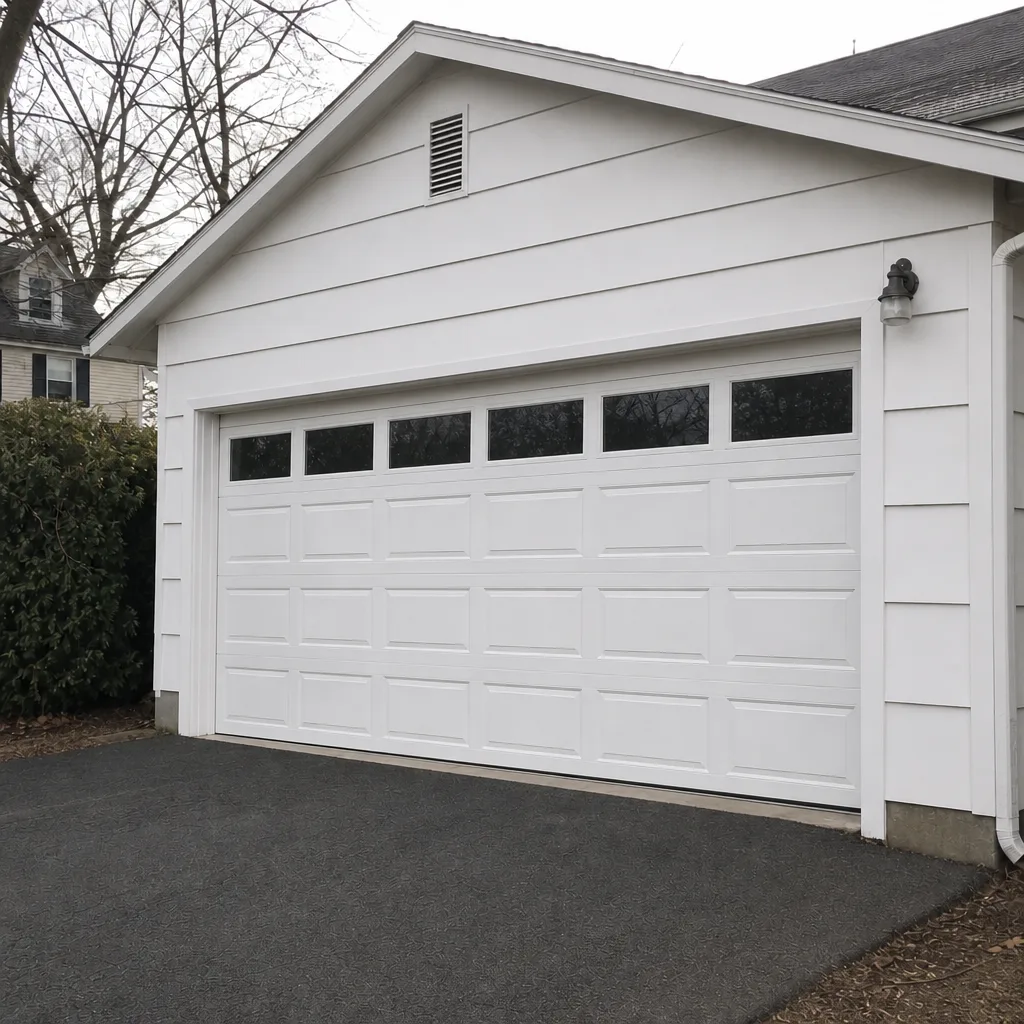 After
When to Call a Professional
Call a professional for anything involving springs, cables, or the torsion system above the door. This is not a safety warning we add to sell spring work; it’s the honest reason spring repair is a separate skill from opener repair. A torsion spring that lets go under load can cause serious injury, and the tools and training required to handle one safely aren’t something a homeowner should improvise. Call for any repair where the door is hanging crooked, where a panel has cracked, or where the opener has been running against a heavy door. And call for diagnostics when you’re seeing the warning signs in the “working but failing” section, because catching a failure early is cheaper than fixing it after the door quits. New Haven Garage Door Repair Co offers free estimates in New Haven – call (866) 476-7578.
Frequently Asked Questions
Most sudden failures are a snapped spring, a cable that’s jumped a drum, or an opener that’s gone into overload protection from fighting a mechanical problem. Pull the emergency release cord and try to lift the door by hand; if it’s heavy, the spring or cable is the cause. Call (866) 476-7578 and we’ll diagnose it the same day in most cases.
You can reset the opener, but resetting it won’t fix a mechanical problem. If the spring is broken or the track is binding, the reset just hides the symptom for a few cycles. Check the mechanical system first, and if the door lifts easily by hand, then a reset is worth trying.
It sounds like a sharp bang or snap, often loud enough to hear inside the house. After the bang, the door usually won’t lift or feels extremely heavy. If you hear it, don’t try to run the opener; call for spring repair instead.
Look for visible dents or bends, a door that binds at one point in its travel, or a door that opens crooked. If you see any of these, stop using the opener and call for a diagnostic. Forcing the door can damage the panels and the opener.
The local professional we connect you with is licensed and insured as their state requires. We can work with your insurer if a repair becomes part of an insurance claim, but we recommend confirming coverage before any repair begins.
Most repairs in New Haven run from about $120 to $340 depending on the part. A single spring typically runs $180 to $340, and a matched pair costs about twice the single-spring figure. Every job is quoted before the work starts, and the written estimate sets the final price. Call (866) 476-7578 for a free estimate.
Repair when the door structure is sound and one component has failed. Replace when the repair cost approaches half the price of a new door and the door is already past its expected service life. We give you both numbers honestly so you can decide.
We work on LiftMaster, Chamberlain, Genie, Clopay, Amarr, Wayne Dalton, Craftsman, and Raynor equipment, so the odds are good that we can service what’s on your ceiling. Tell us the brand when you book and we’ll confirm.
The Bottom Line
Garage door troubleshooting starts with category, not with parts. Spring tension, track alignment, opener signal, and panel integrity cover almost every failure, and matching the symptom to the category narrows the diagnosis before anyone arrives. Check the mechanical system before the electrical one, avoid spring work entirely, and take the “working but failing” signs seriously. In New Haven, the freeze-thaw cycle and the older housing stock make track and seal problems show up earlier than they do elsewhere, so a seasonal check pays for itself. If you’re not sure what category you’re in, that’s the point to call. New Haven Garage Door Repair Co offers free estimates and emergency service when your door fails – call (866) 476-7578 and we’ll get you back to working order.
Written by the team at New Haven Garage Door Repair Co.