Last updated November 21, 2026
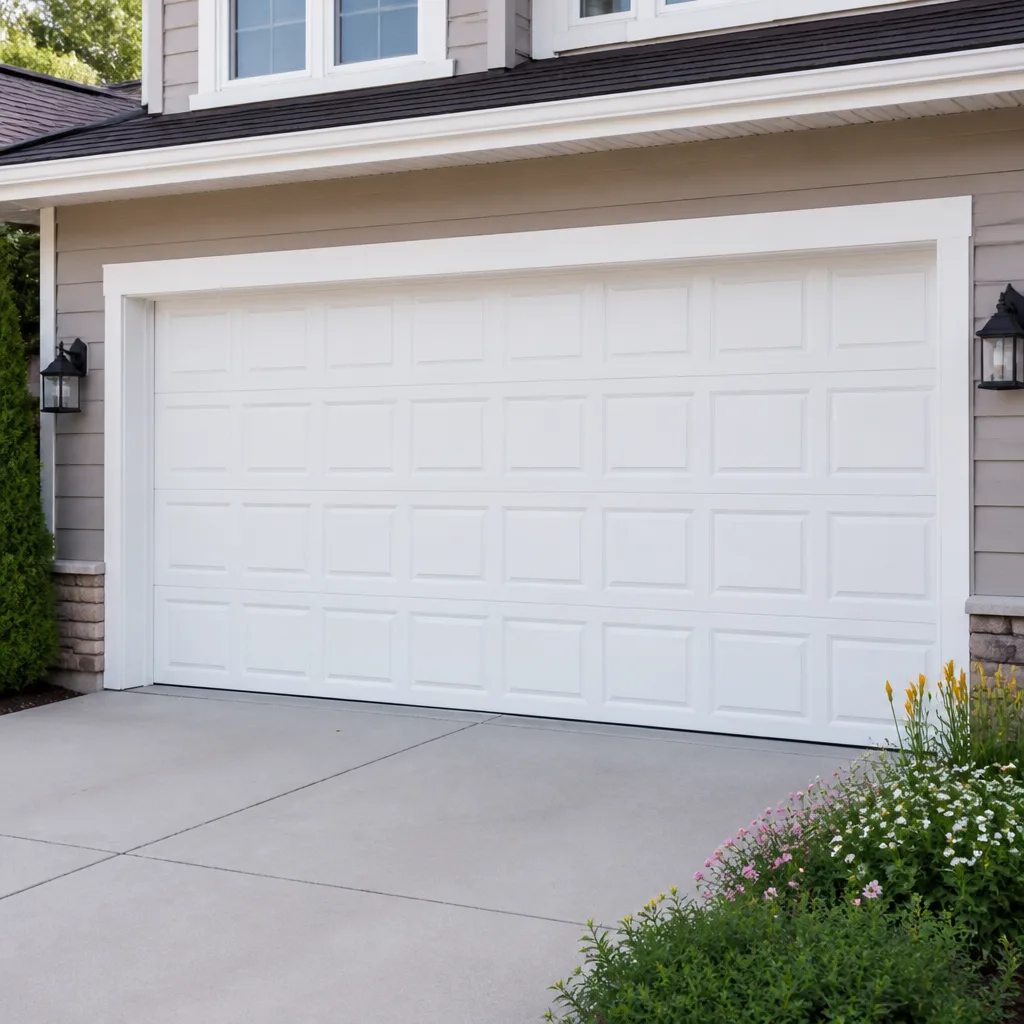 Raised-panel steel
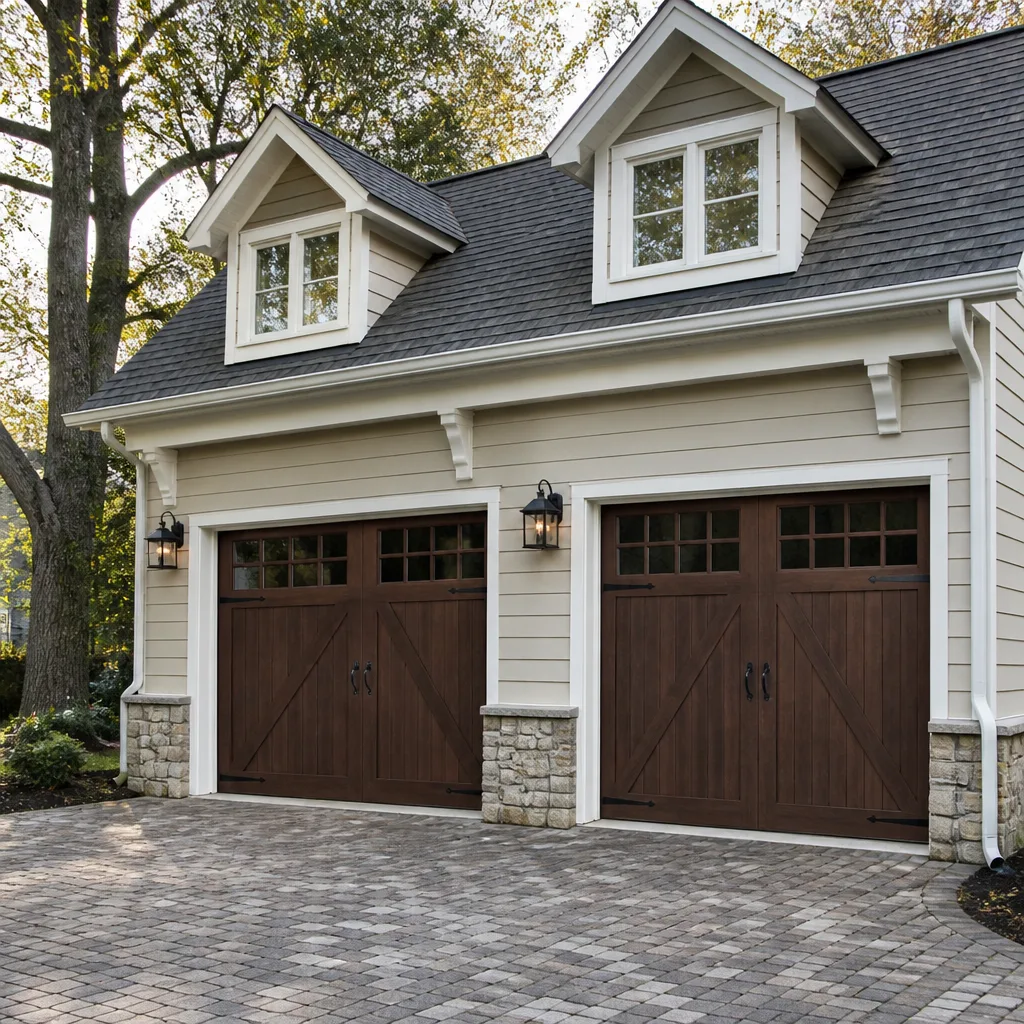 Carriage house
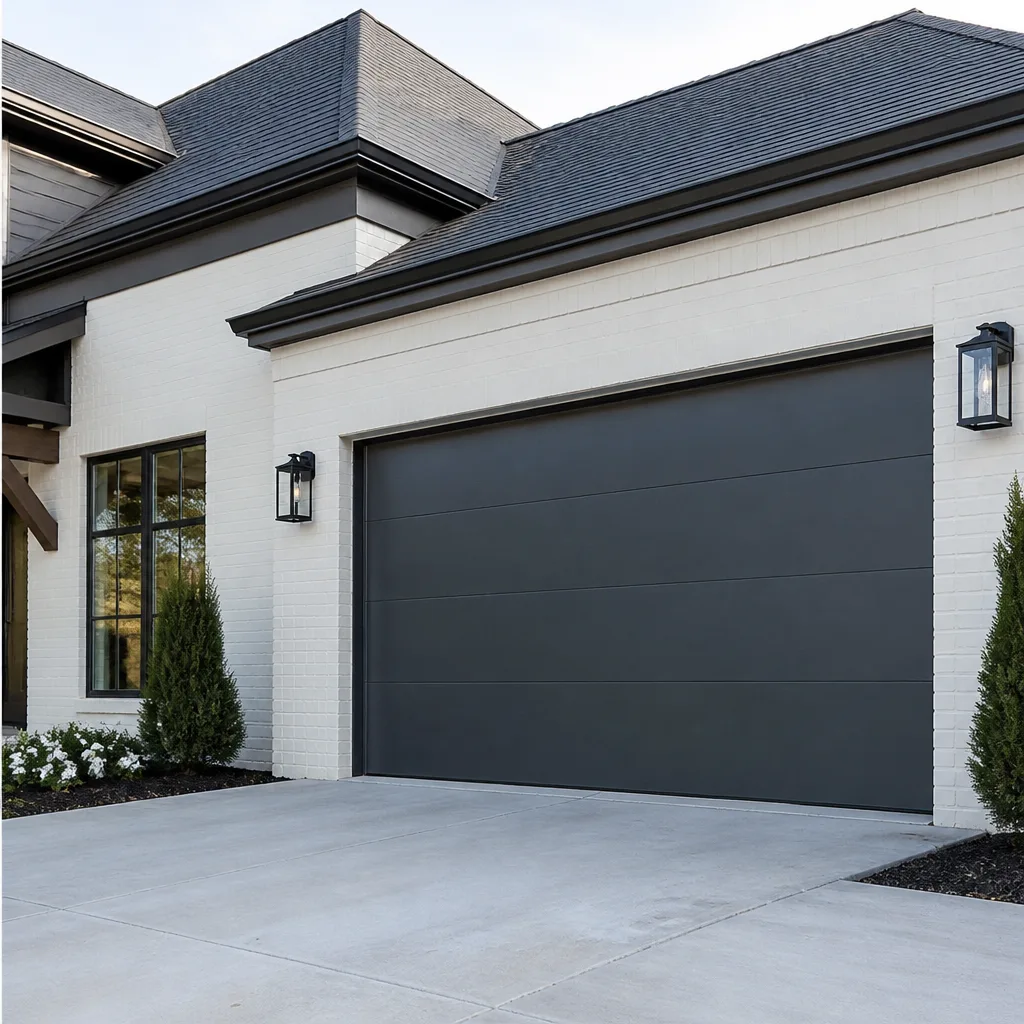 Modern flush
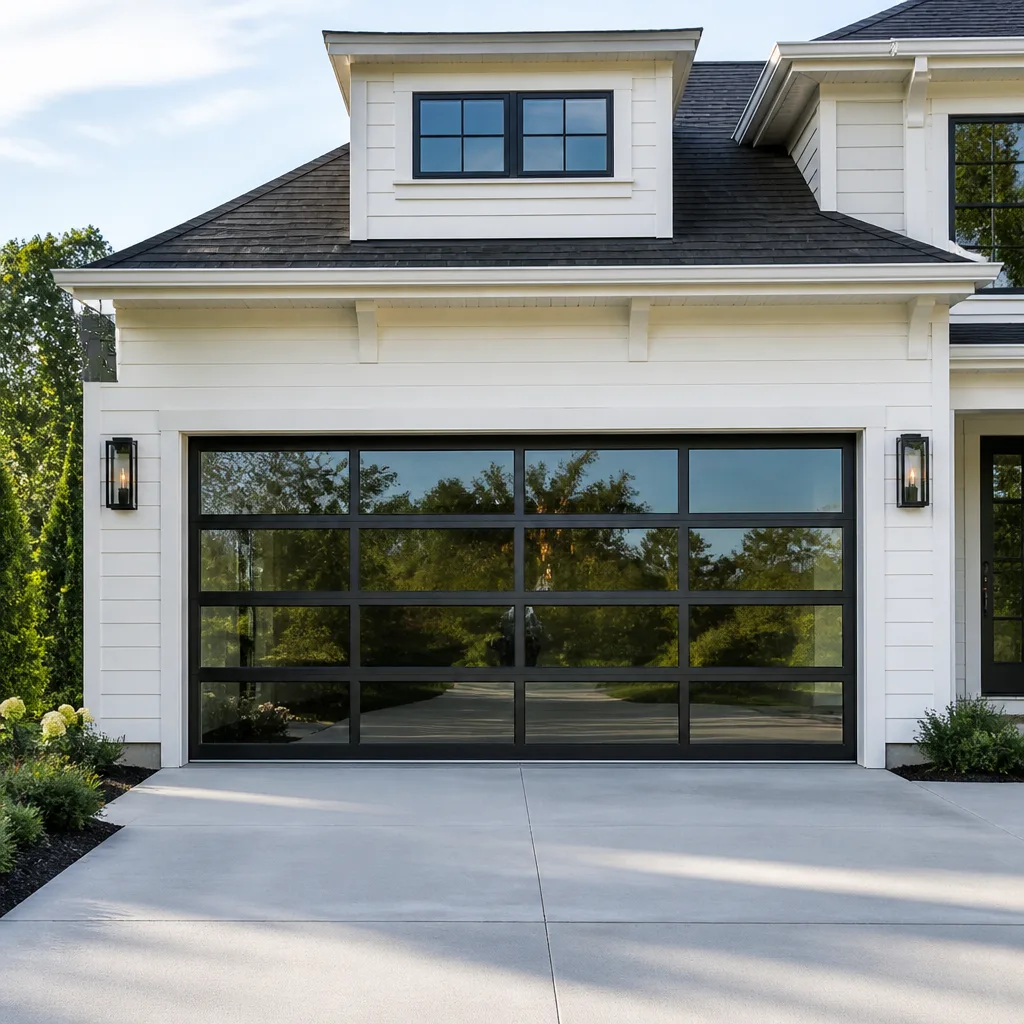 Full-view glass
 LiftMaster openers
 Chamberlain openers
Full 25-point door and opener safety check with every visit - springs, cables, rollers, tracks, and your LiftMaster or Chamberlain opener included
You get a price before we start. It does not change when the pro arrives.
Get your free estimateSeasonal Garage Door Care for New Haven: Year-Round Homeowner’s Guide
Most garage door advice treats cold as the enemy. In New Haven, the real damage happens on the way out of winter, not in the deepest part of it. Our technicians have watched torsion springs snap in February and March far more often than in January, because a single cold snap stiffens metal and then lets it go. What breaks springs is the freeze-thaw cycle: eight or nine weeks of nightly contraction and daytime expansion that fatigues steel the way bending a paperclip back and forth eventually snaps it. Deep cold gets the blame. Repeated movement does the work. This guide walks through each New Haven season as its own mechanical stress event and tells you exactly which parts of your door it hits, what to look for, and when a job is a homeowner task versus a call to a professional.
Quick Answer
Garage door care in New Haven follows four seasonal stress points: late-winter freeze-thaw fatigue on torsion springs and cables, spring tension drift after months of thermal contraction, summer humidity swelling in wood and composite panels, and fall weatherstripping gaps that leak heat before the first frost. A yearly cycle of inspection, lubrication, and one professional tune-up keeps the door working, but springs, cables, and opener adjustments belong to a trained technician because the stored energy in a wound spring can cause severe injury. Call (866) 476-7578 for a free estimate when anything sounds, sticks, or sags.
Styles & brands we work with
- Raised-panel steel
- Carriage house
- Modern flush
- Full-view glass
- LiftMaster openers
- Chamberlain openers
Table of Contents
- Winter: Ice at the Door Bottom and the Opener Strain It Creates
- Spring: Post-Winter Spring Tension and Why It Needs a Professional Eye
- Summer: Humidity, Swollen Panels, and a Door That Binds in the Frame
- Fall: Weatherstripping Inspection and New Haven’s First-Frost Window
- Storm Prep: Nor’easter and Tropical Storm Are Different Problems
- A Year-Round Maintenance Calendar for New Haven Homeowners
- Neighborhood Notes: How New Haven Housing Shapes Garage Door Wear
- What You Can Check Yourself and What You Shouldn’t Touch
Winter: Ice at the Door Bottom and the Opener Strain It Creates
The single most common winter garage door failure in New Haven isn’t a broken part. It’s a door frozen to the floor. Snowmelt runs down the driveway, pools under the bottom seal, and refreezes overnight into a hard bond between the rubber and the concrete. The homeowner presses the remote, the opener strains against a door that can’t move, and the motor or the plastic drive gear takes the load. Do it a few mornings in a row and the opener is done.
The two-minute fix is worth doing before the first freeze. Once a week in winter, or any morning after a thaw, walk out and look at the gap under the door. If there’s standing water or a visible ice ridge, break the seal free by hand before you touch the button. Run your hand along the bottom seal and push up gently at a couple of points. If the door lifts a fraction, it isn’t frozen. If it holds, chip the ice away with a plastic scraper, never a metal shovel, which will tear the rubber and scratch the door panel underneath.
What else winter does to the door:
- Cold stiffens grease. Rollers and hinges packed with old petroleum grease turn gummy below freezing and drag on the tracks, so the opener works harder for the same result.
- Tracks contract. Steel tracks shorten slightly in cold, which can pull the vertical sections a little out of plumb and make the door bind near the top of travel.
- Bottom seals harden. Rubber that felt flexible in October turns brittle and can crack on contact with ice, leaving you with a permanent gap the rest of the season.
- Battery-powered remotes lose range. Cold weakens batteries in Craftsman and Chamberlain remotes, so an intermittent button isn’t always a receiver problem.
If your opener strains, hums, or reverses on cold mornings, it’s telling you something. A quick garage door opener repair visit in early winter costs less than a motor replacement in February. If the opener has already quit, our New Haven Garage Door Repair Co team can diagnose the door and the opener together, because a dead opener is often a symptom, not the cause.
Which Lubricant Actually Works in New Haven Winters
Use a lithium grease or a silicone-based spray on the hinges, rollers, and spring, not WD-40. WD-40 is a solvent and water displacer, not a lubricant, and it will thin out what grease is left and leave the moving parts drier than before. White lithium spray stays put at low temperatures, which is what you want. Two short bursts per hinge, a light coat on the torsion spring, and a pass along the roller bearings. Keep spray off the tracks themselves, which should stay clean and dry.
Spring: Post-Winter Spring Tension and Why It Needs a Professional Eye
By the time spring arrives in New Haven, your torsion spring has been through months of contraction and expansion. The steel doesn’t return to exactly its starting state. It relaxes slightly, which shows up as a door that feels heavier, a door that closes faster than it used to, or an opener that sounds louder. For a door with extension springs rather than torsion, you’ll often see visible sag in the door’s resting position.
Spring is the right time to have a trained technician check the balance and, if needed, re-adjust the tension. We can’t say this strongly enough: do not attempt to adjust torsion spring tension yourself. The spring stores hundreds of pounds of force, and the winding bars slip or fly loose with a small error. Every year, emergency rooms see homeowners who tried. This is a job for someone who does it regularly and knows the warning signs before they happen.
The balance test you can safely do: pull the manual release cord to disconnect the opener, lift the door halfway by hand, and let go. A properly balanced door stays put. If it drops hard or creeps up or down, the spring tension is off and needs professional correction.
- Disconnect the opener. Pull the red release cord down and back to release the carriage.
- Lift the door to halfway. Use the handles, not the panel seams, and lift slowly.
- Let go and watch. A balanced door holds. A door that falls means too little tension. A door that rises means too much.
- Reconnect the opener. Don’t leave the door disconnected. A remote press on a disconnected door won’t open it, and someone in the household will call it broken.
- Call if it fails. A failed balance test is the trigger for a professional garage door spring repair visit, not a homeowner adjustment.
Our technicians have up to 9 years of experience with torsion and extension spring systems on the brands New Haven homes actually have, including LiftMaster, Chamberlain, Raynor, and Clopay. Spring repair is a core service for us, not something we subcontract out, because a spring job done poorly is the most dangerous thing that can happen to a garage door.
Summer: Humidity, Swollen Panels, and a Door That Binds in the Frame
New Haven’s summer humidity does what winter cold can’t: it soaks into wood and composite door panels and swells them. The swelling isn’t dramatic, maybe a sixteenth of an inch at each panel edge, but it adds up across the width of the door. That extra width is what a door frame and track weren’t sized for. The symptom is a door that starts to scrape or hesitate partway down, or a door that rubs the frame on one side more than the other.
Here’s how to tell humidity swelling from a mechanical problem:
- It correlates with weather. The door sticks more after a stretch of wet, muggy days and frees up after a dry week.
- It goes away in winter. True swelling usually eases in the cold months as the wood dries and shrinks back.
- The rub is at the edges. Run a hand along the vertical frame on both sides. Swelling shows as contact at the frame stops, not in the middle of the panel.
- The panels themselves look different. Look for a slight bow or a visibly wider gap between panel sections where the wood has grown.
Wood doors are typical on older New Haven homes, and they need the most attention. Composite and steel-backed doors can swell too at the seams where the panels meet, especially cheaper constructions. Paint and a quality exterior sealer on the door’s edges will slow the swelling down. But if the door has already started to bind, painting over it is a temporary patch. What’s needed is a technician adjusting the track and the hinges so the door works freely without giving it more room than it needs. A door that binds in summer will also slam in winter when the swelling recedes and everything gets loose.
For a door that binds or drags in humid weather, a garage door repair visit in early summer is the way to sort out whether the track, the hinges, or the panels are the cause. If the door has been binding for several seasons and the opener has been straining to force it, the opener may finally give out, and you’ll want both checked at once.
What Smart Openers Add to Summer Care
If you’ve upgraded to a smart-connected opener, chamberlain’s MyQ or LiftMaster’s connected models log each cycle and can send an alert when the door takes longer to close or the motor draws more current. Those alerts are essentially a swelling detector. When the app starts warning you about obstruction or travel time, it’s usually the humidity, not a browser glitch. Take the alert seriously. Call for an inspection before the opener decides the issue for you.
Fall: Weatherstripping Inspection and New Haven’s First-Frost Window
New Haven’s first frost typically lands somewhere in the second half of October. The exact date moves, but the window is predictable enough to plan around. The right time to inspect weatherstripping is three to four weeks before that first frost, so there’s time to fix what you find before the cold sets in and the gaps start costing you real heat.
Your door has three separate sealing systems, and they fail in different ways:
- Bottom seal. Run a flashlight along the base of the door with the door closed and the room dark. Any light leaking under the bottom seal is a gap. Feel the rubber with your fingers. If it’s stiff, cracked, or missing chunks, replace it before the frost.
- Side and top weatherstripping. These are the jamb seals along the vertical frame and across the header. Gaps here show as a visible strip of daylight or a draft you can feel with the back of your hand. These often telegraph cold air straight into the wall cavity, which is where the real heat loss happens.
- Threshold seal. The concrete lip the door lands on. Hairline cracks in the concrete under the door leak both air and small amounts of water that refreeze in winter into the ice problem from the earlier section.
Fall is also the season to check the door’s hardware before cold. Rollers that squeaked all summer will get worse in the cold. Hinges that show rust need attention now, before they seize. If the door has any loose bolts, tighten them, because vibration that seems harmless in mild weather can rattle a bolt loose by January. What you’re really doing in October is catching small problems before cold turns them into big ones.
If your door is failing the balance test, the light test at the bottom seal, or the visual check on the side weatherstripping, that’s the point where a professional visit makes sense. Call (866) 476-7578. Estimates are free, and we’ll tell you what’s actually worn, not just what we’d like to sell.
Storm Prep: Nor’easter and Tropical Storm Are Different Problems
New Haven sits in a place where both nor’easters and the remnants of tropical storms come through, and the two types of storm stress a garage door in very different ways. Getting the door prepped for the wrong one is worse than not prepping at all.
A nor’easter is a slow-moving low-pressure system that arrives from offshore and brings prolonged wind and heavy wet snow or rain. The garage door sees sustained lateral pressure from one side and, in snow years, an extra weight load on the bottom seal. The structural concern is the door flexing against the tracks and the hinges taking load they weren’t designed for. Prep for a nor’easter by:
- Making sure the door is fully closed and the bottom seal compresses against the floor, not resting loosely.
- Clearing the driveway approach so a drift doesn’t back up against the door outside.
- Disconnecting the opener only if the manual release is safe to reach and the door can be secured. Otherwise leave the door connected and don’t try to open it during the storm.
- Checking that side weatherstripping seats properly, since a loose strip can peel off in prolonged wind.
A tropical storm arrives fast, hits with a brief period of high wind and driving rain, and is gone. The concern is impulsive pressure and water intrusion, plus flying debris. Prep for a tropical storm by:
- Removing anything liftable in the driveway or in front of the garage door. Trash bins, garden tools, and loose downspouts become projectiles.
- Checking the door’s panel fasteners. A panel that’s slightly loose at panel seams can separate under a sudden gust and the door becomes airborne.
- Keeping the door fully closed and locked if it has a manual lock. Don’t crack the door to “let wind through”. That’s the opposite of safe.
- Moving vehicles out of the garage if the door has any doubt about its panel integrity. A door failure with a car under it is a much worse problem the day after.
The structural difference matters because the fixes are different. A door that survived a nor’easter often needs hinge and track inspection afterward. A door that took a tropical-storm hit needs panel and fastener inspection, and often the door should be checked before the next storm rather than after. If a storm has left your door off-track, that’s an emergency garage door repair situation. When your door fails, call us. Emergency garage door service is a standard part of what we do, not a premium tier.
A Year-Round Maintenance Calendar for New Haven Homeowners
Here’s the maintenance cycle we think makes the most sense for a garage door in New Haven, mapped to the local weather patterns instead of a generic schedule. Each entry is what to do and why, in the order you should do it.
- October (before first frost). Inspect all weatherstripping. Test the balance with the door disconnected from the opener. Replace worn bottom seals. Lubricate hinges, rollers, and the spring with lithium grease. Tighten any loose hardware.
- November (before freeze). Clear the driveway approach of debris that will become ice-trapped. Confirm the door closes flush. If the opener sounds strained, book a technician before the cold sets in.
- December through February (winter checks). Once a week, or after any thaw, check for ice at the door bottom. Break the seal free by hand before pressing the remote. Note any change in opener noise or travel time.
- March (post-winter inspection). Run the balance test again. Listen for new noise on the spring. If the door feels heavier or moves faster than before winter, call for a professional spring check.
- April (spring tune-up). Have a technician verify spring tension and adjust if needed. Inspect cables for fraying. Check that tracks are still plumb after winter contraction.
- May through August (summer watch). Pay attention to binding during humid weeks. Look for panel swelling at panel seams. Test the smart opener’s travel-time alerts if you have them.
- September (pre-fall prep). Final lubrication pass. Clear anything that’s piled up around the door over the summer. Confirm the door is ready for the cold season ahead.
This isn’t a schedule that requires special tools or skills for the homeowner parts. The inspection items, lubrication, and balance test are the ones you can do safely. The professional items are the ones where a mistake is dangerous, and those are worth booking on a schedule rather than waiting for a failure.
Neighborhood Notes: How New Haven Housing Shapes Garage Door Wear
Garage door wear in New Haven follows housing stock more than it follows weather alone. A home in Westville with a detached garage under a tree canopy faces different seasonal stress than a newer attached garage in East Rock, and both differ from the mix you find around Wooster Square and Fair Haven. These aren’t hard rules, just patterns that come up often enough to be worth planning around.
Older detached garages in Westville and the Hill tend to sit in shade for part of the day and hold moisture longer after rain, which makes summer humidity swelling worse on wood doors. Snow melt from a roof above a detached garage drips onto the driveway and pools at the door bottom more than on a modern pitched-and-guttered garage. Homes in East Rock with mature street trees get debris buildup in the fall that collects in the tracks and hinges.
Newer attached garages in Morris Cove and parts of Fair Haven tend to have steel or composite doors with smart openers. There the wear pattern often shows up in the opener first, because connected systems log strain that manual openers silently absorb. If you’re in one of these areas and your app is pinging about travel time, that’s a real signal.
Across neighborhoods, the seasonal stress is the same. The order in which things fail is what shifts. A Westville home with a shaded detached garage will often see the bottom seal go first. An East Rock home may see the hinges and rollers go first. Neither is a surprise once you know what to look for.
What You Can Check Yourself and What You Shouldn’t Touch
A lot of garage door care is genuinely doable by the homeowner. Some of it isn’t, and the split isn’t arbitrary. Here’s the honest breakdown.
Safe for homeowners:
- Lubricating hinges, rollers, and the torsion spring with lithium grease or silicone spray.
- Checking for ice at the door bottom before opening in winter.
- Running the balance test with the opener disconnected.
- Inspecting weatherstripping with a flashlight for light leaks.
- Checking that bolts and screws are snug.
- Clearing debris from the driveway approach and out of the tracks with a brush or vacuum.
- Testing the auto-reverse safety feature with a piece of wood laid flat under the closing door.
Not safe for homeowners:
- Adjusting or replacing torsion springs. The stored energy in a wound spring is severe enough that a slip can cause serious injury. Spring replacement is a trained-technician task with specialized winding bars and, often, a spring containment kit.
- Adjusting or replacing the cables. Cables are under the same tension as the springs, and a snapped cable can whip with dangerous force.
- Replacing broken hinges under tension. Hinges carry load from the door’s weight through the panels, and removing one under load can cause the panel to sag or fall.
- Realigning tracks with a mallet or pry bar. A slight bend in the wrong direction can cause the door to jump a roller and come down hard.
- Working on opener wiring or the wall control circuit. Electrical work isn’t a garage door task, and there’s no safe shortcut.
The general rule: anything under spring or cable tension is a professional job. Our garage door spring repair service exists specifically because that line is where things go wrong for homeowners who tried. We’d rather take the call than read about the injury.
Common Mistakes to Avoid
- Reaching for WD-40 as a lubricant. It’s a solvent, not a grease. It thins existing lubricant and leaves hinges and rollers drier than before. Use lithium or silicone instead. The mistake is especially bad going into winter when the door needs lubricant that stays functional in the cold.
- Forcing a frozen door open with the remote. The opener isn’t designed to break a frozen seal. The drive gear or motor burns out, and you’ll pay for a spring inspection and an opener repair in the same visit. Break the ice free by hand first, then open. It’s a two-minute difference between a working opener and a dead one.
- Adjusting torsion spring tension yourself. The most dangerous DIY mistake on the list. The spring stores hundreds of pounds of force, and the winding bars offer very little forgiveness. Every call we take to fix a homeowner-wound spring is a call where we’re relieved the injury was limited to the door.
- Painting over summer swelling instead of fixing the underlying fit. A coat of paint seals the panel edges for a month or two. If the door is already binding in the frame, painting doesn’t change the fit and the binding returns by the next humid stretch. Have the track and hinges checked first.
- Ignoring fall weatherstripping. New Haven’s first frost comes quickly, and gaps that were minor in October turn into real heat loss in November. Inspect in early fall, replace before the first freeze, and the whole cold season goes better.
- Leaving the door disconnected after a balance test. It’s an easy mistake. You pull the release cord, test the balance, then forget to re-engage it. The remote stops working and someone in the household thinks the opener died. Reconnect before you walk back inside.
- Trying to storm-prep by leaving the door cracked. The instinct is to relieve pressure. The result is that wind and rain get inside, and a partially raised door is far more vulnerable to lifting off its tracks. Fully close and lock before a storm.
See the difference
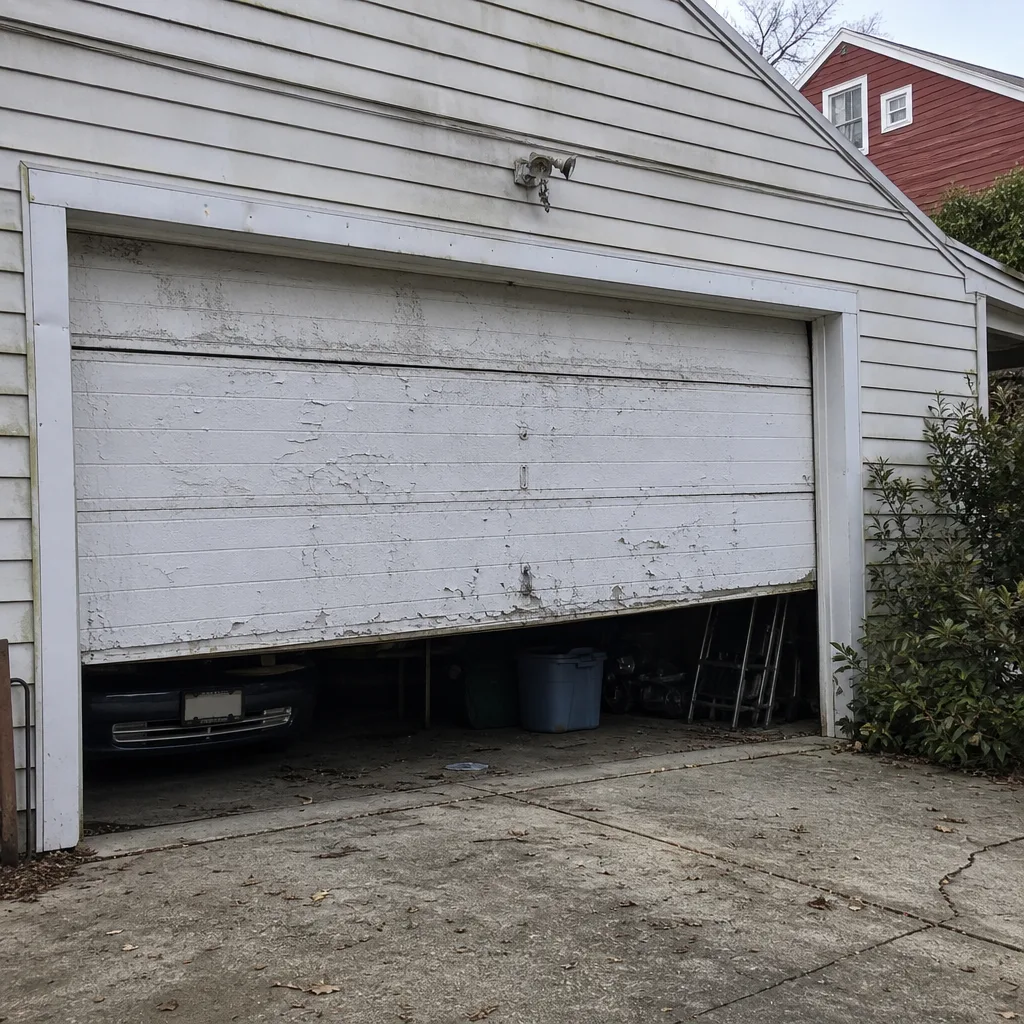 Before
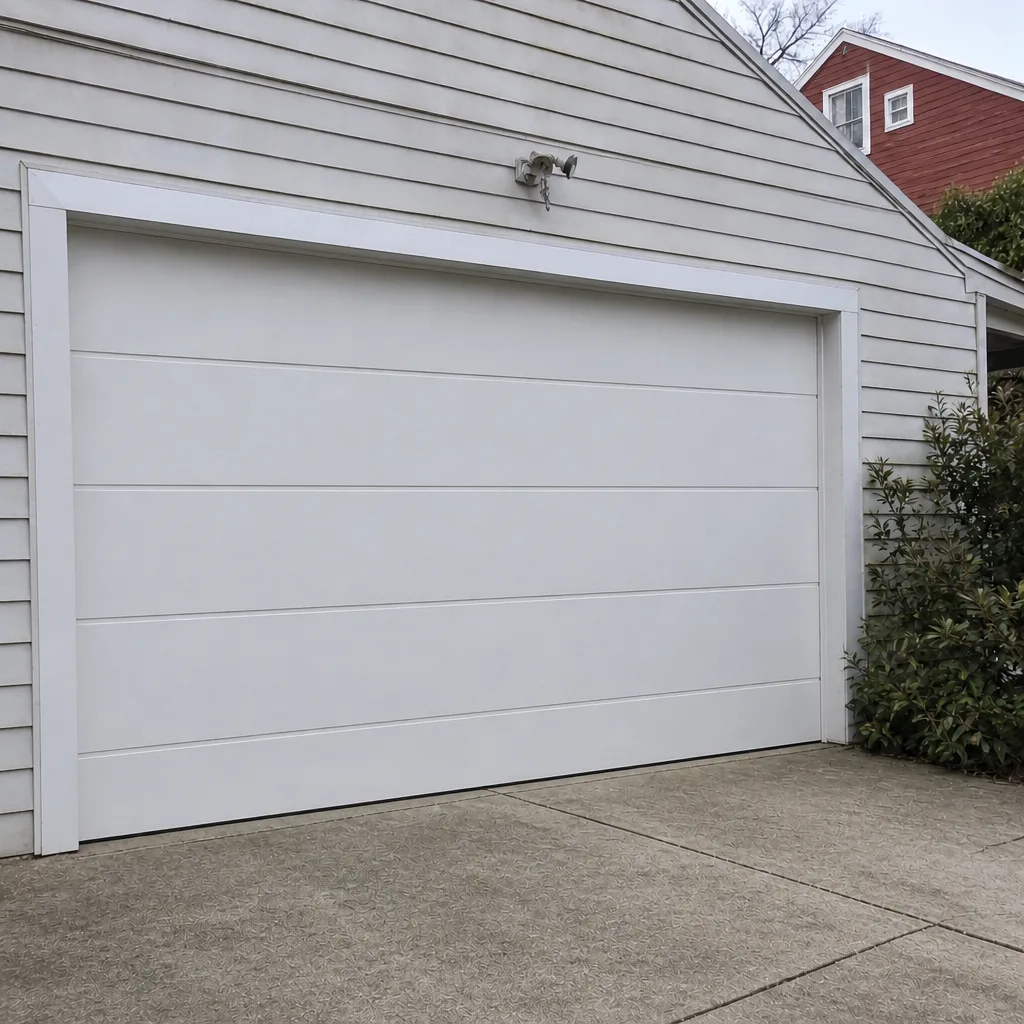 After
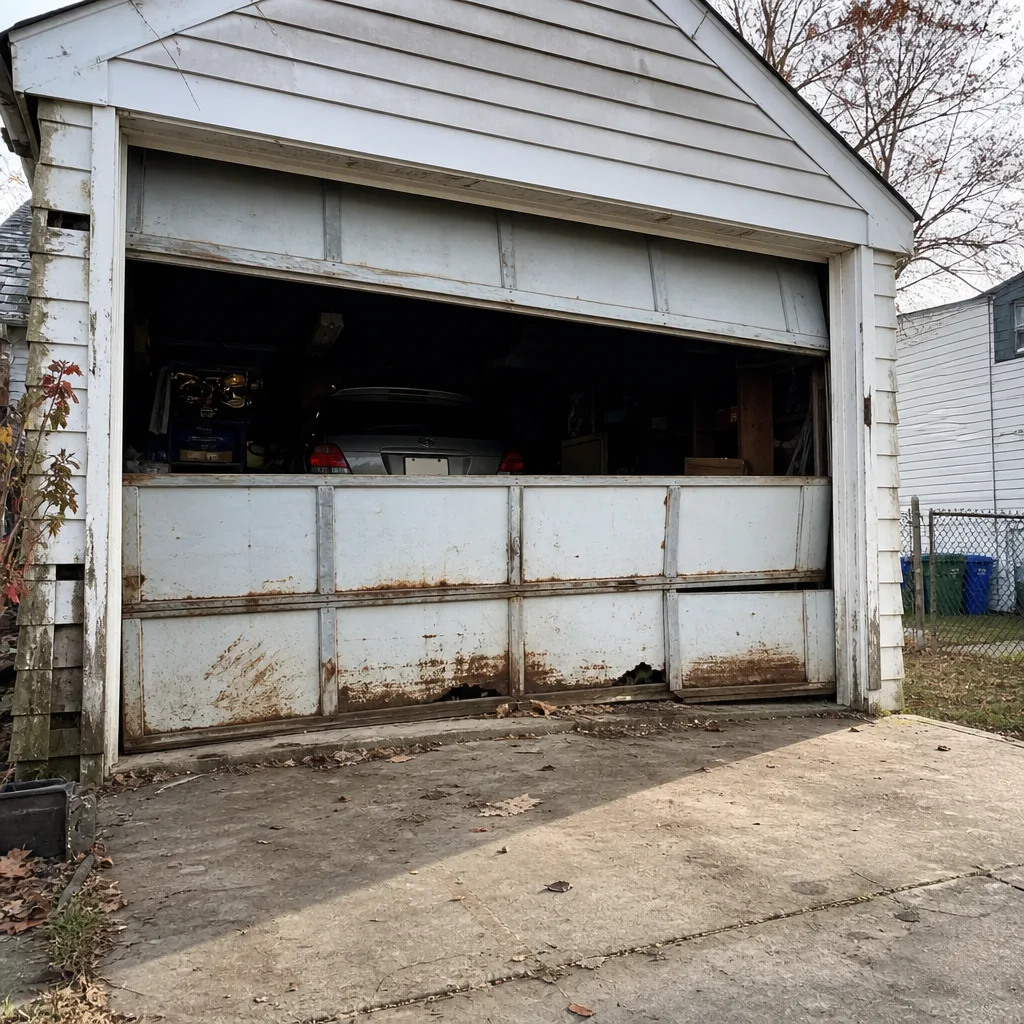 Before
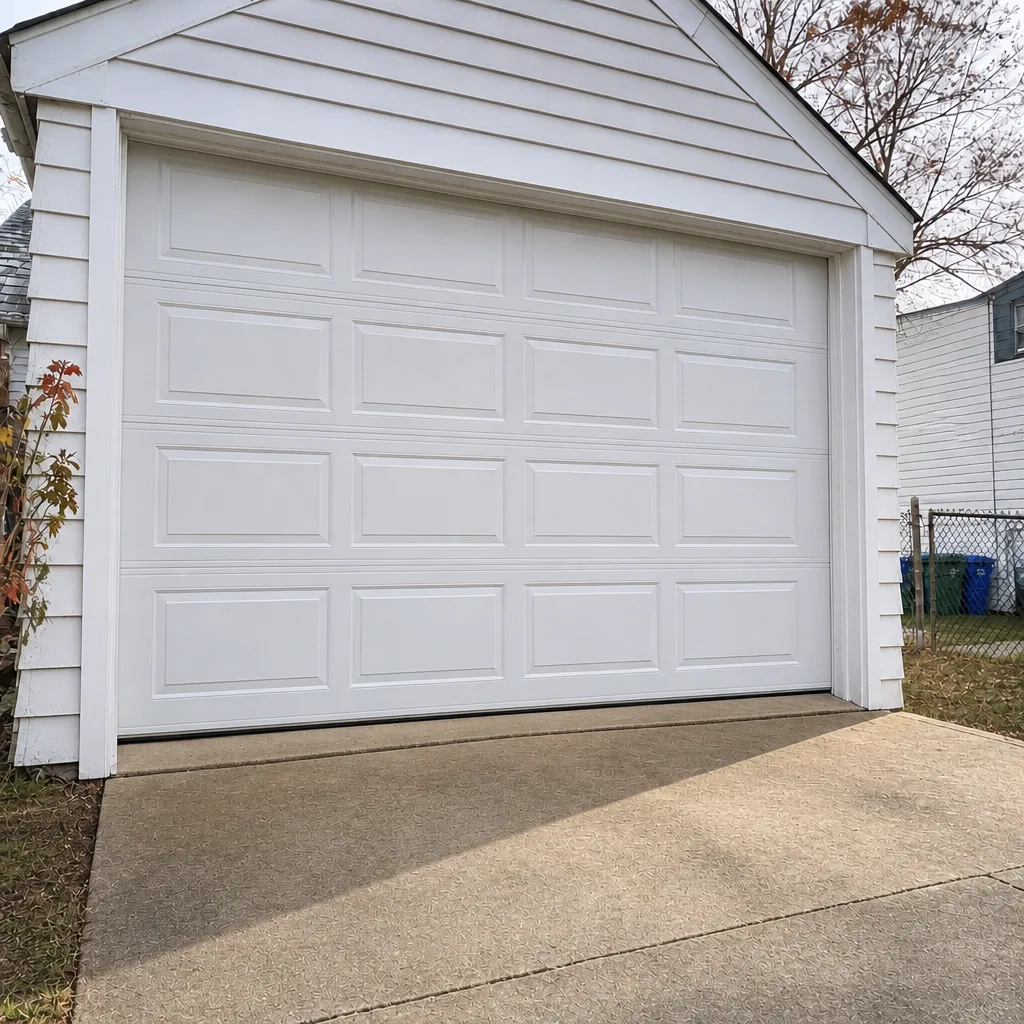 After
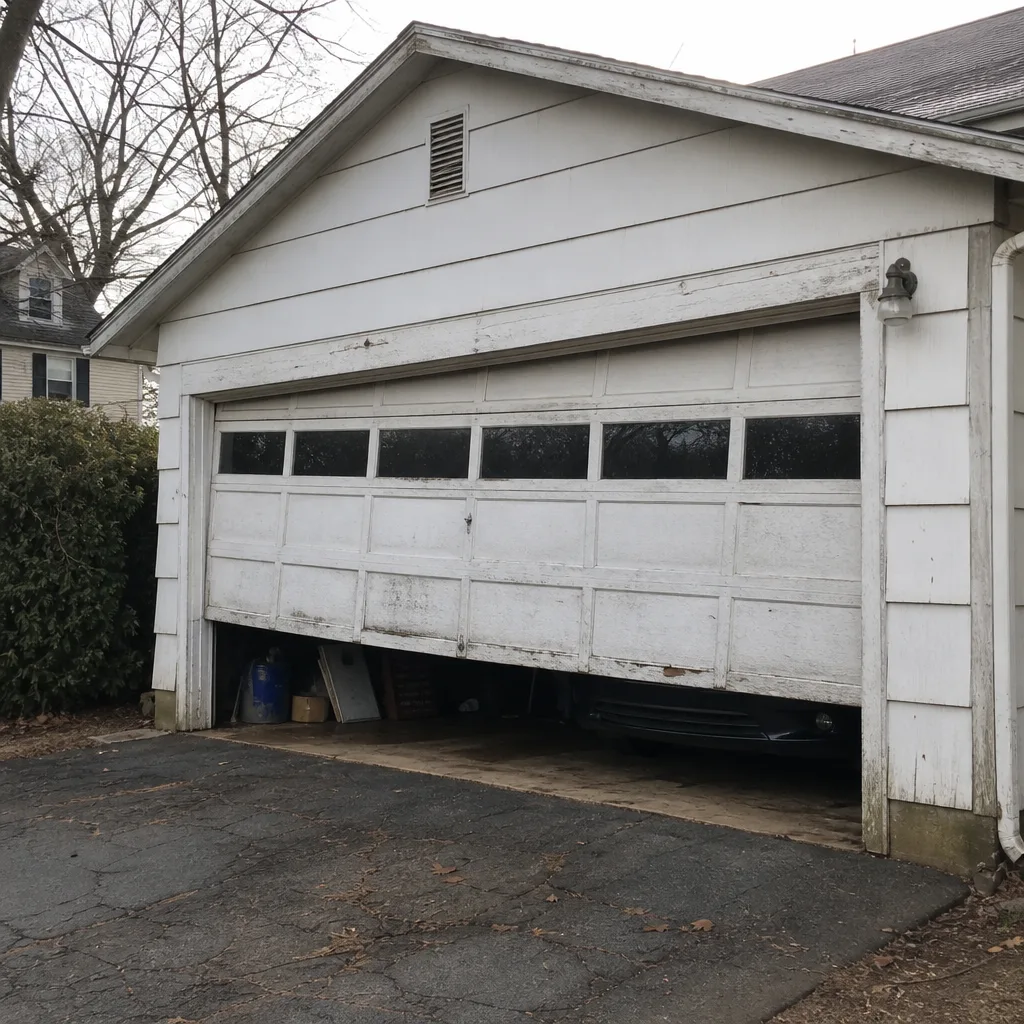 Before
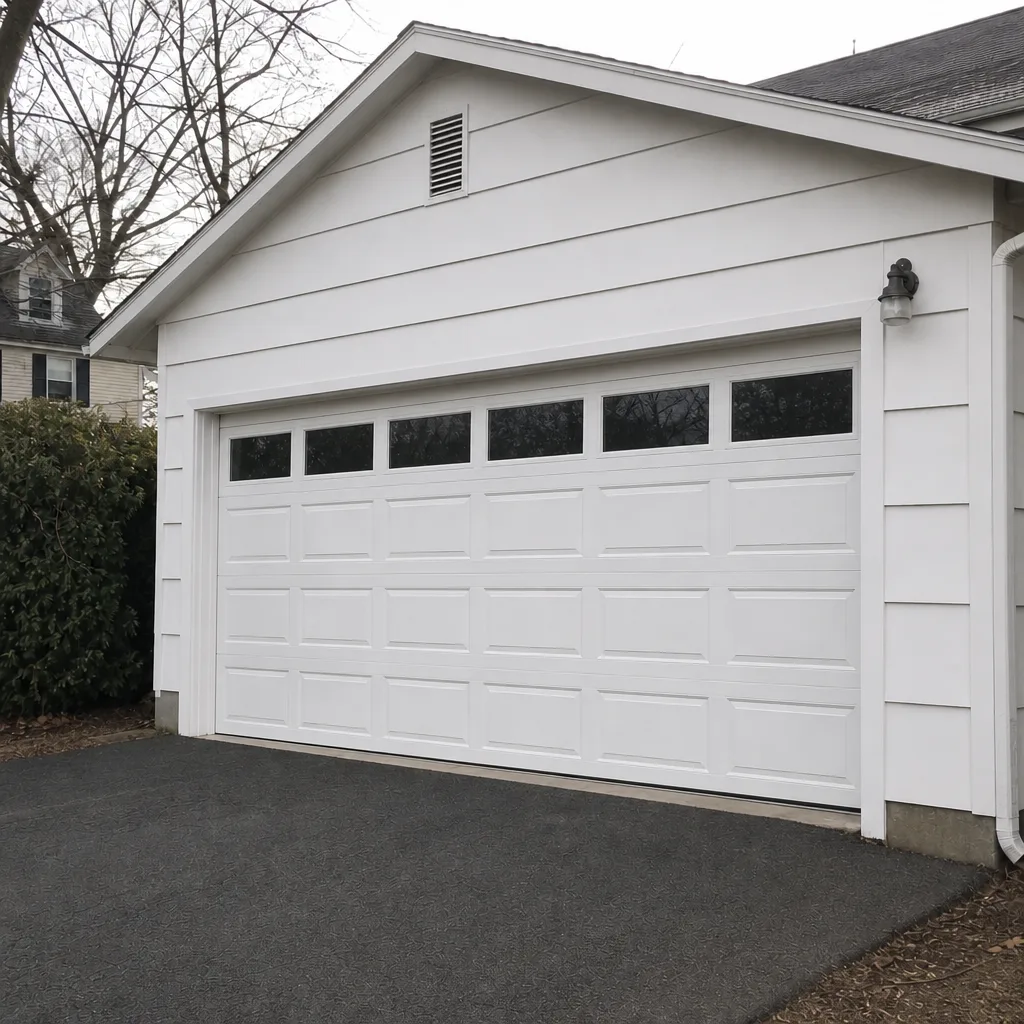 After
When to Call a Professional
Call a technician when the door fails the balance test, when a spring has snapped or visibly sagged, when the door is off its tracks or hanging unevenly, when the opener strains or reverses without an obstruction, or when storm damage has left a panel or hinge displaced. Call if you hear a loud bang from the garage and the door won’t open, which is the classic sign of a snapped spring. Call if the door binds in summer and stays bound for more than a week, or if you see daylight under the bottom seal in October after you’ve inspected. When your door fails, that call covers diagnosis and repair. New Haven Garage Door Repair Co offers free estimates in New Haven. Call (866) 476-7578.
Frequently Asked Questions
Once a year is the baseline for a door in New Haven, ideally in early spring after the freeze-thaw season and again in fall before the first frost. The spring visit catches the balance and tension drift that winter causes, and the fall visit catches weatherstripping and hardware issues before cold sets in. Doors on wood construction or under a tree canopy may want a check mid-summer too. Call (866) 476-7578 for an exact quote. Estimates are free.
Most broken springs in New Haven happen in late winter and early spring, when the freeze-thaw cycle has been flexing the steel for weeks. The coldest January week isn’t the threat most people picture. Repeated contraction and expansion over eight or nine weeks fatigues the metal more than any single cold snap. If your door makes a loud bang in February or March and won’t open, that’s the pattern working itself out.
Road salt on the driveway itself doesn’t reach the door panels in amounts that matter. What does matter is the meltwater carrying salt pooling under the bottom seal and, in some cases, running into the door’s lower hinges. Wipe down hinges in spring with a damp cloth if the door sits in a spot where driven meltwater pools. Keep an eye on the bottom seal and replace it when it looks stiff or cracked.
No. Forcing a frozen door open strains the opener and can snap a spring that’s already under stress. Before you press the remote on a morning after a thaw or freeze, check that the door isn’t bonded to the floor. Push up gently on the bottom edge. If it lifts a fraction of an inch, it’s free. If it holds, chip the ice free with a plastic scraper or pour a little warm water along the base to loosen it. Never use a metal shovel on the seal.
Spring repairs in the New Haven market typically run in a modest range per spring, and a matched pair usually gets replaced together, so a pair costs about twice the single-spring figure. Because a wound torsion spring carries serious stored force, this is a safety job, not a DIY one. Call (866) 476-7578 for an exact quote. Estimates are free, and the written estimate sets the final price before any work starts.
For emergency situations like a snapped spring, an off-track door, or an opener that’s failed with the door stuck down, we do offer emergency garage door service as part of our standard offering, not a premium tier. Call us and we’ll tell you what’s possible for your situation. For a routine tune-up or a scheduled repair, we’ll book you a time that works and confirm the estimate in writing before work starts.
Yes, and they’re not the same. A nor’easter is a long, sustained wind event, so the door is fully closed with the bottom seal compressed and the driveway cleared of drift sources. A tropical storm is a short, intense wind event, so the priority is removing loose objects that become projectiles and confirming panels are firmly attached. For either one, fully close and lock the door. Don’t crack it open to relieve pressure.
The Bottom Line
Seasonal garage door care in New Haven isn’t about one big maintenance day. It’s about recognizing that winter, spring, summer, and fall each stress different parts of the door. Winter ice strains the opener. Spring tension drift needs a professional check. Summer humidity swells panels. Fall weatherstripping gaps leak heat if they aren’t closed before the frost. Storm prep differs between nor’easters and tropical storms. A simple year-round calendar of inspection, lubrication, and one or two professional tune-ups catches most problems before they become expensive. Anything under spring or cable tension stays in the hands of a trained technician. Our technicians have up to 9 years of experience on the brands New Haven homes actually have. One call covers the diagnosis and the fix.
Call (866) 476-7578 for a free estimate. We’ll tell you what’s actually worn and what can wait, and the written estimate gives you the final price before any work starts.
Written by the team at New Haven Garage Door Repair Co.