Last updated November 21, 2026
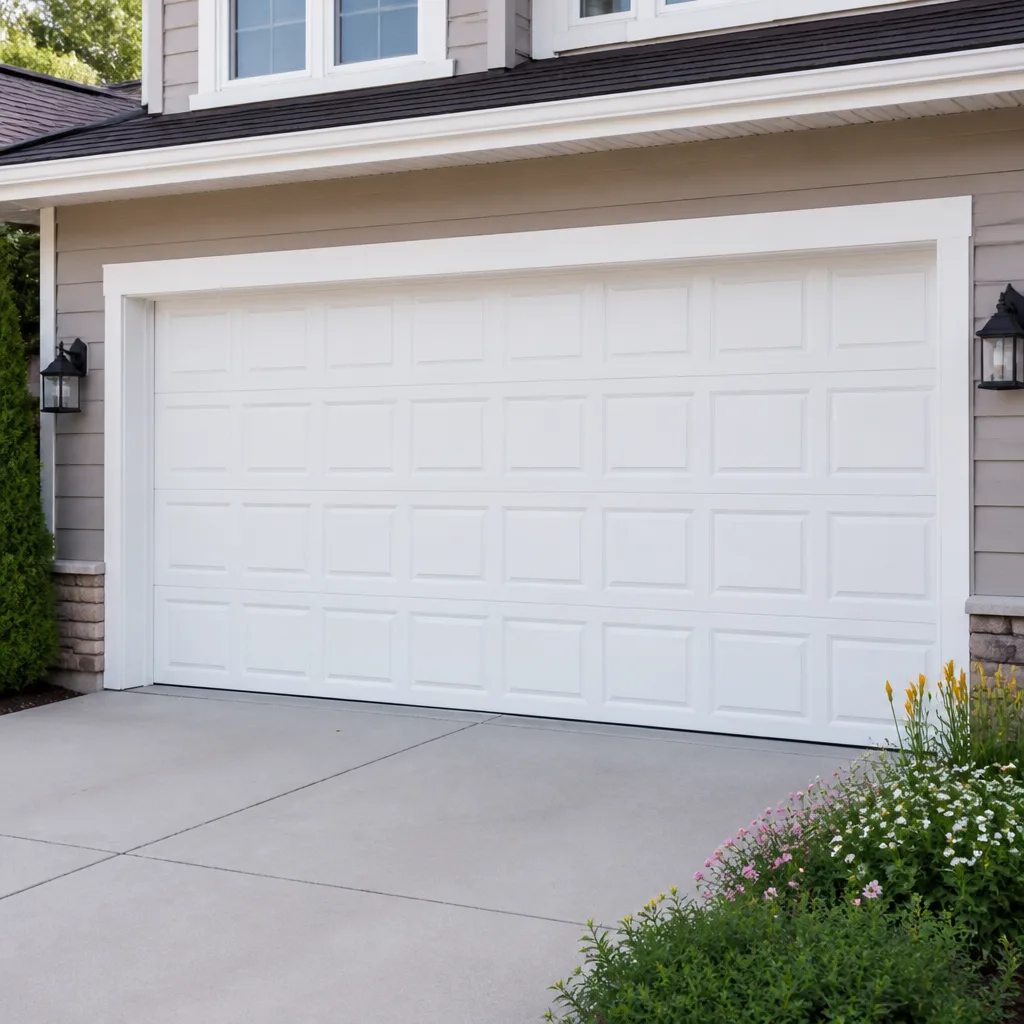 Raised-panel steel
 Carriage house
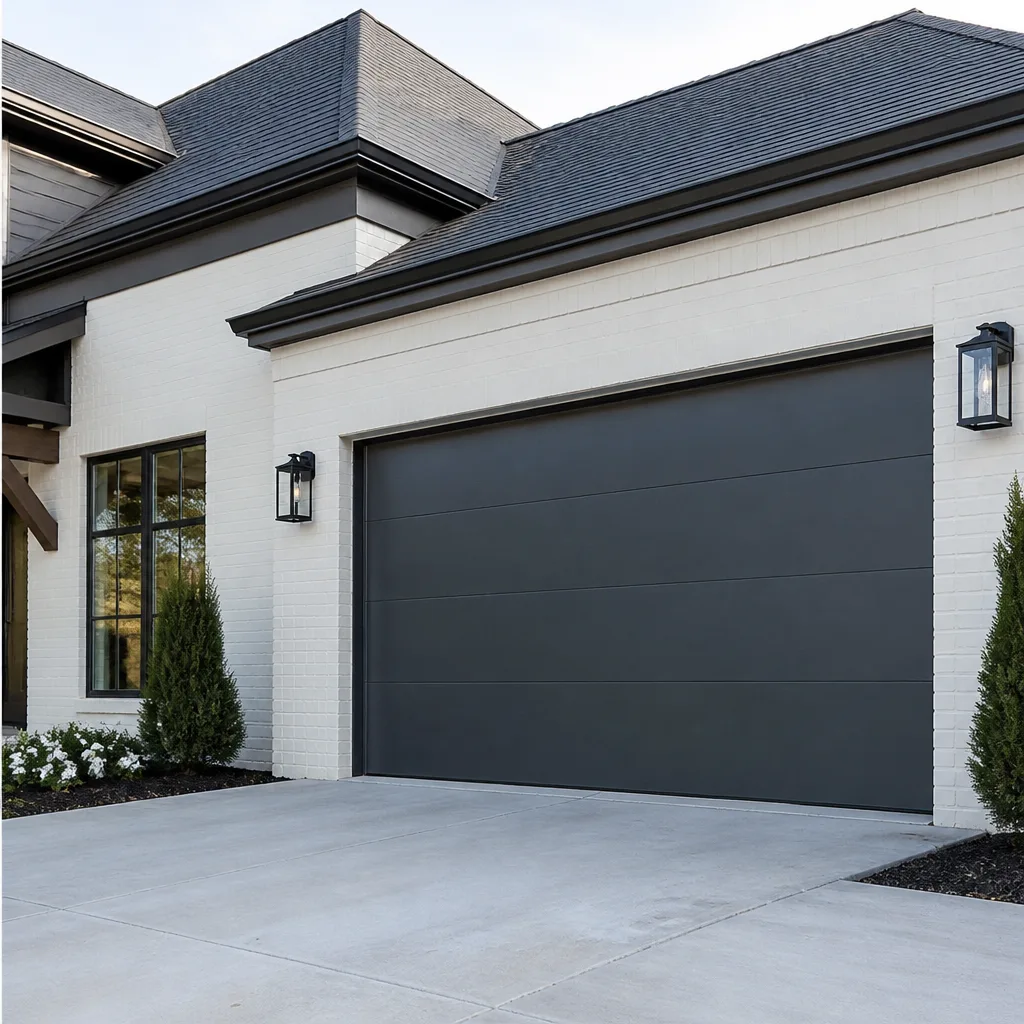 Modern flush
 Full-view glass
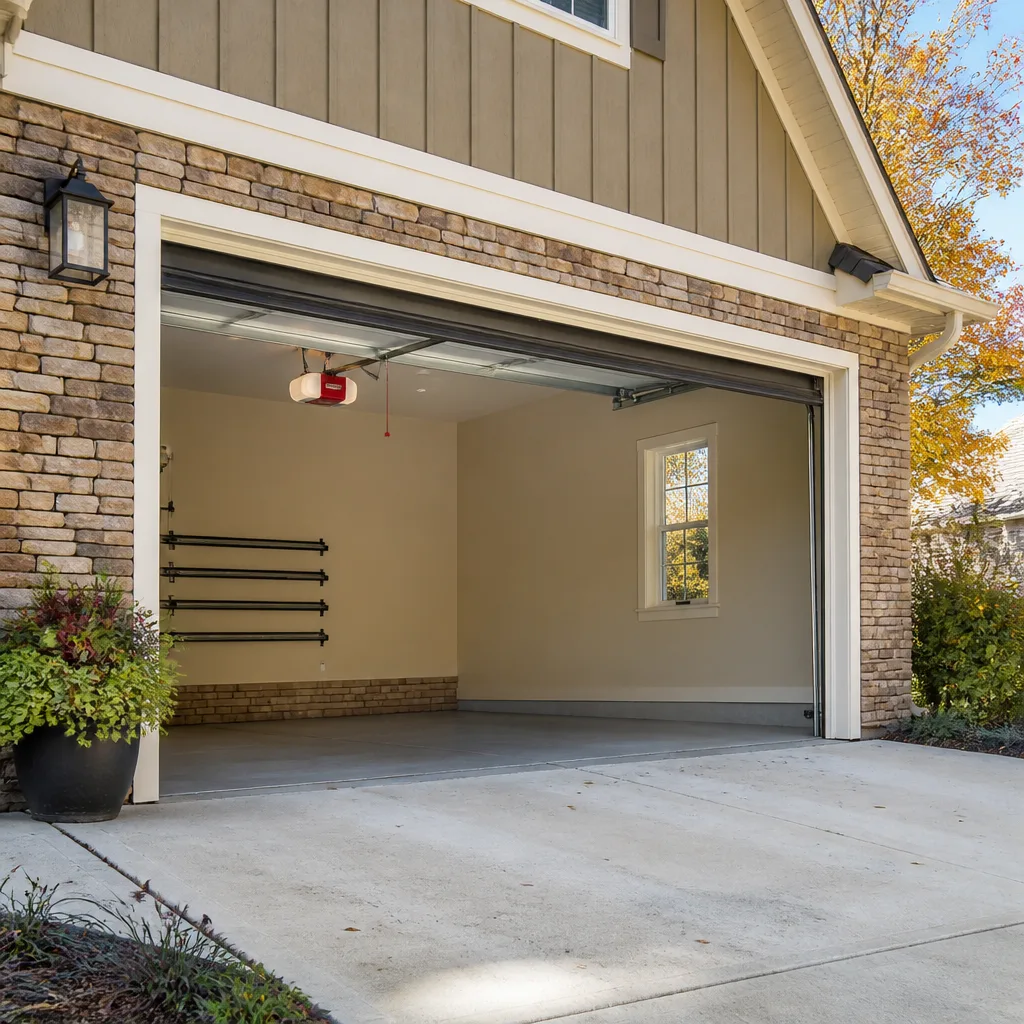 LiftMaster openers
 Chamberlain openers
Full 25-point door and opener safety check with every visit - springs, cables, rollers, tracks, and your LiftMaster or Chamberlain opener included
You get a price before we start. It does not change when the pro arrives.
Get your free estimateHow to Hire a Garage Door Contractor in New Haven: A Step-by-Step Guide
Connecticut does not require a specialty license to replace a garage door spring. That means anyone with a service van can legally show up at your house in New Haven and attempt a repair that sends stored torque into an improperly wound drum. The work looks simple from the driveway. It isn’t. Spring replacement, cable tensioning, and opener calibration each carry real risk when they go wrong, and a garage door is the largest moving object in most homes.
This guide gives you a filter. You’ll learn what Connecticut contractor licensing actually covers (and where the gaps are), the five questions that separate technicians from salespeople, how to read reviews for garage door work specifically, and why a diagnosis matters more than a quote. We’ve watched this process from the inside, and we’ll tell you what to look for.
Quick Answer
Hire a garage door contractor in New Haven by verifying their Connecticut registration, asking brand-specific diagnostic questions, and insisting on an on-site diagnosis before any price is quoted. A qualified contractor will explain what failed and why, put the scope in writing, and never pressure you to decide the same day. Get at least two written estimates for anything beyond a simple repair, and confirm that the company handles spring work in-house rather than subcontracting it.
Styles & brands we work with
- Raised-panel steel
- Carriage house
- Modern flush
- Full-view glass
- LiftMaster openers
- Chamberlain openers
Table of Contents
- What Connecticut Licensing Covers for Garage Door Work
- Five Questions That Reveal Technical Competence
- How to Read Reviews for Garage Door Companies
- The Difference Between a Quote and a Diagnosis
- Red Flags in Service Agreements
- Why Brand Familiarity Matters in New Haven
- How New Haven’s Climate Affects Your Door
- The Step-by-Step Hiring Process
What Connecticut Licensing Covers for Garage Door Work
Connecticut regulates home improvement contractors through a registration system rather than a garage-door-specific license. Anyone performing home improvement work for compensation above a threshold set by the state must hold a Home Improvement Contractor registration through the Department of Consumer Protection. Ask for that registration number and confirm it’s active. A registered contractor can be looked up, and an unregistered one can’t.
Here’s the gap. Registration confirms a contractor has filed paperwork and carried the required insurance. It does not test garage door knowledge. There’s no state exam that covers torsion spring calculations, drum winding, or opener force limits. Electrical work on the opener circuit falls under separate electrical licensing rules, and in most municipalities a full door replacement may require a building permit. Ask your contractor whether the job needs one and who pulls it.
What this means for you:
- Registration is a floor, not a ceiling. It screens out the completely unaccountable. It says nothing about whether the technician can safely wind a torsion spring.
- Insurance is the part that protects you. A spring under tension can injure a technician, and a door that falls can damage property. Confirm general liability coverage before work begins.
- Permits vary by municipality. New Haven and surrounding towns handle permits differently. Call the city’s building department and ask directly rather than assuming.
- Brand certification fills the gap. Manufacturers train and certify technicians on their own systems. That credential is voluntary, which is exactly why it tells you something.
Because the state license doesn’t guarantee competence, the vetting burden lands on the homeowner. The rest of this guide is about carrying that burden efficiently. When you need a repair handled correctly, New Haven Garage Door Repair Co is one option worth evaluating against these criteria.
Five Questions That Reveal Technical Competence
You can learn more in five minutes of questions than in an hour of sales presentation. A technician answers these directly. A salesperson deflects toward pricing or scheduling. Ask them on the phone before you book, and again when the technician arrives.
- “Do you repair torsion springs in-house, or do you subcontract?” Spring work is a safety job requiring specific tooling and training. A company that subcontracts it is a dispatcher, not a specialist. You want the answer to be that the same crew diagnosing your door is the one repairing it.
- “What brand is my opener, and what’s the most common failure on that model?” A LiftMaster and a Craftsman behave differently as they age. Someone familiar with the brand will name a specific component, like a travel limit switch or a logic board. A generalist will say “we’ll take a look.”
- “How do you set spring tension?” The answer involves door weight, drum size, and a measured number of turns. If the response is vague, the technician is guessing at the most dangerous part of the job.
- “Will you diagnose before you quote?” This is the single most important question on the list. See the section below on why.
- “What’s covered if the repair fails?” A confident contractor states warranty terms without hesitation. If the answer is “we stand behind our work” with nothing behind it, ask for the specifics in writing.
You can also ask whether they handle garage door opener repair across both older chain-drive units and newer smart-connected systems. Opener technology has moved quickly, and a company still comfortable only with legacy systems may struggle when your app-controlled opener loses sync.
How to Read Reviews for Garage Door Companies
Garage door reviews are unusually easy to fake and unusually easy to read correctly, if you know the patterns. The key is to look for reviews that describe the process, not just the outcome. “Great service, fast, friendly” tells you nothing. “They told me my Wayne Dalton cable had frayed at the drum and showed me the wear before replacing both” tells you a technician diagnosed and communicated.
Patterns that signal recurring shortcuts:
- Reviews mentioning a repair that failed shortly after. One is bad luck. Three mentioning the same component within months is a pattern.
- Repeated complaints about “the price changed once they arrived.” This points to phone quotes given without diagnosis, then adjusted on-site. Legitimate contractors diagnose first and quote after.
- Reviews that all appear within a short window. Look at the date distribution, not the star average.
- Missing detail about what was actually done. If no reviewer ever names a part, a brand, or a symptom, be skeptical of the sample.
- Responses that argue with negative reviewers. A company that answers criticism with defensiveness is telling you how it handles problems.
Search specifically for reviews mentioning LiftMaster or Raynor systems, or whatever equipment is on your house. New Haven homeowners with older doors often have brand-specific issues, and a reviewer who names the same brand you own is worth more than ten generic five-star ratings. Bring those findings to your conversation when you call about garage door repair.
The Difference Between a Quote and a Diagnosis
This distinction saves more money than any negotiation tactic. A quote is a price for a job. A diagnosis is an explanation of why the job is needed, and which job is actually needed. Companies that skip diagnosis and jump to a quote are guessing, and you pay for the guess later.
Consider a door that reverses before closing. A quote-only approach might sell you an opener replacement. A diagnosis checks the safety sensors, the track alignment, the spring balance, and the opener’s force settings. The actual fault could be a misaligned track that costs a fraction of a new opener. The wrong repair fixes nothing, and you’ve now paid twice.
A proper diagnosis includes:
- The technician operating the door and observing it through a full cycle
- Reading the balance of the door with the opener disconnected
- Inspecting springs, cables, rollers, hinges, and the bottom seal
- Testing the opener’s safety reverse and force limits
- A clear explanation of what failed, what’s wearing, and what can wait
That last point matters. A good technician tells you what doesn’t need replacing yet. A salesperson sells everything at once. The diagnosis is also what makes the quote meaningful: you’re pricing a specific, understood problem rather than a category of work. Ask any contractor in New Haven to walk you through their findings before they give you a number.
Red Flags in Service Agreements
Most garage door work is documented with a short service agreement or written estimate. Read it before you sign, and watch for these issues. Each one costs you leverage when something goes wrong.
- Vague parts language. “Replace necessary components” or “door hardware” leaves the scope open. An agreement should name the parts, the brand, and the quantity. A matched spring pair should say pair.
- No warranty terms. How long is the part covered? The labor? Is the warranty transferable? If the document is silent, you have nothing to point to later.
- Same-day pressure. “This price is good today only” is a sales tactic, not a scheduling constraint. Any legitimate contractor will let you sleep on a non-emergency decision.
- Deposits on small repairs. Routine repairs are paid on completion. Large deposits on a simple fix are a warning.
- No written estimate at all. Verbal-only pricing is unenforceable. The written estimate is the price.
An emergency is different. If a spring has failed and the door is unusable, the priority is getting the door back to working order safely. Even then, ask for the written scope and the price before work begins, and confirm whether springs are replaced singly or as a matched pair, since a pair usually runs about twice the price of one spring.
Why Brand Familiarity Matters in New Haven
Garage door equipment is not interchangeable. A Craftsman opener from the 2000s has different failure modes than a current smart-connected LiftMaster, and a Wayne Dalton door panel system assembles differently than a Raynor. A technician who knows the brand diagnoses by behavior. A technician who doesn’t starts by guessing and works backward from your invoice.
We work on your brand: LiftMaster, Chamberlain, Genie, Clopay, Amarr, Wayne Dalton, Craftsman, and Raynor. That range covers most of what’s installed on homes around New Haven, from the older housing stock near East Rock to newer construction in the surrounding towns. Brand familiarity shortens the diagnosis, and it matters most on opener work, where model-specific logic boards and travel limits are where the actual fault usually lives.
Ask your contractor which brands they’re certified to service. If the list is short or the answer is “all of them” with no detail, ask about a specific model. The technician who can describe how a particular opener’s force settings drift over time is the one you want.
How New Haven’s Climate Affects Your Door
New Haven’s winters matter to garage doors in ways that don’t show up in a phone quote. Repeated freeze-thaw cycles work on the bottom seal and the frame, and moisture gets into the seal, expands, and accelerates wear. Road salt tracked onto a concrete apron gets onto rollers and hinges and speeds corrosion. A technician who works in this climate knows to check those points, not just the obvious spring and opener.
What this means for hiring: ask whether the contractor checks the bottom seal, the weatherstripping, and the hardware for corrosion during a routine service visit. A company that inspects only the spring and the opener is leaving the wear points of this climate unexamined. It also means spring and cable work tends to cluster after cold snaps, when the metal is most brittle. That’s when scheduling gets tight, which is another reason to have a trusted contractor lined up before you need one.
The Step-by-Step Hiring Process
Here’s the filter, in order. Work through it and you’ll surface qualified technicians and screen out the ones who cause more damage than they fix.
- Define the symptom. Write down what the door does, when it started, and whether it’s constant or intermittent. A clear symptom description gets you a more useful first call.
- Verify registration and insurance. Ask for the Connecticut Home Improvement Contractor registration and confirm the liability insurance before booking.
- Ask the five competence questions. Do it on the phone. Note who answers confidently and who deflects.
- Read reviews for process, not stars. Search for your brand name in the reviews. Look for recurring failure patterns.
- Book a diagnosis, not a quote. Make clear you want the findings explained before pricing.
- Get the scope and price in writing. Confirm parts, brand, quantity, and warranty terms. The written estimate is the price.
- Confirm the price before work starts. Nothing should be replaced that isn’t on the written estimate without your approval.
- Keep the paperwork. The estimate, the agreement, and the warranty terms are your record if anything goes wrong.
For a spring, ask whether a single spring or a matched pair is being replaced, since a pair usually runs about twice the price of one. For a full door, ask about the measure and the written price, and expect lead time for ordering. Installation is scheduled work, not same-day work. When you need the safety-critical job done right the first time, garage door spring repair belongs with a contractor who treats it as core work rather than a referral.
Common Mistakes to Avoid
- Accepting a phone quote as final. Pricing given before anyone sees the door is a guess. It is routinely revised on-site, and you lose the negotiating ground. Insist on a diagnosis first.
- Letting a generalist handle spring work. It’s a safety job, not a general handyman task. A contractor who doesn’t do springs regularly may decline, subcontract, or improvise, and improvising is the risk.
- Replacing one spring of a matched pair. The springs are installed together and wear together. Replacing one leaves the other near the end of its life, and you’ll pay again soon. Most technicians will recommend the pair.
- Skipping the permit question. New Haven and neighboring municipalities vary on when a door replacement needs a permit. Call the building department and ask rather than assuming your contractor handles it.
- Ignoring the opener’s safety reverse. If the door doesn’t reverse when it meets an obstruction, that’s a safety failure, not an annoyance. Get it checked.
- Signing an agreement with vague parts language. “Hardware” and “components” are not scope. Name the parts before you sign.
- Deciding under pressure. A same-day deadline on a non-emergency is a sales tactic. Take the written estimate home and compare it against another.
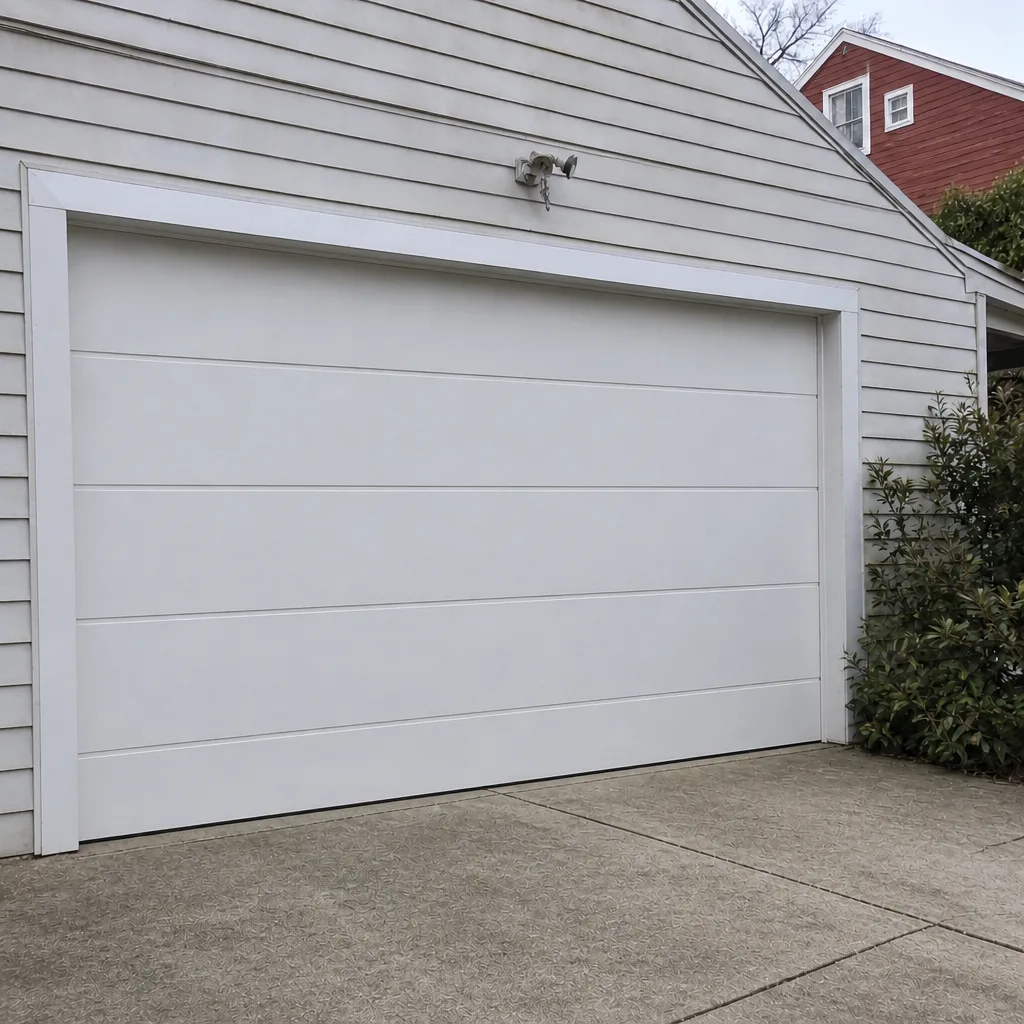
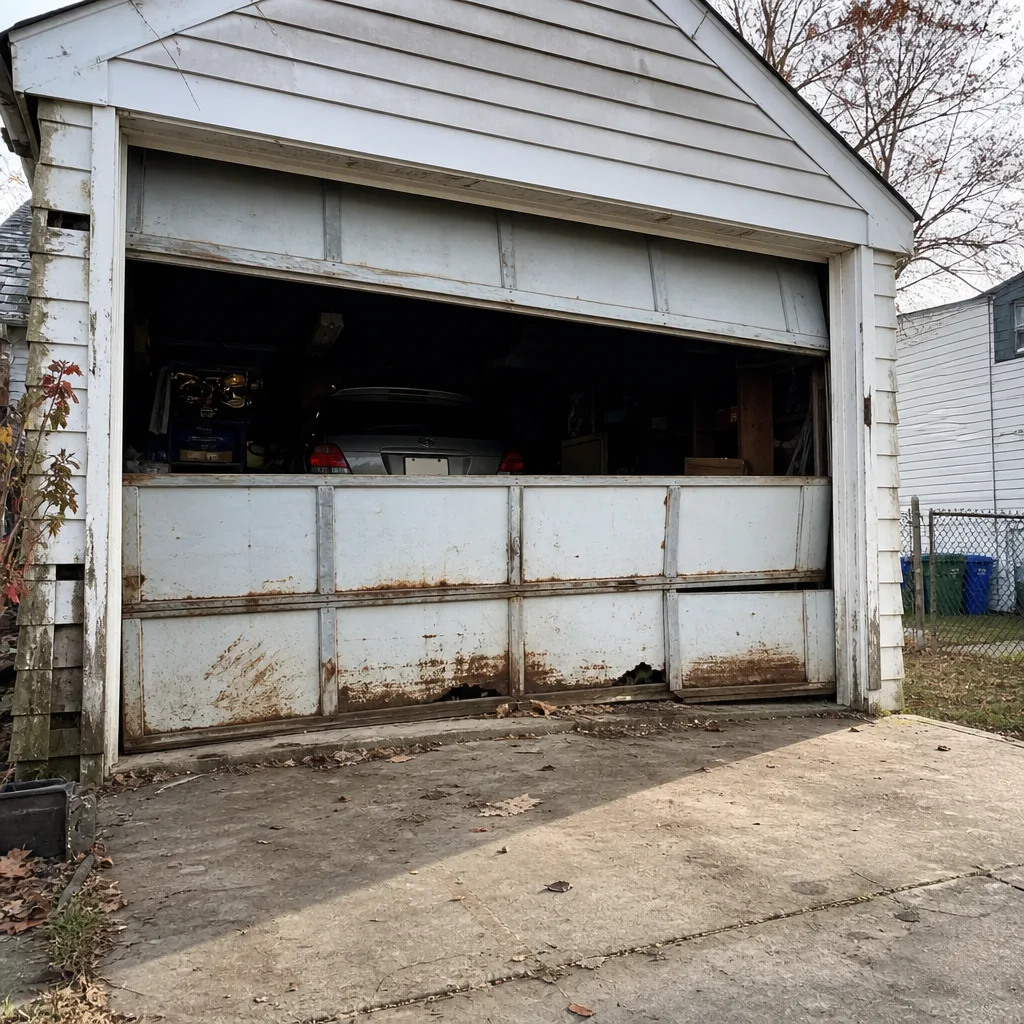
See the difference
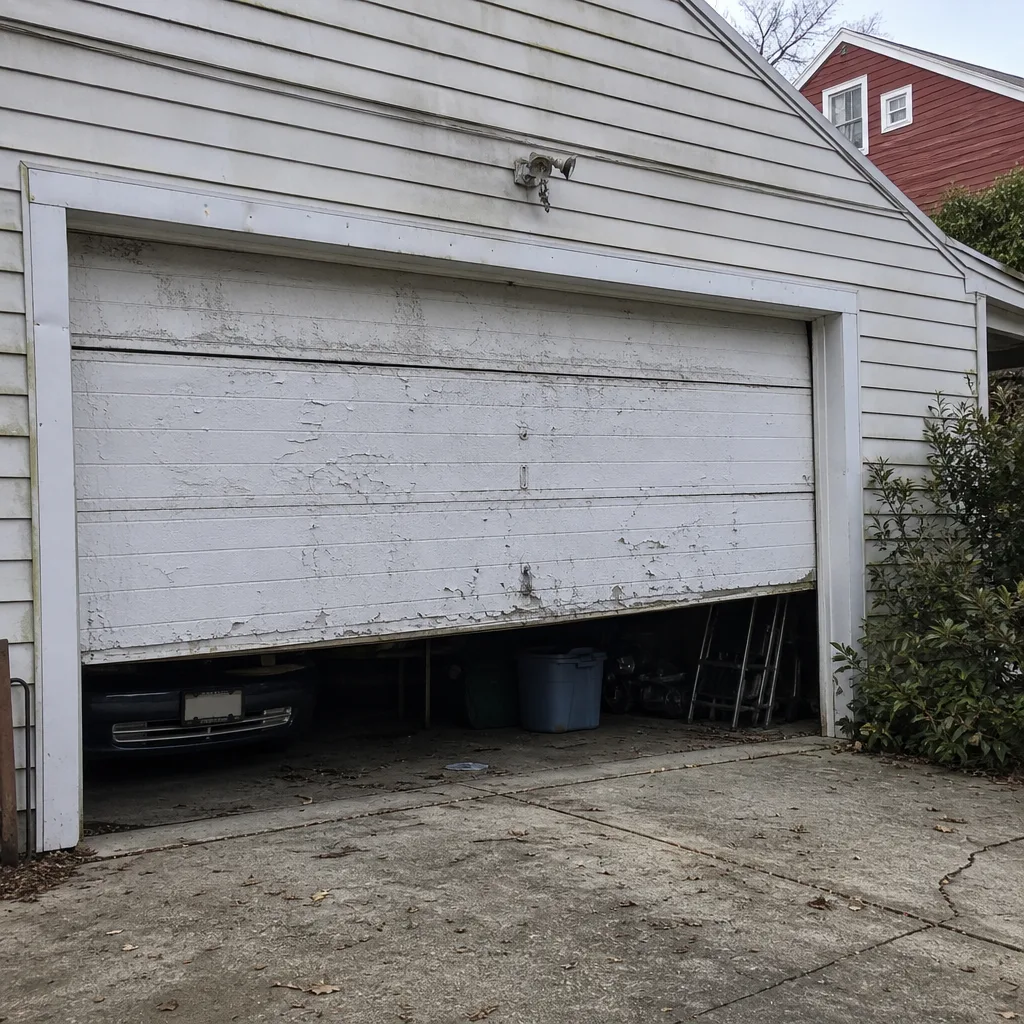 Before
 After
 Before
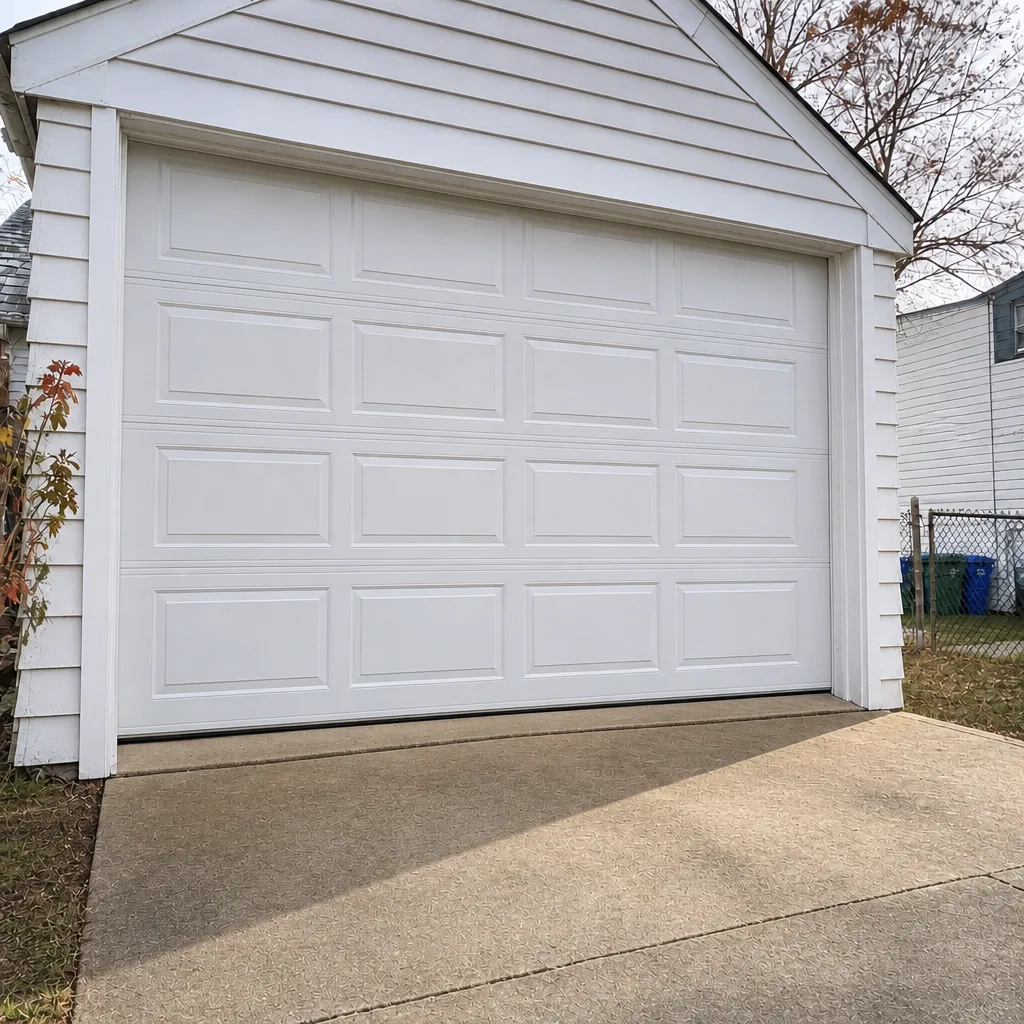 After
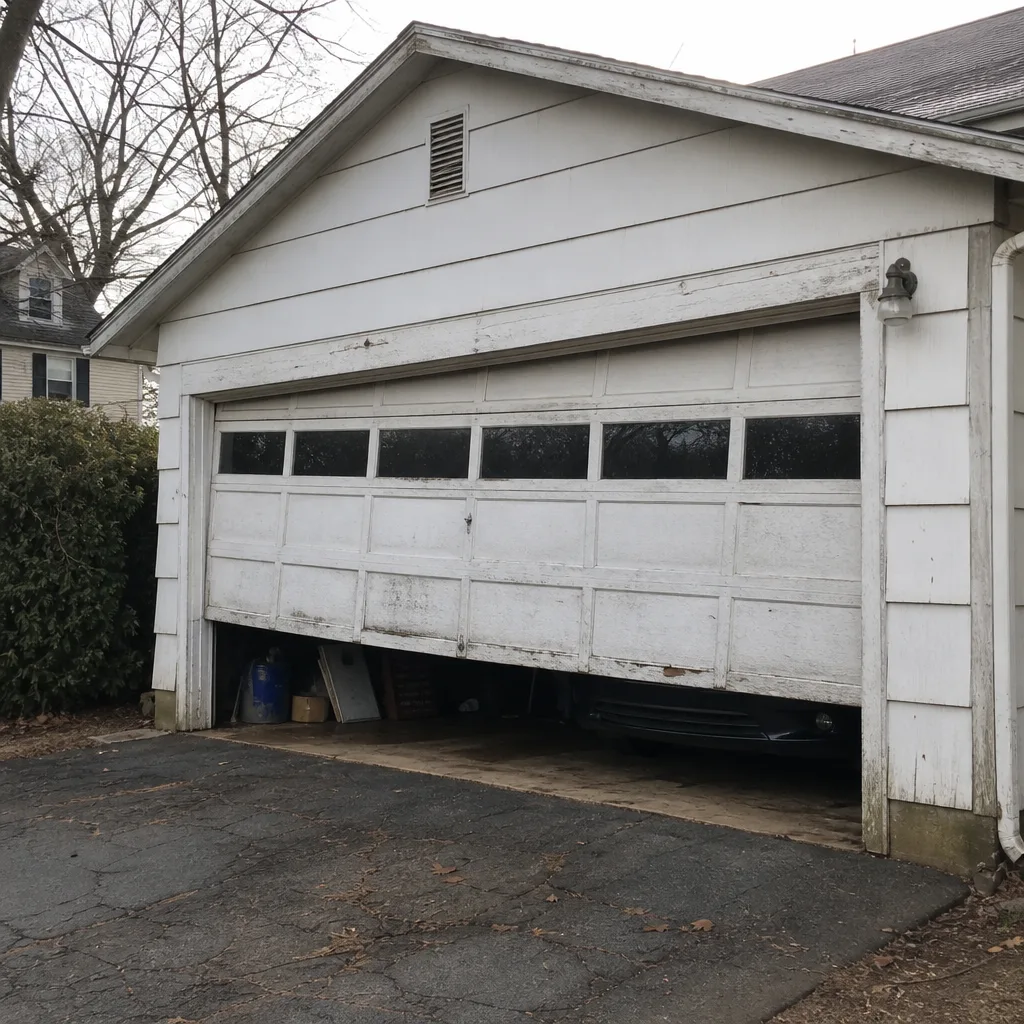 Before
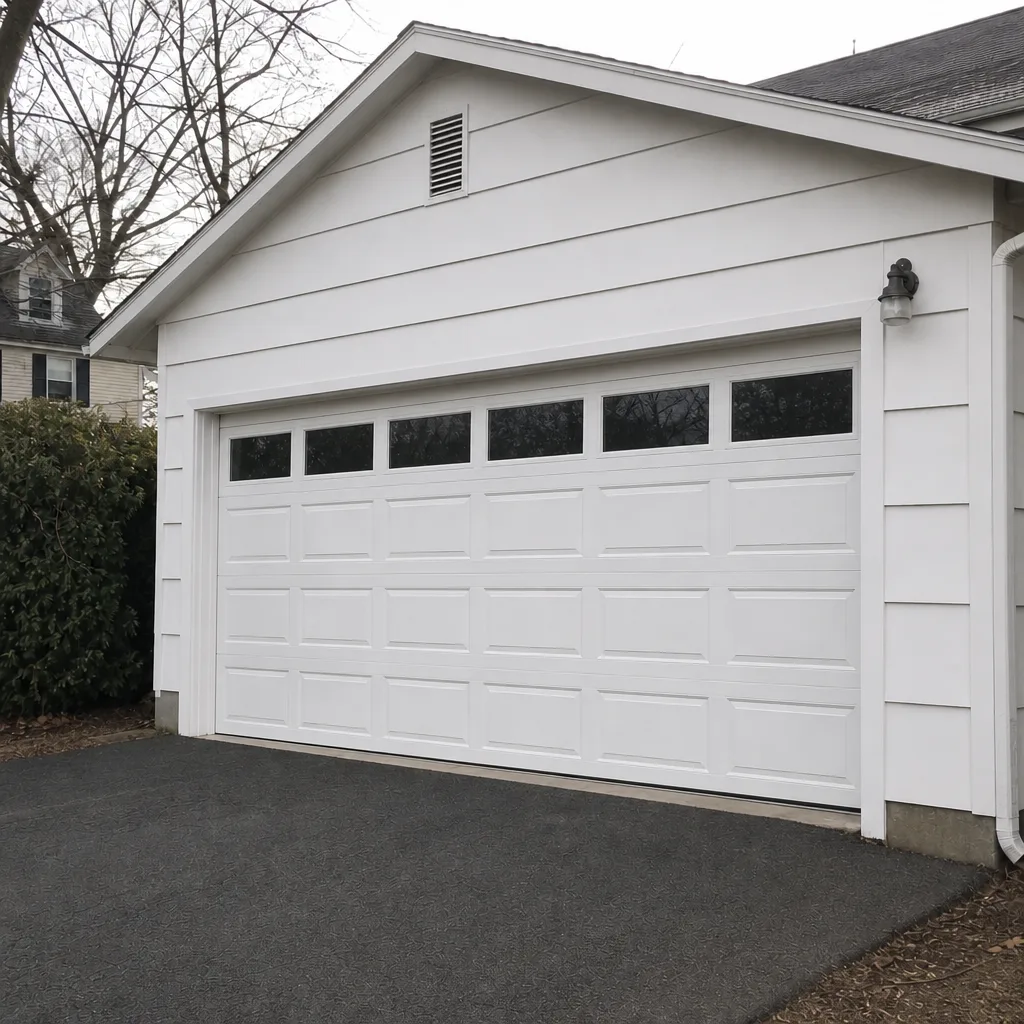 After
When to Call a Professional
Some fixes are homeowner territory: replacing a remote battery, clearing an obstruction from a sensor path, or resetting a tripped breaker. Other situations belong with a trained technician, and some are genuinely dangerous.
Call a professional when a spring breaks, when a cable is frayed or loose, when the door is off its track or hanging unevenly, when the opener reverses or fails to close, or when the door is too heavy to lift by hand. Torsion springs and cables are under high tension, and an improperly wound drum can cause serious injury. Don’t attempt to adjust them yourself. A door that comes down unexpectedly is the same category. For these, stop using the door and call.
New Haven Garage Door Repair Co offers free estimates in New Haven and handles repair, opener work, spring replacement, and full installation. We work on the major brands, diagnose before we quote, and confirm the price with you before any work starts. When your door fails, call (866) 476-7578.
Frequently Asked Questions
Verify the contractor’s Connecticut Home Improvement Contractor registration and insurance, ask brand-specific diagnostic questions on the phone, read reviews for process rather than stars, and insist on an on-site diagnosis before any price is quoted. Get the scope and price in writing, and confirm the price before work begins. Call (866) 476-7578 for a free estimate.
Connecticut does not issue a garage-door-specific license. Contractors performing home improvement work must hold a Home Improvement Contractor registration through the state Department of Consumer Protection, which confirms insurance and filing but does not test garage door competence. That’s why homeowner vetting matters so much here. Call (866) 476-7578 if you want to talk through what to ask before you book.
Spring repair is priced per spring, so a matched pair usually costs about twice the price of one. The range depends on the spring size, door weight, and access. Any price you’re given before the door is inspected is an estimate, and the written estimate is the price. Call (866) 476-7578 for a free estimate so we can diagnose first and quote accurately.
It shouldn’t, if the contractor diagnosed before quoting. The written estimate sets the price, and no work should start until you’ve agreed to it. If a quote was given sight unseen and changes on arrival, that’s a sign the diagnosis was skipped. Call (866) 476-7578 and we’ll explain the findings before we give you a number.
Replace both if they’re a matched pair. The two springs are installed together and wear together, so replacing one leaves the other near the end of its life. A pair costs about twice a single spring, but doing the job once is cheaper than doing it twice. Call (866) 476-7578 for an estimate on a pair.
Spring repair is often same-day when you call early, since it’s a safety-critical job we handle in-house. Emergency service is part of what we offer, not a premium add-on, so a door that fails and won’t open is a reason to call rather than wait. Call (866) 476-7578 and we’ll book you in.
The Bottom Line
Connecticut’s loose licensing is the reason this guide exists. Registration and insurance are the minimum; the rest is on you. Verify those first, then ask the five competence questions and watch how they’re answered. Read reviews for process, not star averages. Demand a diagnosis before a quote, get the scope in writing with named parts, and don’t sign anything vague. Confirm the price before work starts, and walk away from same-day pressure on anything that isn’t an emergency. Do that, and you’ll end up with a technician who fixes the actual problem. Call (866) 476-7578 for a free estimate in New Haven.
Written by the team at New Haven Garage Door Repair Co.