Last updated November 21, 2026
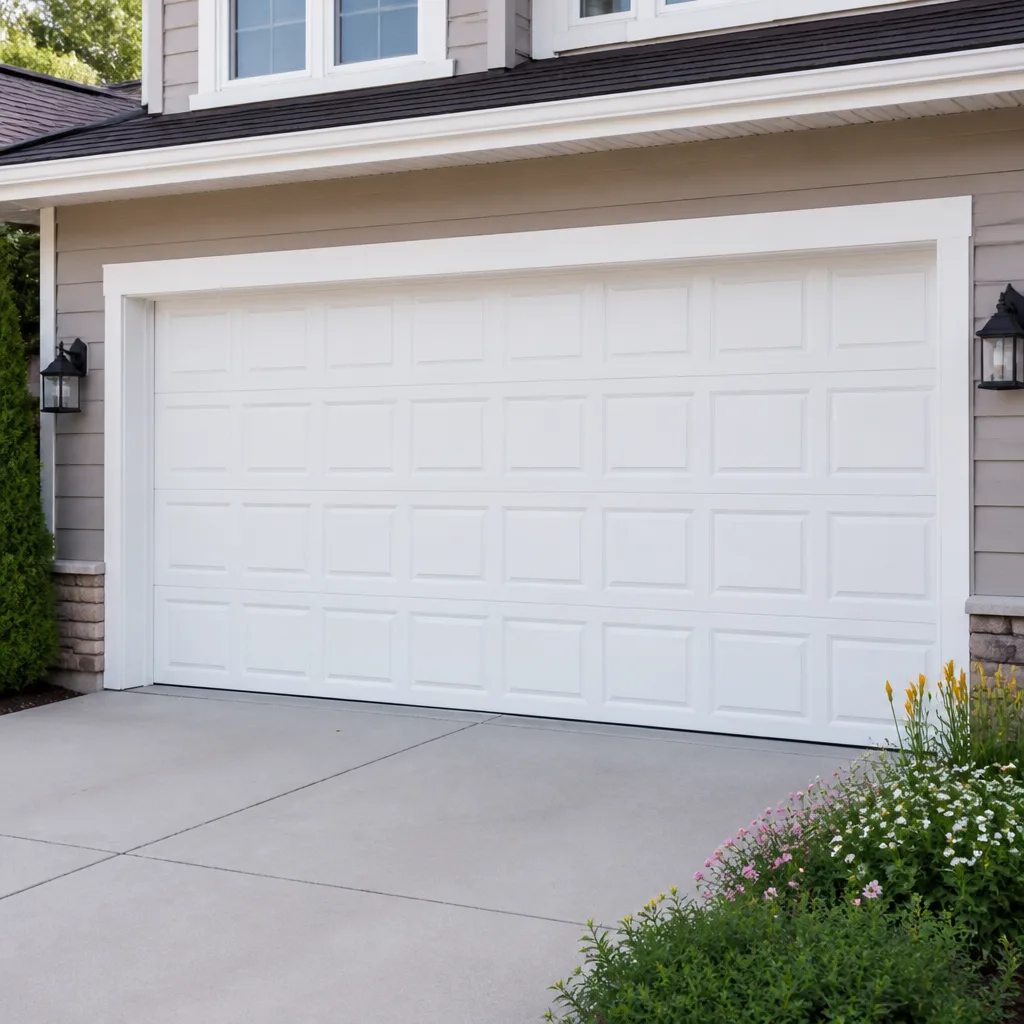 Raised-panel steel
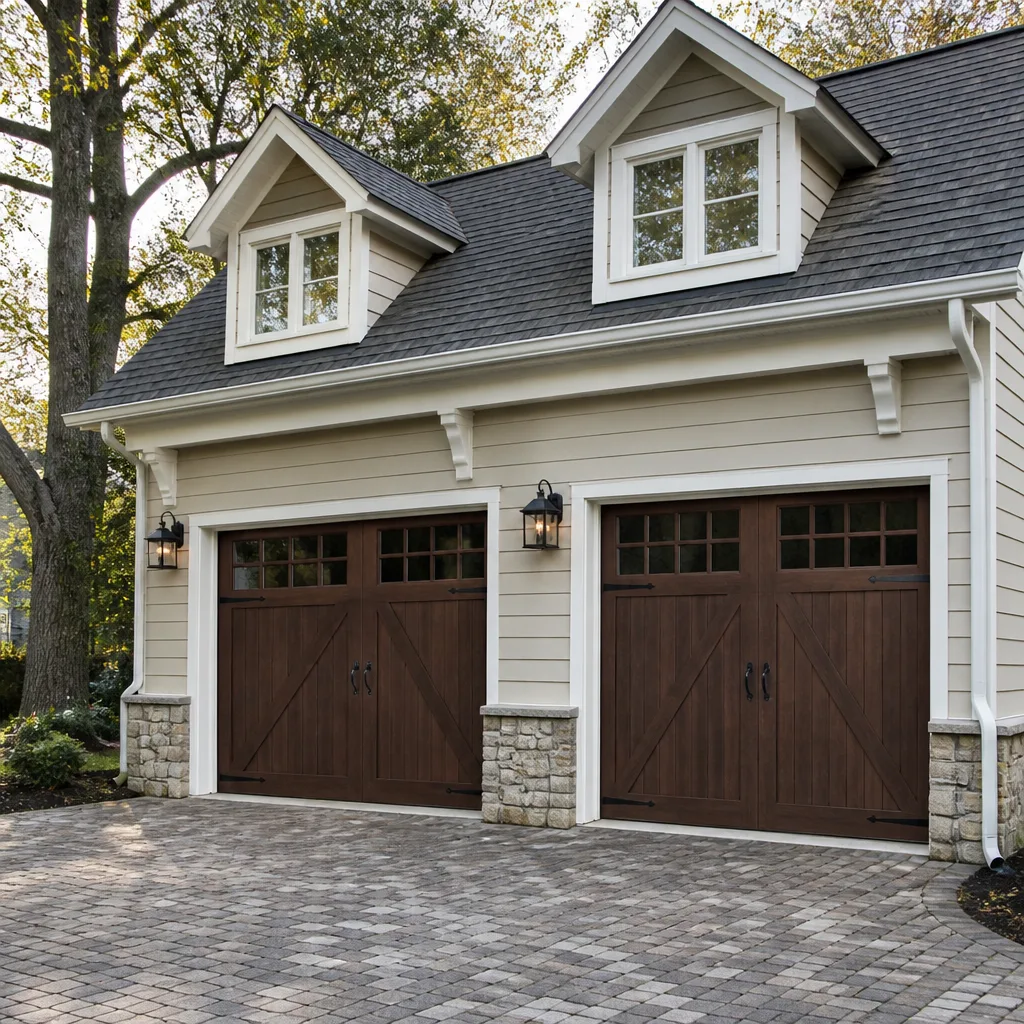 Carriage house
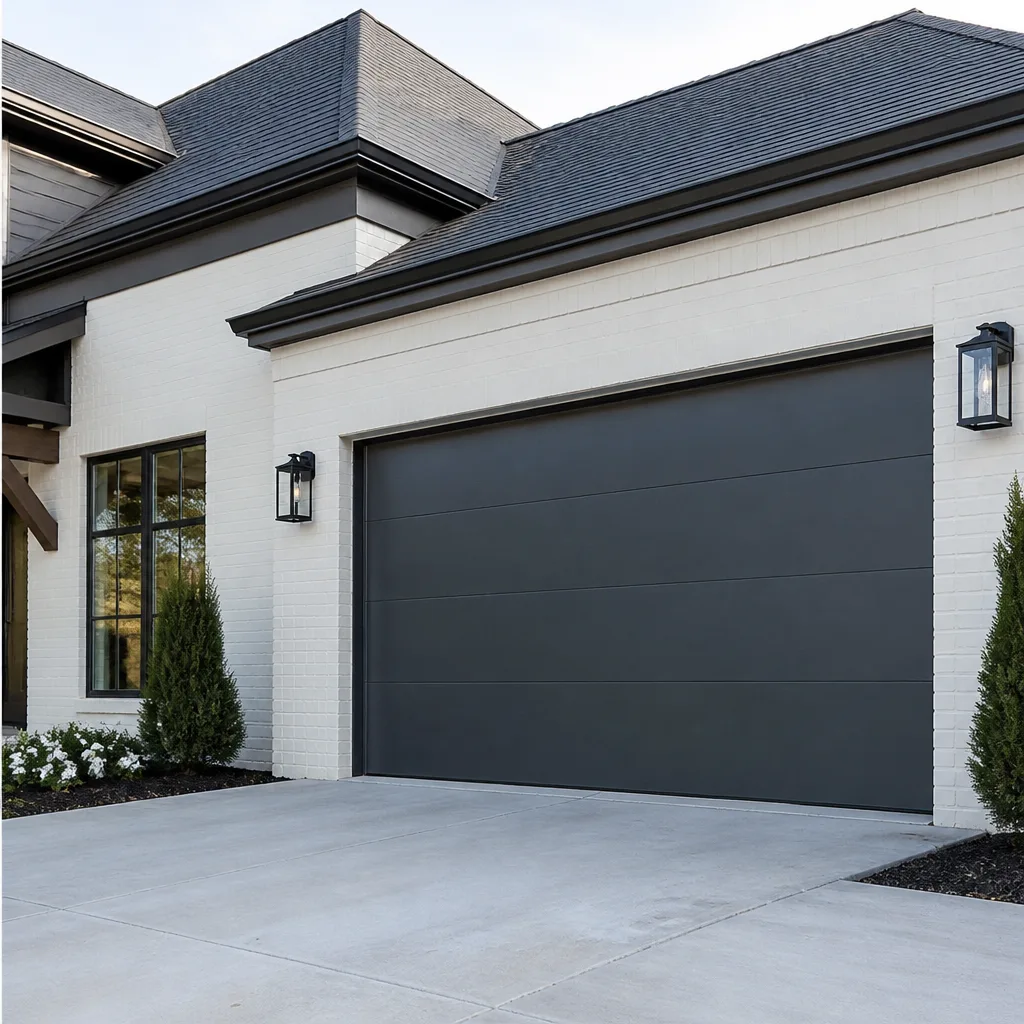 Modern flush
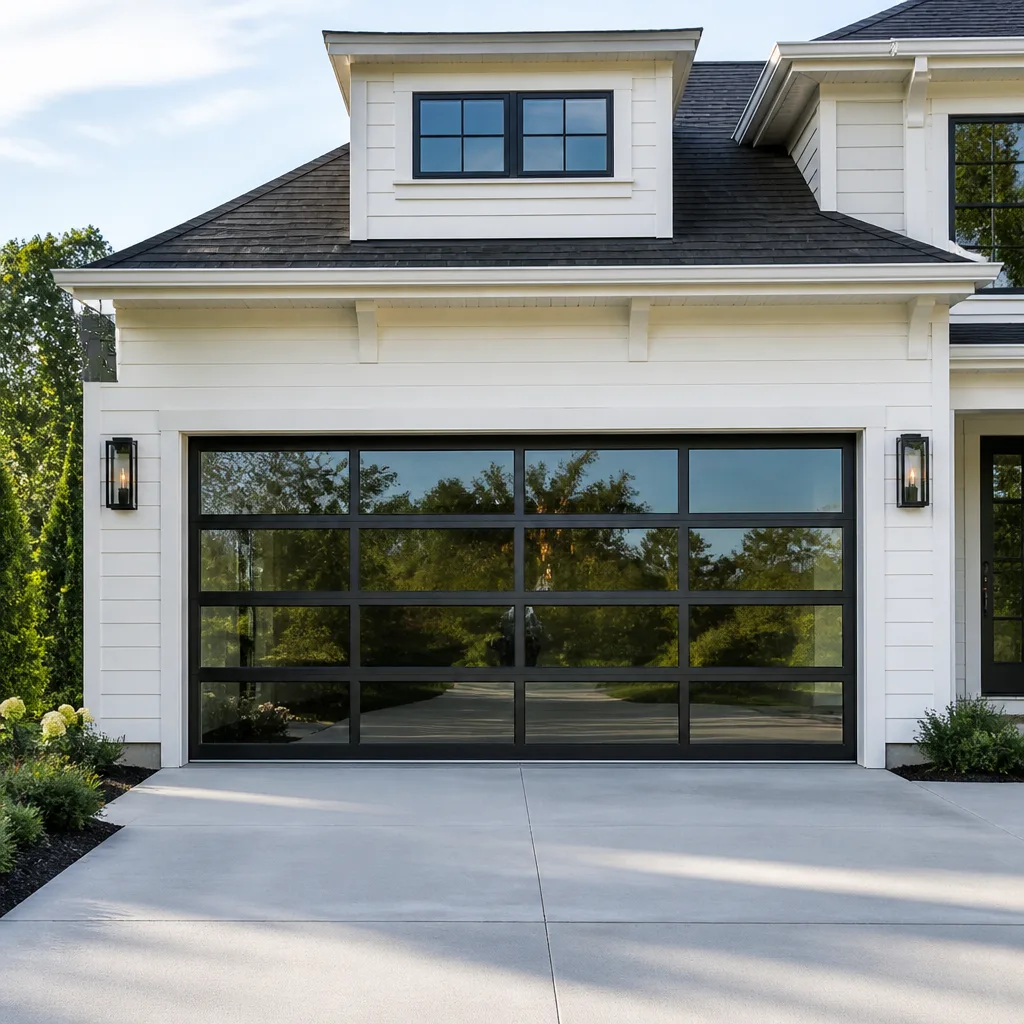 Full-view glass
 LiftMaster openers
 Chamberlain openers
Full 25-point door and opener safety check with every visit - springs, cables, rollers, tracks, and your LiftMaster or Chamberlain opener included
You get a price before we start. It does not change when the pro arrives.
Get your free estimateDIY vs Professional Garage Door: The New Haven Homeowner’s Decision Guide
Most homeowners ask the DIY question the wrong way. They ask “am I handy enough to fix this?” when the better question is “does this specific task carry energy or load that a careful person can’t safely manage at home?” A torsion spring holds a stored force that releases in a fraction of a second, and it does not behave the way a video filmed in a controlled shop makes it look. That gap between how a repair looks on screen and how it behaves in a New Haven garage is where the real decisions live. This guide draws the line precisely, task by task, so you can decide based on mechanics rather than marketing.
Quick Answer
Some garage door work is genuinely safe for a prepared homeowner: swapping rollers, replacing weatherstripping, lubricating moving parts and realigning safety sensors. Anything involving torsion springs, cables, cable drums or structural header work is a professional job because the stored energy can cause serious injury, and no amount of care substitutes for proper winding bars and training. If the repair touches the spring system or the door’s structural attachment, call a pro.
Styles & brands we work with
- Raised-panel steel
- Carriage house
- Modern flush
- Full-view glass
- LiftMaster openers
- Chamberlain openers
Table of Contents
- What garage door repairs are actually safe to DIY?
- Which repairs belong to a professional, and why?
- What does DIY really cost once you add it all up?
- Why New Haven’s older homes make DIY harder
- What happens to your insurance if a DIY repair fails?
- Openers and smart systems: DIY or not?
- How to choose a garage door pro in New Haven
- Common mistakes to avoid
What garage door repairs are actually safe to DIY?
Roller replacement, weatherstripping, lubrication and safety sensor alignment are the four jobs a careful homeowner can usually handle with basic tools. None of them involve stored spring tension or a load that can snap back. They’re also the jobs where a small mistake shows up slowly rather than violently: a stiff roller squeaks, a worn seal lets in drafts, a misaligned sensor stops the door from closing. You’ll notice a problem before it becomes dangerous.
Here’s what each of those safe jobs involves, and where the limits are:
- Roller replacement. With the door fully closed and the opener disconnected, the rollers slide out of their hinges. Nylon rollers run quieter than steel and last longer. If a hinge is bent or the track is dented, stop and get it looked at, because a bent track puts the door under lateral load.
- Weatherstripping. The bottom seal and the jamb seals are push-on or slide-in pieces. In New Haven, a cold winter and a humid summer work a bottom seal hard, so it’s one of the first pieces to crack. Replacing it is simple and low risk.
- Lubrication. A garage door has hinges, rollers, and a torsion tube that benefit from a proper garage door lubricant a couple of times a year. Don’t use heavy grease. A light, purpose-made spray keeps parts moving without attracting grit.
- Safety sensor alignment. The two small sensors at the bottom of the track need to see each other. If the door reverses for no reason, check that both lenses are clean, pointed at each other, and that the indicator lights are steady. That’s a five-minute fix.
What all four have in common is that they don’t touch the counterbalance system, which is the part of the door that stores force. That’s the dividing line.
Which repairs belong to a professional, and why?
Torsion spring winding, cable and cable drum replacement, and structural header work are professional jobs, full stop. The reason isn’t that these tasks require unusual intelligence. It’s that they involve stored mechanical energy and structural loads that a homeowner can’t safely control with retail tools, and the failure mode is sudden and violent rather than gradual. A wound torsion spring on a broken or slack cable doesn’t release gently. It releases all at once.
Here’s what each of those jobs actually involves and why the risk is real:
- Torsion spring winding. The spring is wound to a specific number of turns matched to the door’s weight. Winding requires two proper winding bars seated fully in the cone, and the technician keeps their body out of the release path. A bar that slips out of a partly wound spring can swing with enough force to break a wrist or worse. There’s no safe way to substitute a screwdriver or a homemade bar.
- Cable and drum replacement. The lift cables run from the bottom corner brackets up over the drums at each end of the torsion tube. A frayed cable is a warning sign, not a cosmetic issue. Replacing one means releasing spring tension first, and a cable that lets go under load can whip across the garage.
- Structural header work. If the opening has sagged, the header above it may need reinforcement or the track brackets may need repositioning. That’s carpentry and structural judgment, not a parts swap. Getting it wrong affects how the whole door hangs.
The winding and cable work is exactly what garage door spring repair covers. Spring repair is a safety job before it’s anything else, and it’s a core part of what we do rather than something we hand off. If your door won’t lift, or you’ve heard a loud bang from the garage, that’s a spring or cable failure and it’s time to stop and call.
What does DIY really cost once you add it all up?
The DIY total is almost always higher than the parts receipt suggests. Retail parts cost more than trade pricing, specialty tools add up, and the biggest line item is the cost of a professional fix when a DIY attempt goes wrong. A homeowner who replaces a spring with the wrong wind count can damage the opener, bend the torsion tube, or leave the door hanging out of balance, and that’s a bigger job than the original repair.
Here’s how the true cost comparison breaks down by task:
- Spring repair. A single torsion spring repair in the New Haven area typically runs $180 to $340 depending on the door and spring type. A matched pair is usually replaced together, so a pair costs about twice a single spring. The DIY version means buying springs at retail, sourcing two proper winding bars, and accepting the injury risk. In our experience, the retail savings rarely cover the risk, and a failed attempt resets the job to a professional repair plus whatever got damaged.
- Cable and drum replacement. This depends on the door, the cable configuration, and whether the drums need replacing too, so it’s quoted on inspection. The DIY path involves releasing spring tension, which is the same risk as a spring job, so the true cost has to include the injury exposure.
- Roller and weatherstripping replacement. These are genuinely economical to DIY. Parts run modestly at any hardware store, and the tools are a screwdriver and a utility knife. This is where DIY makes sense.
- Opener repair. Depends on the fault and the brand. A capacitor or a gear kit swap on a LiftMaster or a Craftsman is a reasonable DIY project for someone comfortable with low-voltage work, but diagnosing the fault is where most homeowners get stuck. That’s why a proper garage door opener repair starts with diagnosis, not a parts guess.
- New door installation. A full replacement is measured, ordered, and scheduled, and the panels ship to fit. DIY installation on a new door means handling a large, heavy assembly and getting the track, spring, and opener aligned together. The failure rate on first-time installs is high and the warranty on the door often depends on professional installation.
Whatever route you take, the written estimate sets the final price on any professional job. We quote and agree the price before any work starts, so there are no surprises on the invoice. Estimates are free, so the comparison costs you nothing.
| Task | DIY Feasibility | Typical Professional Cost |
|---|---|---|
| Roller replacement | Safe for a prepared homeowner | Modest, often bundled with a tune-up |
| Weatherstripping / bottom seal | Safe for a prepared homeowner | Modest |
| Lubrication and adjustment | Safe for a prepared homeowner | Modest |
| Safety sensor alignment | Safe for a prepared homeowner | Minimal, often part of a service call |
| Single torsion spring | Not recommended | $180 to $340 typical |
| Matched spring pair | Not recommended | About twice a single spring |
| Cable or drum replacement | Not recommended | Quoted on inspection |
| Opener repair | Case by case | Quoted on inspection |
| New door installation | Not recommended | Quoted after measure |
Why New Haven’s older homes make DIY harder
New Haven’s older housing stock is full of uneven garage floors, out-of-square openings, and doors that have been re-hung a time or two. That matters for DIY because tutorials assume a square opening and a level floor. When the floor slopes toward the door, the bottom seal doesn’t sit flat, and when the opening is out of square, the track runs slightly off vertical and the rollers bind at one end. A homeowner following a video on a level floor can’t reproduce the same result in a garage that settled a hundred years ago.
What we see in older New Haven garages, in general terms rather than any one property:
- Garage floors that slope toward the apron for drainage, which changes how the bottom seal contacts the ground.
- Openings that are slightly out of square after a century of settling, so the track has to be shimmed to keep the door running true.
- Doors that were re-hung at some point with mismatched springs, so the left and right sides carry different tension.
- Wood jambs that have swollen and shrunken through freeze-thaw cycles, which affects how the weatherstripping seats.
- Opener rails that were mounted years ago and have drifted out of alignment with the door’s travel path.
Each of those is a small complication on its own. Stack two or three together and a straightforward DIY roller swap can turn into a door that won’t close properly. The fix is usually simple once you know what to look for, but it’s the kind of judgment that comes from working on New Haven doors rather than any door.
What happens to your insurance if a DIY repair fails?
A failed DIY repair can affect your homeowner’s insurance coverage on the resulting damage, and the specifics depend on your policy, so read it before you decide to go DIY on a spring or cable. Here’s the general picture rather than a promise about your particular carrier. A spring that lets go and damages the door, the opener, or a parked car is one thing. A repair that a homeowner performed incorrectly and which then fails is a different conversation, and insurers may look at that differently.
Two practical points:
- Document what you did. If you replace a roller or a seal, keep the receipt and a note of what you changed. That doesn’t replace a professional inspection, but it shows the work was done sensibly.
- Don’t DIY on the structural side. Header work, spring winding, and cable replacement are the three areas where a failed repair is most likely to be read as a homeowner-performed job that shouldn’t have been attempted. That’s not a legal judgment, just the practical reality. When the work is done by a vetted local professional who is licensed and insured as their state requires, the responsibility picture is clearer.
If you’re not sure whether a repair is DIY-safe, that uncertainty is the answer. Call us at (866) 476-7578 and we’ll tell you whether it’s a job you can handle or one that needs a pro. That call is free.
Openers and smart systems: DIY or not?
Openers sit in a middle zone. Replacing a remote or re-pairing a keypad is a homeowner job. Diagnosing why a door reverses mid-travel, why the opener runs but the door doesn’t move, or why a smart app has lost connection is usually a professional diagnosis. The opener itself isn’t dangerous the way a spring is, but a missed diagnosis on a LiftMaster or a Genie sends homeowners down a parts-replacement rabbit hole that costs more than the fix.
That’s where brand familiarity matters. Contemporary openers from LiftMaster, Chamberlain, Genie, and Craftsman each fail in slightly different ways. A Craftsman that runs but doesn’t lift is usually a gear or capacitor issue. A LiftMaster that beeps and reverses is often a sensor or travel-limit problem. A Genie with a flashing light is telling you a specific thing through its diagnostic code. Diagnosing by brand behavior is faster than guessing, and it saves the cost of swapping parts that weren’t the problem.
Smart-connected openers add a layer. If the app works but the wall button doesn’t, the problem is on the wall-control side. If the wall button works but the app doesn’t, it’s usually the Wi-Fi module or the pairing, not the opener’s motor. Knowing which side of that split you’re on is half the repair. Our technicians have up to 9 years of experience across both legacy and smart-connected systems, and we work on your brand rather than a generic one-size diagnosis.
On a new opener installation, the work is measured and scheduled rather than same-day. That’s not because it’s slow; it’s because we want to get the rail, the travel limits, and the safety reverse dialed in correctly the first time. You get a free measure and a written price before anything is ordered.
How to choose a garage door pro in New Haven
Choosing a pro is mostly about specificity. A company that names the brands it services, explains how it diagnoses a spring versus a cable, and quotes in writing before starting is showing its work. A company that talks in generalities about quality and customer service is telling you less. This is the same reason you’d rather talk to a mechanic about your specific model than about “cars” in general.
Here’s what to look for when comparing bids:
- Brand-specific service. Ask which brands they’re familiar with. We’re certified across LiftMaster, Chamberlain, Genie, Clopay, Amarr, Wayne Dalton, Craftsman, and Raynor, and we reference those names specifically because diagnosis is brand-dependent.
- In-house spring work. Spring repair is a safety job that some generalists avoid or subcontract. Ask whether the company that answers the phone is the one that does the winding.
- Emergency availability. Not every garage door company offers true emergency response. Ask how a failed door gets handled when it happens outside a normal appointment.
- Written estimates. The written estimate should state the price and the scope before work starts. If a company won’t put it in writing, that’s your answer.
- Full-spectrum capability. The same company that repairs your door should be able to replace it when the time comes. That means repair, opener work, spring work, and full installation under one relationship.
Compare the bids on the same scope and the same brands. A low bid that excludes spring work isn’t a lower price; it’s an incomplete one. For a full repair quote, start with garage door repair and we’ll tell you what the job actually involves.
Common Mistakes to Avoid
- Winding a torsion spring with improvised tools. A screwdriver or a piece of rebar is not a winding bar. The spring can release without warning, and the injury is serious. Use a trained professional for any spring job.
- Cutting a cable under tension. The lift cables are under load from the spring system. Never cut or release one without first releasing the spring tension safely, which is a professional step.
- Buying a generic replacement spring without matching the door. Springs are specified by wire size, inside diameter, and length, and they have to match the door’s weight and the number of cycles you want. A wrong spring shortens the door’s life and can strain the opener.
- Assuming the floor is level. New Haven garages are often on sloped floors. If you set the bottom seal and the track assuming level, the door won’t seat right and the seal will wear through on one side.
- Ignoring a frayed cable because the door still works. A frayed cable is a warning sign, not a cosmetic issue. It can let go under load, and that’s when the damage is worst. Have it checked.
- Forgetting to disconnect the opener before a roller swap. Forgetting this step is the most common reason a homeowner gets a surprise when a remote fires off mid-repair. Always pull the release and confirm the door doesn’t move under power.
- Assuming the warranty covers DIY work. Door and opener warranties often depend on professional installation or repair. If a DIY repair causes damage that the warranty would have covered, you may not be covered.
See the difference
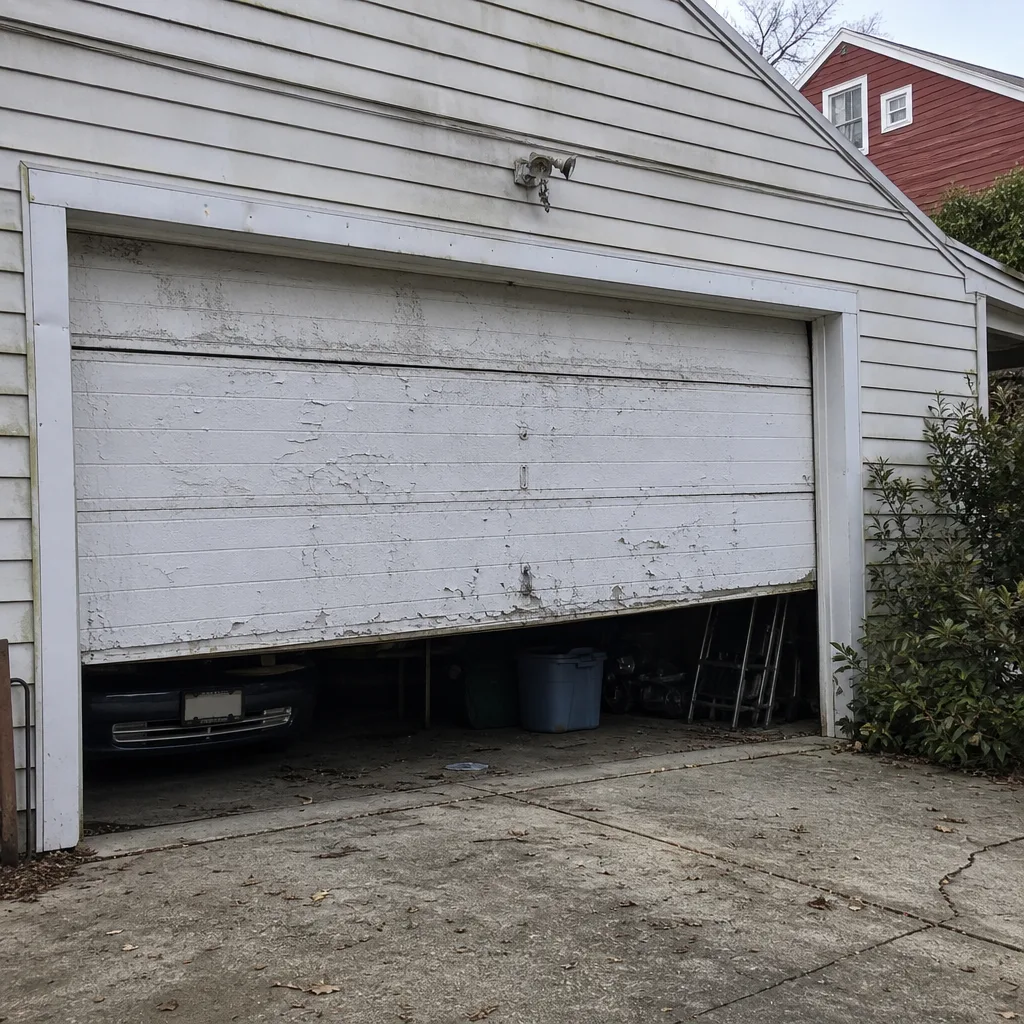 Before
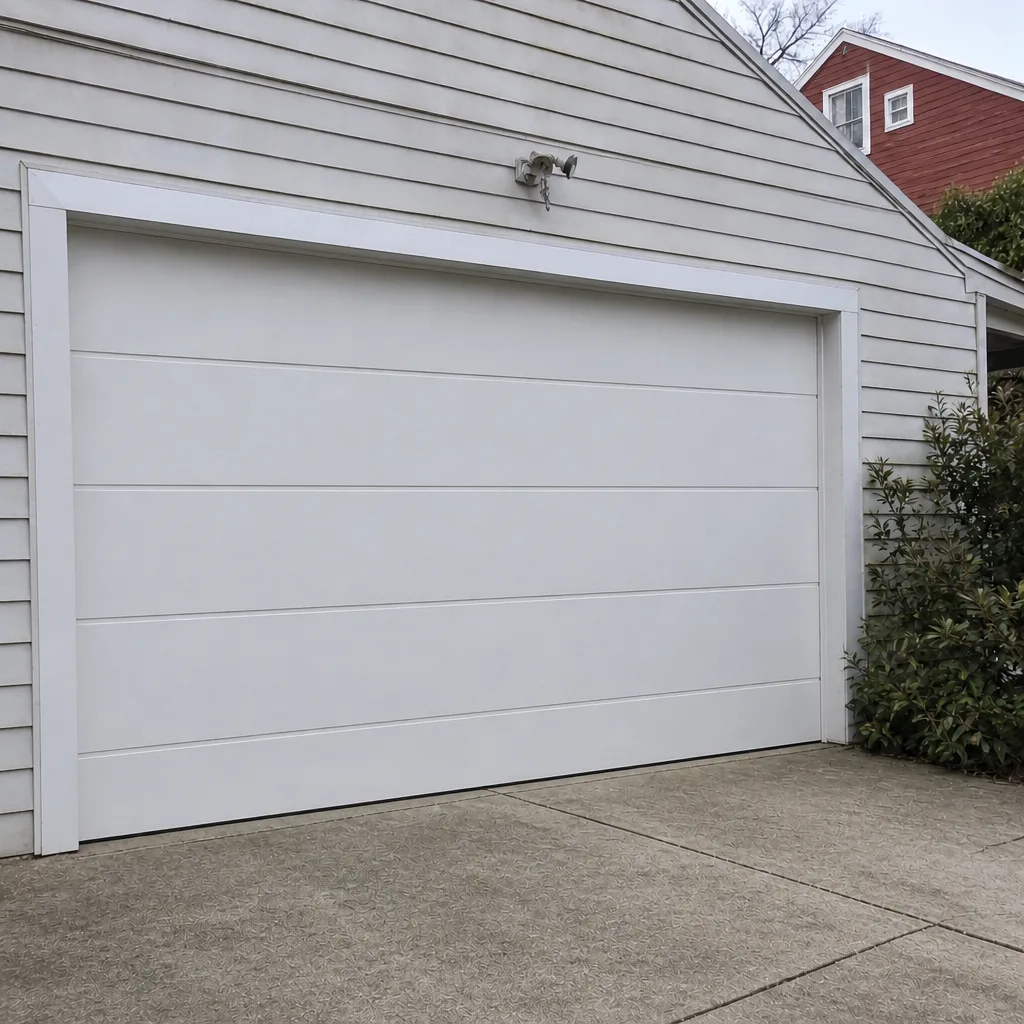 After
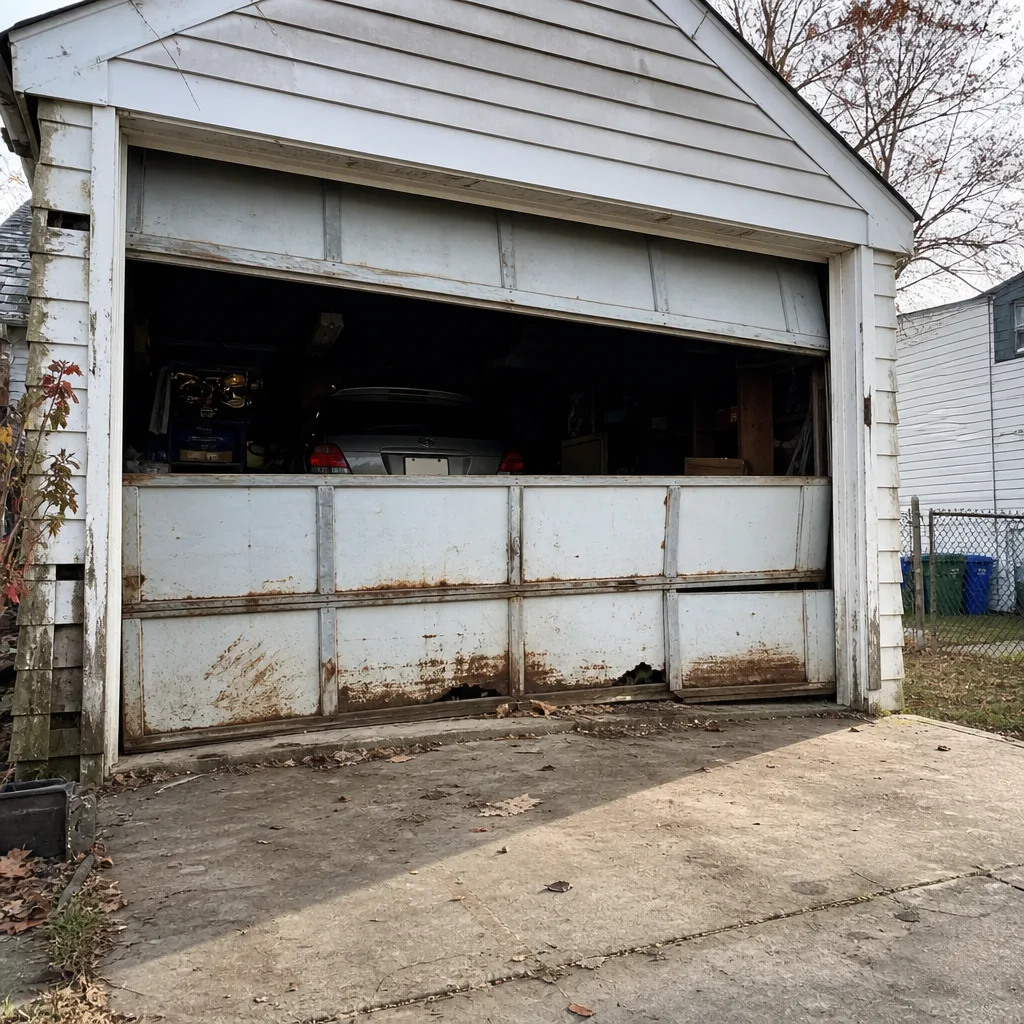 Before
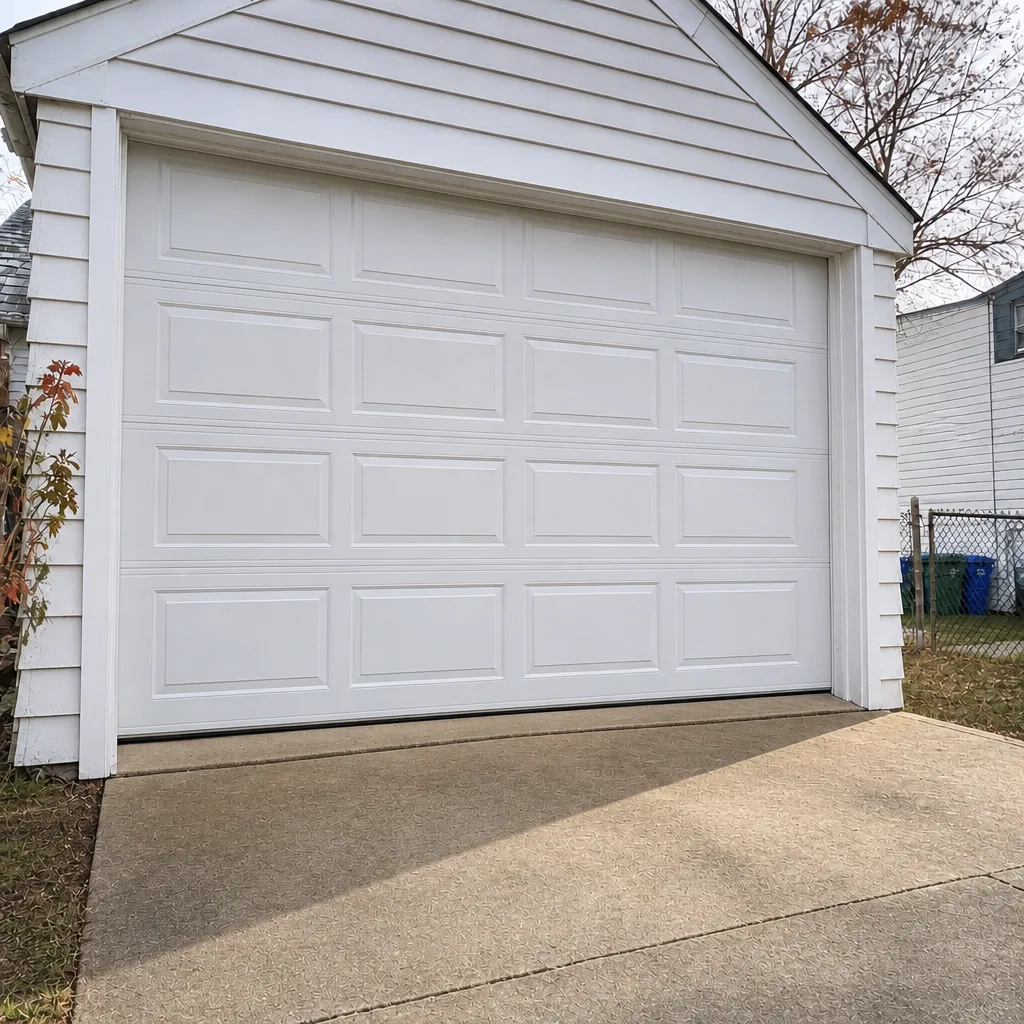 After
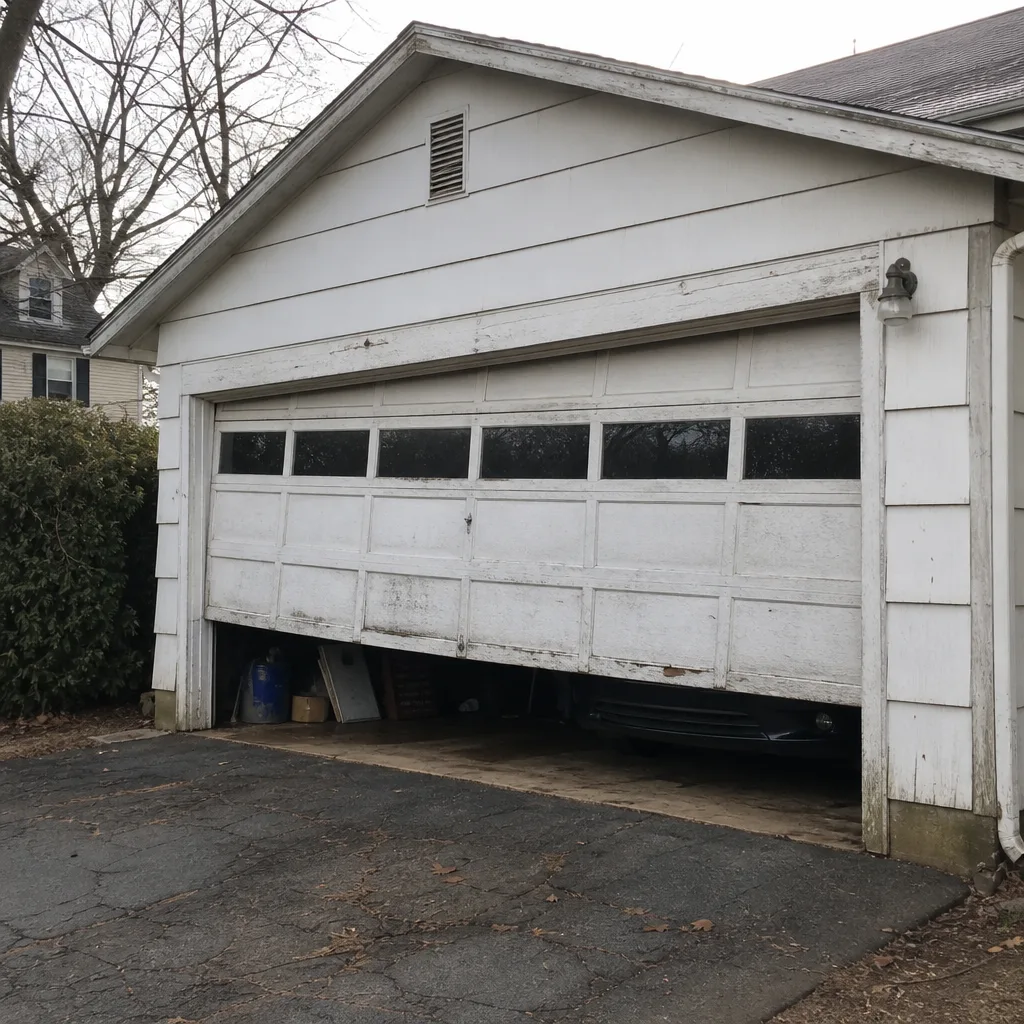 Before
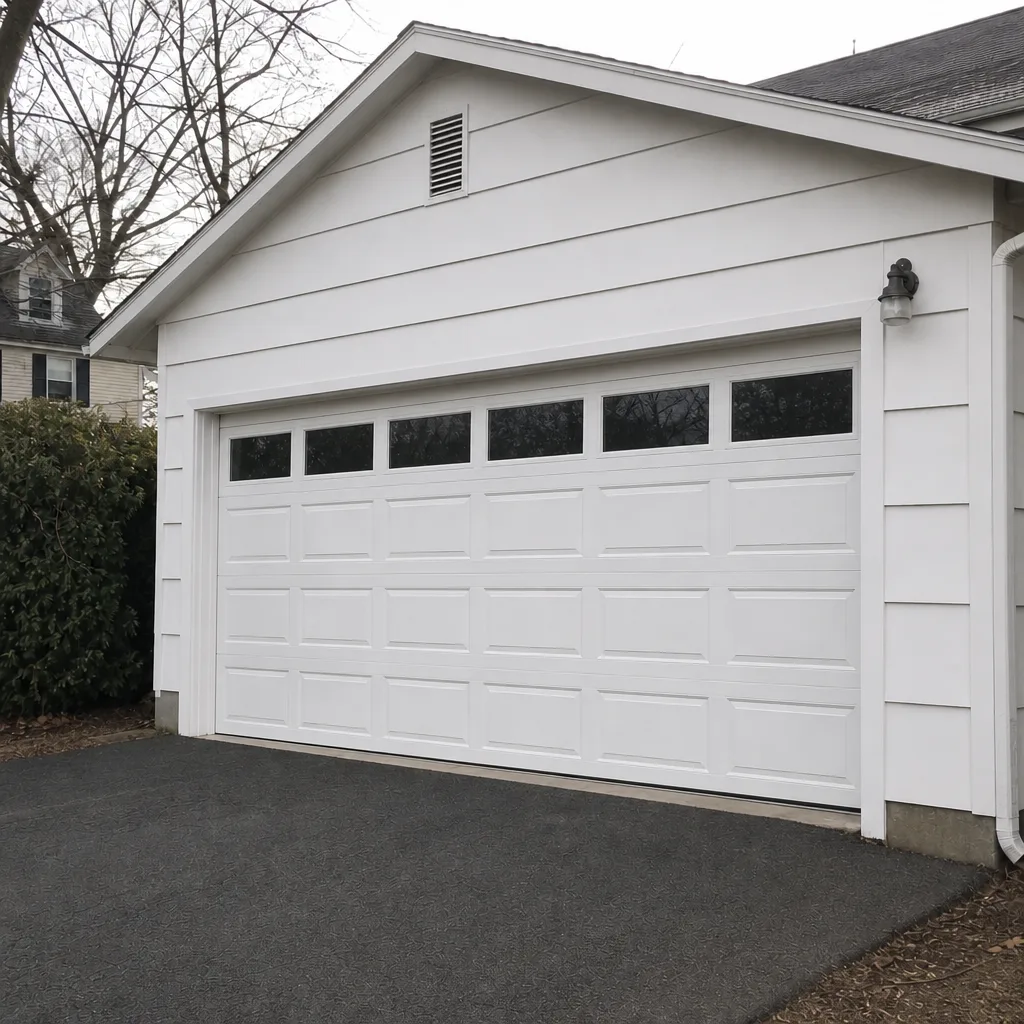 After
When to Call a Professional
Call a pro when the repair touches the spring system, the cables, the drums, the structural header, or a newly installed door. Call when the door comes off its track, when a cable is frayed, when the door won’t lift under manual power, or when you hear a loud bang from the garage. Those are the moments where the risk moves from slow wear to sudden release, and where skill cannot substitute for the right tooling and training. If the door is off its track, don’t run the opener, because the motor can drag the door further out of alignment. The same applies to a door that’s hanging unevenly or one side that’s dropped. New Haven Garage Door Repair Co offers free estimates in New Haven, and if the door has failed and you need it back to working order quickly, call (866) 476-7578. Emergency service is part of what we offer as a standard, not a premium tier.
Frequently Asked Questions
No, spring replacement is not a safe DIY job. The torsion spring stores enough energy to break a wrist or worse during release, and winding requires two proper winding bars and training. Call a professional for spring work rather than risk an injury. Call (866) 476-7578 for an exact quote, and estimates are free.
A single torsion spring repair in the New Haven area typically runs $180 to $340, and a matched pair is usually replaced together, so a pair costs about twice a single spring. The written estimate sets the final price before any work starts. Call for an exact quote; estimates are free.
For rollers, weatherstripping, lubrication, and sensor alignment, DIY is usually cheaper because parts are modest and the tools are basic. For springs, cables, drums, and installation, the true DIY total is usually higher once you add retail parts, specialty tools, and the cost of a professional fix when an attempt goes wrong. Call for an exact quote on the professional side, and estimates are free.
We offer emergency garage door service, so call and we’ll tell you what’s available on the day. If a door has failed and it’s blocking a car or leaving the garage open, that’s the kind of job we prioritize. Call (866) 476-7578 and we’ll start from there.
No, we quote and agree the price before any work starts. If we open a door and find a bigger issue than expected, we stop and talk to you before doing anything that would change the price. The written estimate is the number you’ll see on the invoice. Call for an exact quote and we’ll put it in writing before we begin.
The local pro we connect you with is licensed and insured as their state requires. Our technicians have up to 9 years of experience across the major brands, and we work on your brand rather than a generic one. If you’re comparing bids, ask the same question of every company you contact. Call (866) 476-7578 for a free estimate.
The Bottom Line
The DIY question for a garage door isn’t about whether you’re handy enough. It’s about which tasks carry stored energy that a careful person can’t safely manage at home, and that line runs through the spring system and the structural attachment. Rollers, weatherstripping, lubrication and sensor alignment are yours to handle. Springs, cables, drums, header work and full installation belong to a professional with proper tooling and training. In New Haven’s older garages, uneven floors and out-of-square openings make the pro jobs even more of a pro job. When the repair crosses that line, or when the door has failed and you want it back to working order, New Haven Garage Door Repair Co is here for it: New Haven Garage Door Repair Co covers repair, opener work, spring work and new installation, so one call covers it. Call (866) 476-7578 for a free estimate, and we’ll give you a written price before any work starts.
Written by the team at New Haven Garage Door Repair Co.