Last updated November 21, 2026
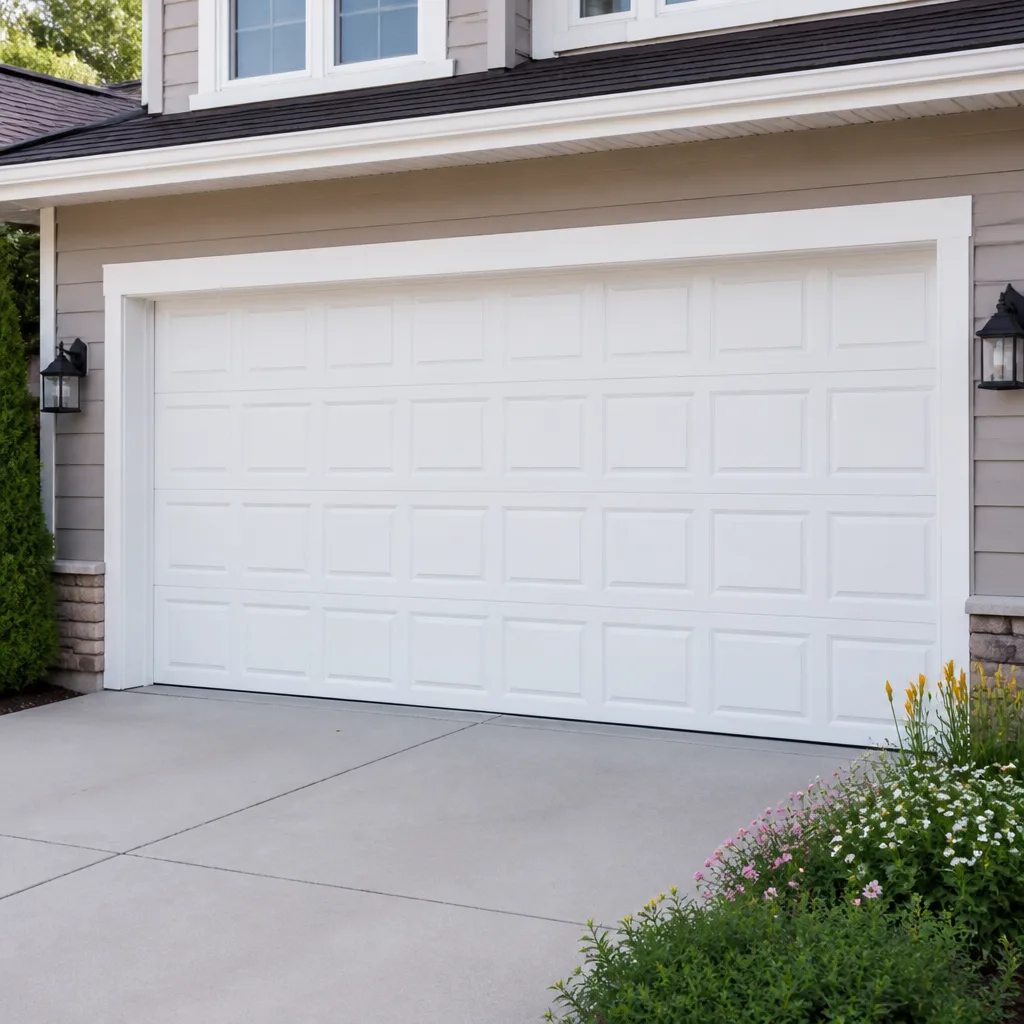 Raised-panel steel
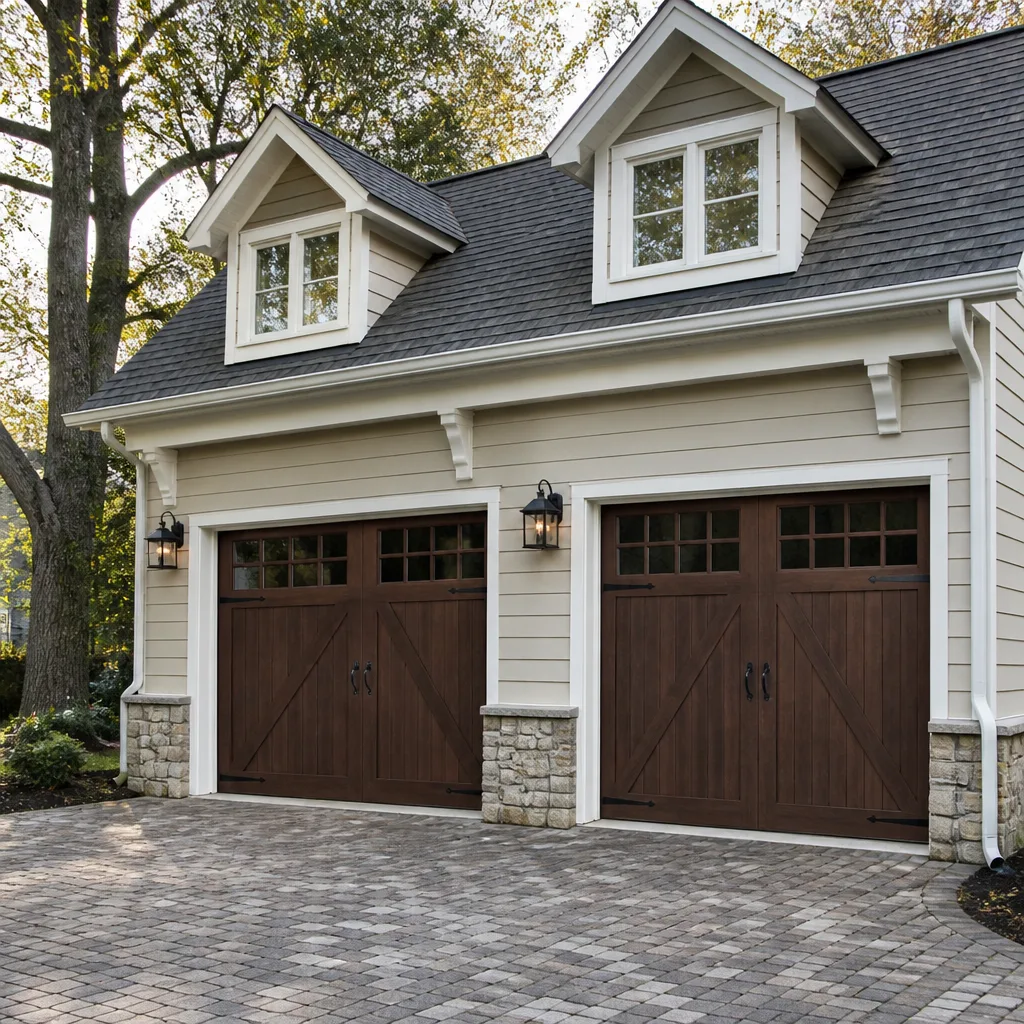 Carriage house
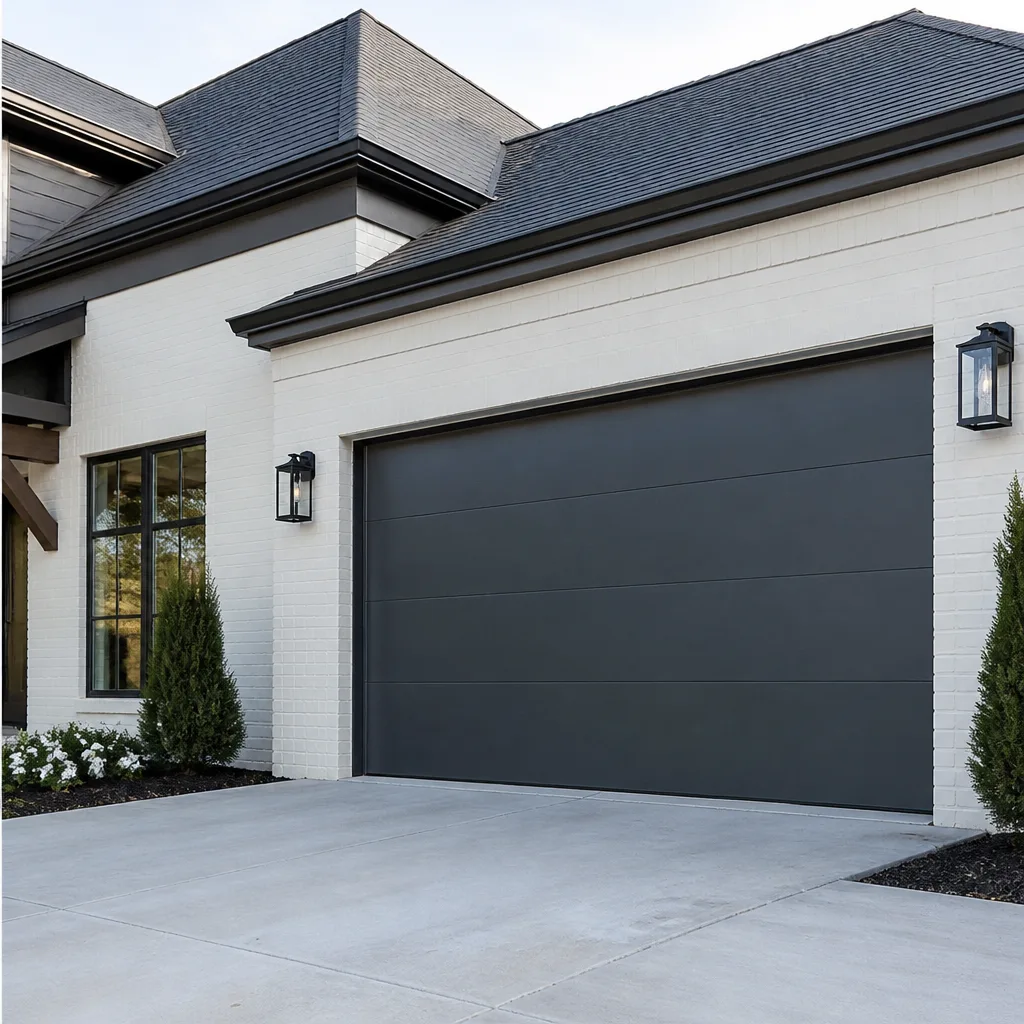 Modern flush
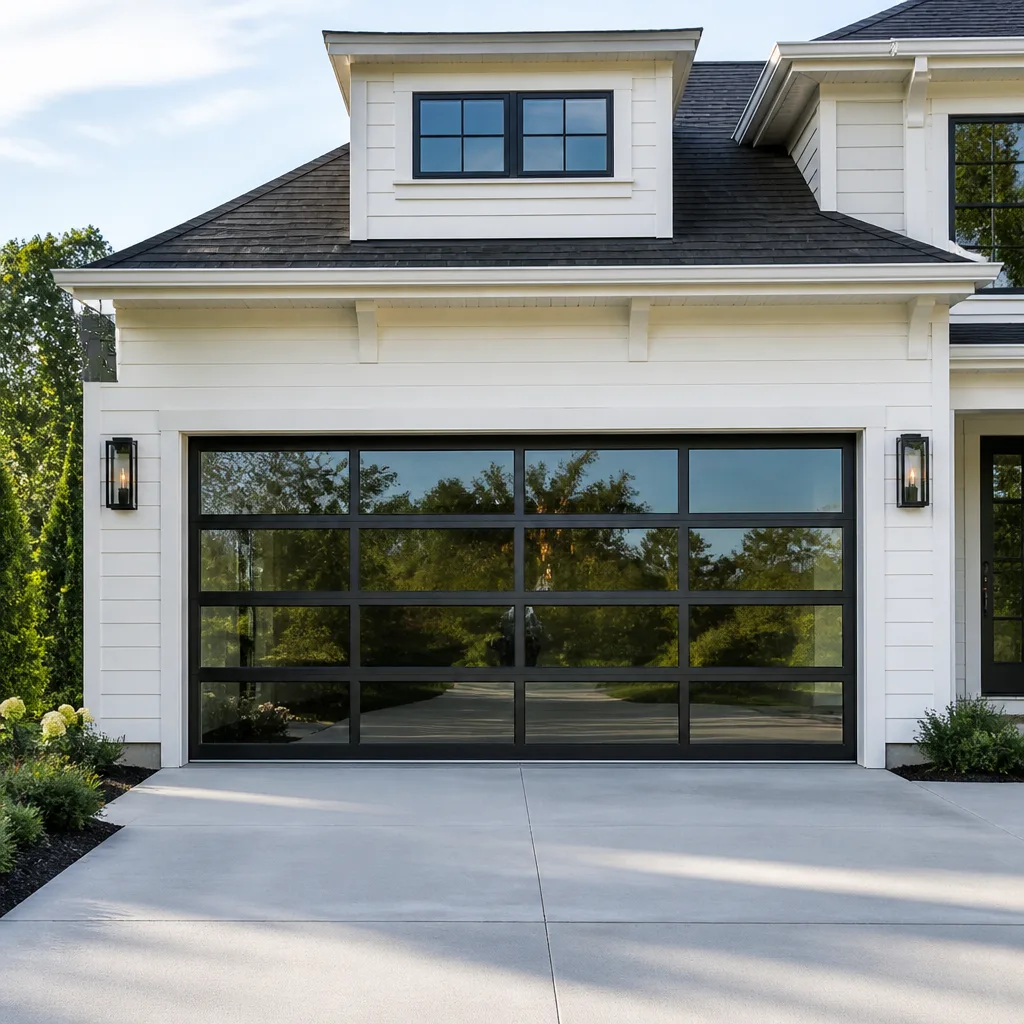 Full-view glass
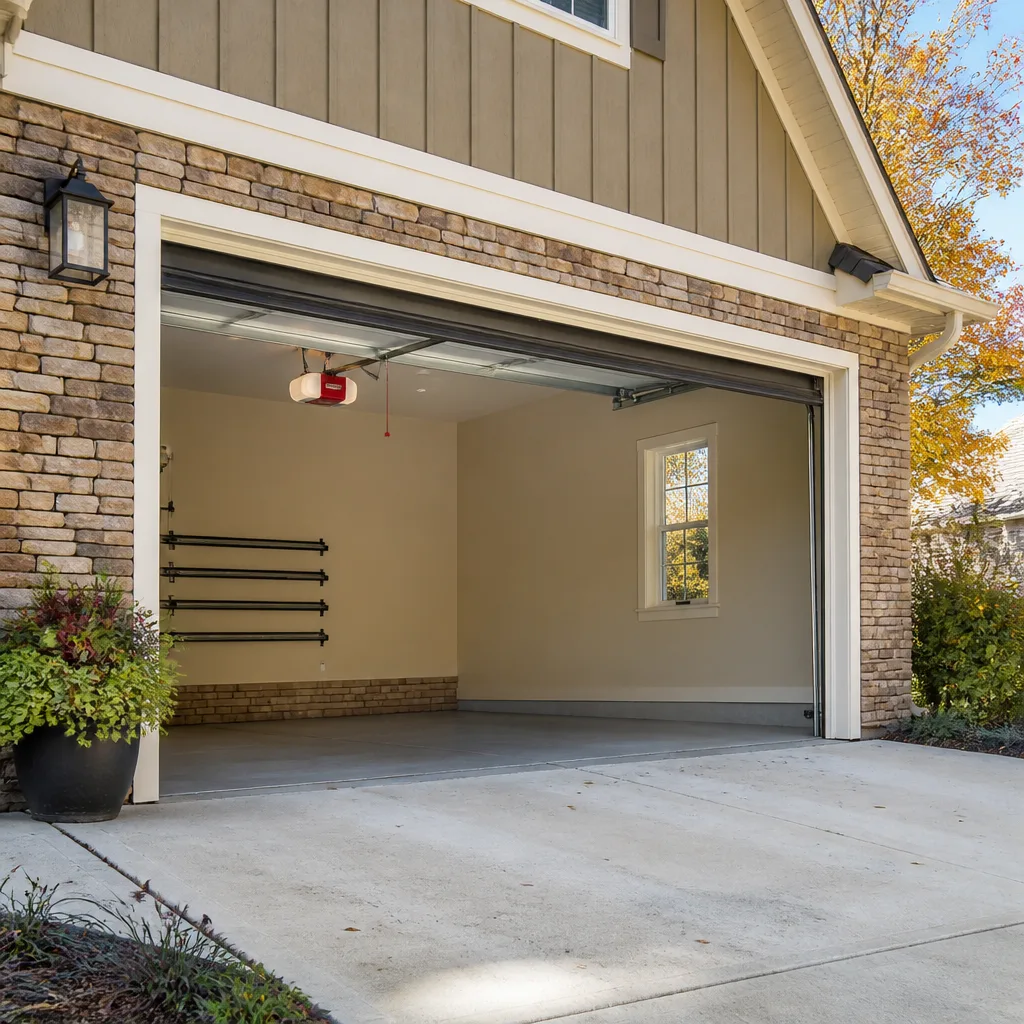 LiftMaster openers
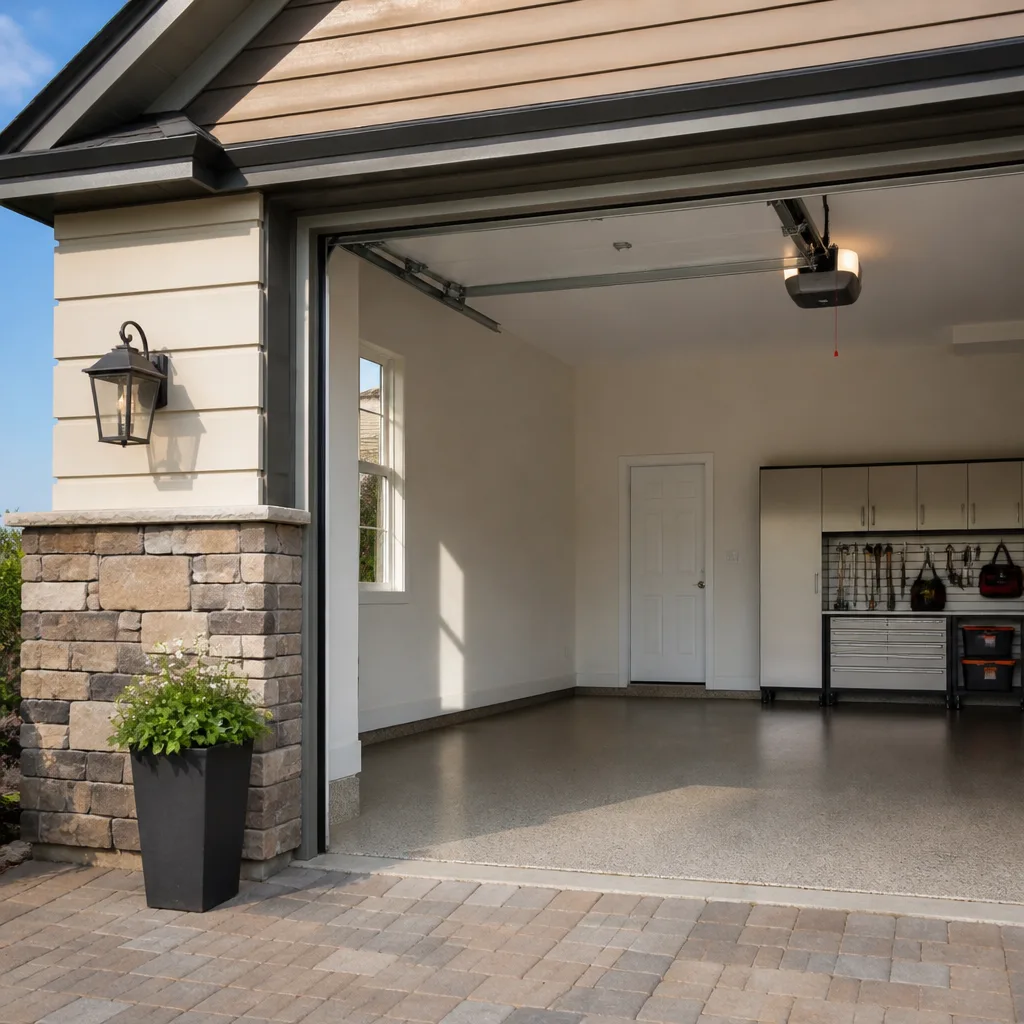 Chamberlain openers
Full 25-point door and opener safety check with every visit - springs, cables, rollers, tracks, and your LiftMaster or Chamberlain opener included
You get a price before we start. It does not change when the pro arrives.
Get your free estimateGarage Door Emergency Preparedness Guide for New Haven Homes
The part of a garage door most homeowners have never touched is the part that matters most when everything else fails. Your opener quits during an outage, and the release cord becomes your only way in or out. Most people have never pulled it, and the first time they do is at midnight, in the dark, learning that the mechanism doesn’t let go the way they pictured. This guide is the plan you build before that moment: how manual release works on the rail setups common in New Haven homes, how to secure a door that won’t close, what to have ready when you call, how to brace for a nor’easter with no power, and which failures can safely wait until morning. You’ll finish knowing what to do with your hands and what to say on the phone.
Quick Answer
Prepare for a garage door emergency by testing your manual release once now, learning which rail type you have, keeping a phone photo of your door and opener model labels, and knowing which failures are safety-urgent (a snapped spring, a door off its track, a cable that has let go) versus which can wait until morning (a dead opener with a door that still balances by hand). Never force a door that has lost tension or come off its track. Write down our number before you need it.
Styles & brands we work with
- Raised-panel steel
- Carriage house
- Modern flush
- Full-view glass
- LiftMaster openers
- Chamberlain openers
Table of Contents
- How does manual release work on the openers in New Haven homes?
- The three rail configurations you’ll find in New Haven
- How do you secure a door that won’t close?
- What should you have ready before calling for emergency service?
- Nor’easter prep: bracing a door when the power is out
- The 24-hour decision tree: urgent or wait?
- Fixes you can handle yourself, and ones you can’t
- Building a plan so a failure is never a surprise
How does manual release work on the openers in New Haven homes?
Manual release does one job: it disconnects the door from the opener so you can lift it by hand. The cord you see hanging from the opener trolley pulls a lever that uncouples the carriage from the rail. That’s the whole idea. The trouble is that it only works cleanly when the door is in a normal position, the spring system is still holding weight, and the door isn’t bound up. In an outage that’s usually true. After a spring failure, it changes the picture entirely.
Here’s the sequence to understand, not to force:
- Pull straight down on the release cord, firmly but without yanking.
- Listen for the click of the carriage releasing from the trolley.
- With the door still closed, try lifting it a few inches by hand. A properly balanced door lifts with little effort. A door that feels dead weight tells you the spring system isn’t holding it.
- If it lifts easily, raise it the rest of the way and prop it open if you need access. If it feels heavy, stop. Don’t keep pulling.
To reconnect, run the opener and let the carriage catch the trolley as the door cycles, or if the opener is dead, lift the release lever back into place by hand. Some homeowners find reconnecting trickier than releasing. That’s normal. The carriage needs to line up.
One detail most people miss: with the door disconnected, gravity is the only thing holding it closed. A disconnected door that’s slightly out of balance can drift down on its own. If you’ve disconnected it to get a car out, close it by hand and leave it down until power returns or the technician arrives. Our garage door opener repair team sees this every time a storm comes through: doors left disconnected and drifting.
We work on the brands most common in New Haven garages, so the release mechanism on a LiftMaster or a Genie is something we know by hand. If you’re unsure, take a photo of the opener and send it along.
The three rail configurations you’ll find in New Haven
Your manual release behaves a little differently depending on how the opener is mounted. New Haven homes, from the older two- and three-family houses near Wooster Square to the postwar capes out toward Westville and the newer builds around East Rock, tend to fall into three setups. Knowing which you have tells you what to expect before you pull anything.
1. Standard ceiling-mounted rail with a trolley carriage
This is the most common setup in single-family homes. The opener hangs from the ceiling, a long rail runs back to the door, and a carriage rides along it with the release cord hanging near the door. Release means uncoupling the carriage from the trolley. Expect the cord to be reachable from the floor, and expect a distinct click. This is the easiest type to operate by hand and the one most people are picturing when they read the instructions.
2. Low-clearance or side-mounted rail
Garages with low headroom or a tight ceiling put the opener closer to the door or on a short rail. The release cord may be short or tucked up near the header, which means you might need a step stool to reach it. Test reachability now while it’s light and you have time, not during an outage. If the cord is short, a technician can often add a longer extension cord to the release.
3. Jackshaft (side-mounted) opener on the torsion bar
Some newer and renovated New Haven homes use a wall-mounted jackshaft opener that drives the torsion bar instead of a ceiling rail. These have a manual release too, but it’s a separate lever or chain on the unit near the wall, and the release procedure is different. If you have no ceiling rail and see a compact box beside the high-lift track, you have a jackshaft. Read the label and get familiar with the lever before you need it. Raynor and Chamberlain both make units that show up in these setups.
Whichever you have, the principle is the same: the release disconnects drive from door, but the door’s own spring system is what makes it liftable. If the springs are broken, no manual release will make the door safe to lift.
How do you secure a door that won’t close?
When a spring snaps or a cable lets go, the door won’t close on its own, and often it won’t open either. The door is now an opening in your home that anyone can walk through. Securing it is about temporary safety, not permanent repair. Do it the right way and you protect the house until a technician arrives. Do it the wrong way and you risk injury or a collapsed panel.
The right way
- Keep everyone, especially children and pets, out of the garage and away from the door.
- If the door is partially open and stable, don’t muscle it the rest of the way. A door with a broken spring is holding a dangerous load in the remaining spring or cable.
- Block the opening from the inside with furniture or a barricade if the door can’t close, so the house isn’t open to the street.
- Use a secondary lock if you have one: many doors have a manual lock or a latch that pins the door to the track. Engage it to prevent the door from sliding.
- If the door is closed but the opener won’t run, only the opener needs attention. The door itself may be safe.
The wrong way
- Don’t try to lift a door with a broken spring by hand and prop it open with a chair or broom. The door can come down hard.
- Don’t keep cycling the opener. Running a dead or misaligned door burns out the opener motor and can pull the door further off track.
- Don’t wedge a door that’s off its track. Forcing it can bend the panels or the track beyond repair.
- Don’t reach into the torsion bar, springs, or cable drum area. Those components hold tension even when the door is down.
If you’re unsure whether the door is stable, leave it exactly as it is and call. When we take a garage door spring repair call, we can tell you over the phone whether the door should be left alone. A door that’s had a cable or spring failure is a safety job, not a DIY job.
What should you have ready before calling for emergency service?
An emergency call goes faster when you can tell us three things: what brand and model you have, what happened just before it failed, and what you can safely observe now. That information lets a technician arrive with the right parts and the right approach instead of spending the first visit diagnosing. Have these ready before or as you call.
- Door brand and model. Look for a label on the door’s bottom section, on the end stile, or inside the door. Brand names like Clopay, Amarr, Wayne Dalton and Raynor are common. A photo of the label saves time.
- Opener brand and model. The opener’s label is on the back or side of the motor housing or under the light cover. LiftMaster, Chamberlain, Genie and Craftsman labels are typical in New Haven homes.
- What you heard or saw. A loud bang then a dead door points to a spring. A grinding or popping sound points to a cable or roller. A door that stopped halfway and beeps points to a safety sensor or force setting. Describe it plainly.
- What’s happening now. Is the door open, closed, or stuck partway? Is it off its track at one side? Can you see a dangling cable or a gap in a spring?
- Your access needs. Do you need the car out, or is the house open? That helps us prioritize.
- Your address and a reachable number.
If you can safely do it, snap a few photos of the door from a few feet back, the opener label, and the springs. Don’t climb on anything or get near the springs to get a better shot. Our team handles everything from the opener to the door to the spring, so one call covers it. When your door fails, the details you have ready are what let us turn the call into a fix.
Nor’easter prep: bracing a door when the power is out
A nor’easter can knock out power for hours and push wind against your garage door for the duration. A sectional door that’s disconnected from the opener and left loose can bow under wind load, and the bottom panel is usually the first to give. The fix is simple and cheap: lock the door down so it can’t move. Do it before the storm if you can, and again if the power goes out and you’ve had to release the door to get a car in or out.
Here’s how to secure it manually:
- Close the door fully by hand (if the opener is functional, let it close).
- If you disconnected the door to get a car out, reconnect the carriage or leave the door down and secured.
- Engage the manual lock on the door’s track if it has one. Many New Haven doors have a lock or latch on the inside or an external keyed lock.
- If the door has no lock, place a heavy brace or barricade against the inside of the door low down, across the width, so it can’t push in at the bottom.
- Don’t rely on the opener to hold a disconnected door. The opener’s drive isn’t a lock.
For older doors without a built-in lock, an aftermarket slide lock or deadbolt-style latch is worth installing. A technician can add one during a service visit. If your door is already damaged by wind or impact, or if it’s bowed, call before the next storm. The team at New Haven Garage Door Repair Co sees a lot of storm aftermath in New Haven, and a bowed panel is far easier to correct before it becomes a full replacement. Hail is uncommon here, so most door damage we see is wind, impact, or a door that’s been pushed in.
The 24-hour decision tree: urgent or wait?
Not every failure needs a midnight call. Some do. The difference usually comes down to whether the door is holding a dangerous load or leaving your home open. Use this decision tree to sort your situation before you pick up the phone.
Call now (urgent for safety or security)
- A spring has snapped, and the door won’t lift or won’t close fully.
- A cable is dangling or has come off the drum.
- The door is off its track or hanging crooked.
- The door is stuck open, leaving the house open to the street.
- The door is bowed or a panel has dropped after wind or impact.
- You smell burning from the opener.
Can wait for the morning (no safety or security risk)
- The opener is dead but the door balances and works by hand, and you can secure it down.
- The door closes but the opener won’t reverse or the light doesn’t work.
- A remote or keypad won’t work and you have another way in and out.
- The door is noisy or squeaks but moves and closes fully.
- The door won’t open only from one remote and you can use the wall control.
How to decide
If the door is secure, the house is closed, and nothing is dangling or off track, you can wait. If the door is holding weight on a broken spring, is hung up off track, is leaving the house open, or is making a burning smell, that’s an emergency. If you truly can’t tell, call and describe it. Our emergency garage door service exists for exactly the moment your door fails, and it’s a standard part of how we operate. If your door fails on a Saturday, you can call and we’ll book you for Sunday; we’re closed Saturday.
Fixes you can handle yourself, and ones you can’t
Some garage door problems are genuinely homeowner-fixable. Others are what we call safety jobs, and a wrong move there can hurt you. The line between them is usually whether the fix involves tension, springs, cables, or the door’s weight. Here’s how to sort it.
Safe to handle yourself
- Remote or keypad not working. Replace batteries, check the keypad code, and re-pair the remote to the opener. That’s routine.
- Door reverses on its own. Check the safety sensors at the bottom corners: wipe the lenses, make sure nothing is in the beam, and see that the sensor lights are on. A misaligned sensor is a common cause.
- Noisy door. A squeak can be a dry roller. A door that grinds may have a dry hinge. Light lubrication on rollers and hinges can quiet things down, but don’t lubricate the track or the springs.
- Door doesn’t close all the way. Sometimes a small obstruction, a misaligned track near the floor, or a force setting is the cause. Check for obstructions first.
Leave to a professional
- Any spring or cable problem. Torsion and extension springs and the cables and drums are under high tension. A released spring can cause serious injury. Don’t attempt a repair, adjustment, or replacement.
- A door that’s off track. Re-seating a door on its track requires controlled lifting and can be dangerous if the door is heavy or the spring is compromised.
- Bowed or damaged panels. These affect the door’s balance and can be unsafe to operate.
- Opener electrical or logic problems. If the opener hums, trips the breaker, or the wall control is dead, that’s a diagnostic job.
We handle garage door repair across New Haven, and we take spring calls as a core service, not a referral. Spring repair is a safety job, and it’s one we do in-house. Our technicians have up to 9 years of experience, and the local pro is licensed and insured as their state requires. That matters most on the jobs where a wrong move is dangerous.
Building a plan so a failure is never a surprise
A prepared homeowner is the one who isn’t caught out at midnight. The plan doesn’t take long, and most of it is done once. Put it together on a calm afternoon, not in an outage.
- Physical test. Pull the release cord once, confirm the carriage releases, lift the door a few inches, then reconnect. Do this now while you have light and time.
- Note your equipment. Photograph the door label and the opener label. Save the photos to your phone and to your emergency contact list.
- Check the reach. Confirm the release cord is easy to grab from the floor. If it’s short, plan to have a step stool nearby or ask about extending it.
- Know your lock. Locate the manual lock or latch and test it. If you don’t have one, plan for a slide lock.
- Store the number. Save (866) 476-7578 in your phone under a name you’ll recognize.
- Annual service. Have a technician check spring tension, cables, rollers, and balance once a year. Small issues get caught before they become a failure.
We also handle garage door opener repair across brands, and if your door’s life is winding down, the same relationship covers a new installation. One call covers it from the first repair through the new door. Opener expertise spans both legacy and smart-home-connected systems, so as the systems in the area’s homes get app-controlled, we’re already familiar. A technician who knows your brand’s behavior diagnoses faster and arrives better prepared.
Common Mistakes to Avoid
- Never pulling the manual release. The first time you pull it shouldn’t be at midnight. Test it now, in daylight, while you have time to troubleshoot.
- Lifting a door with a broken spring. A door that’s lost tension is dead weight and can come down hard. Don’t try to lift it and prop it with a chair or broom.
- Forcing a door that’s off its track. Forcing a hung-up door can bend tracks and panels beyond repair. Leave it and call.
- Cycling a dead opener repeatedly. Running a door that won’t move burns out the motor and can yank the door further off track.
- Relying on the opener to lock a disconnected door. The drive isn’t a lock. A disconnected door can drift down on its own and needs a manual lock or brace.
- Ignoring the labels. Homeowners who can’t tell us their door and opener brand at the moment of failure cost themselves a diagnostic step. Photograph the labels now.
- Skipping the annual check. A worn roller or a loosening cable is easy to catch during a service visit and far harder to deal with when a spring lets go during a storm.
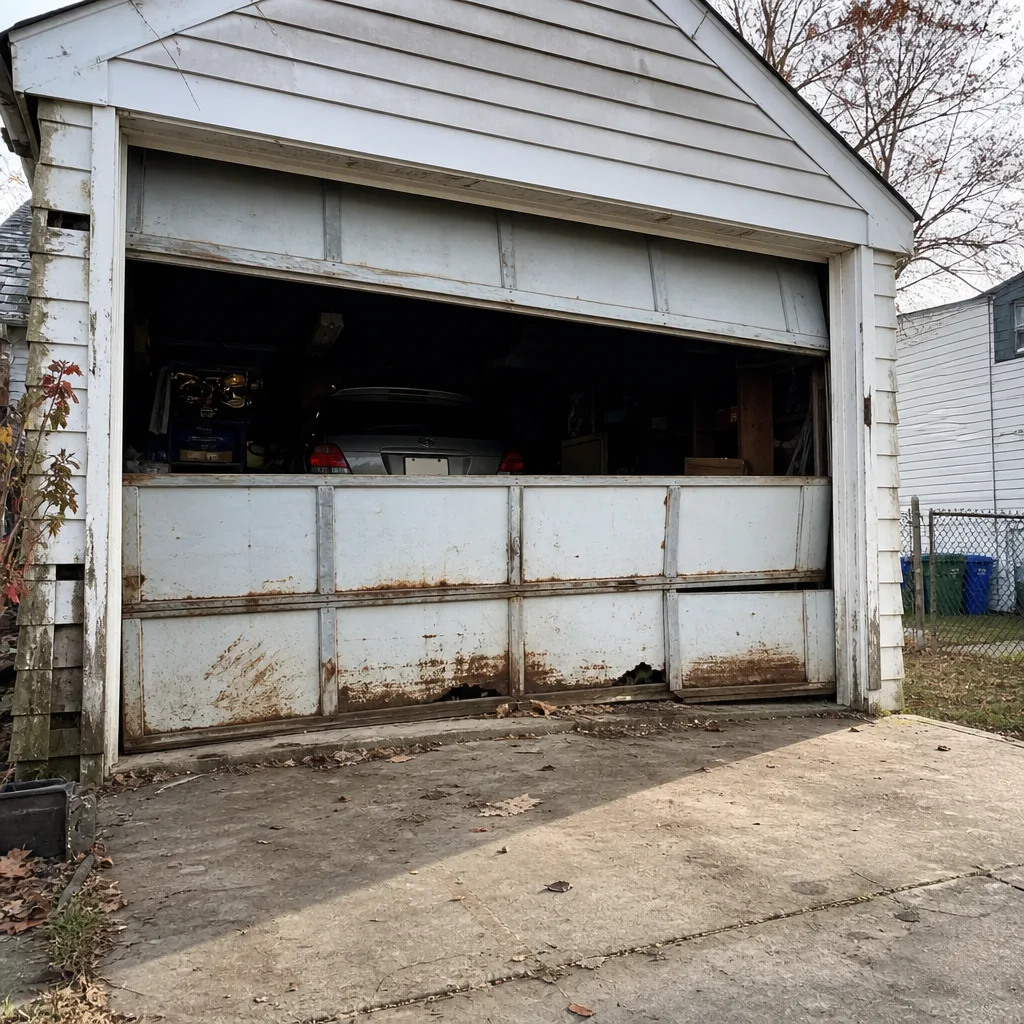
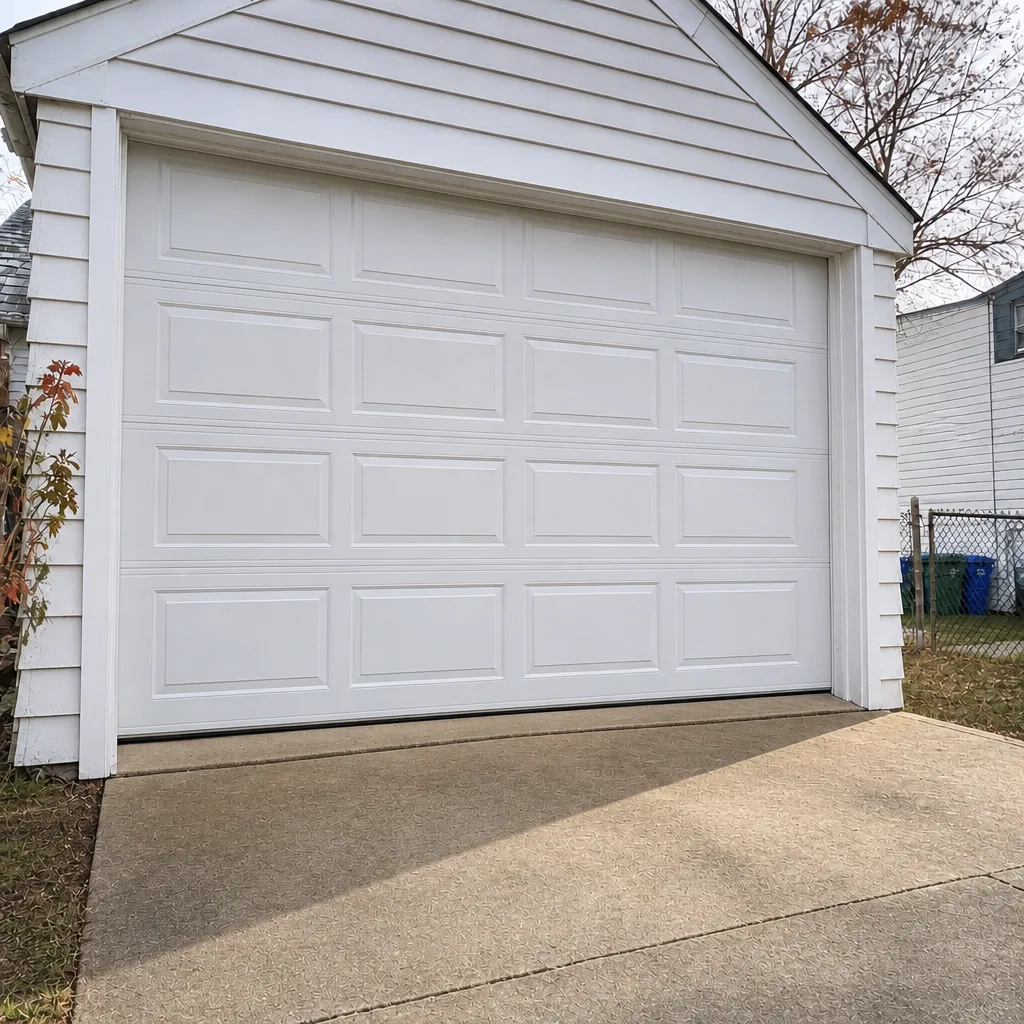
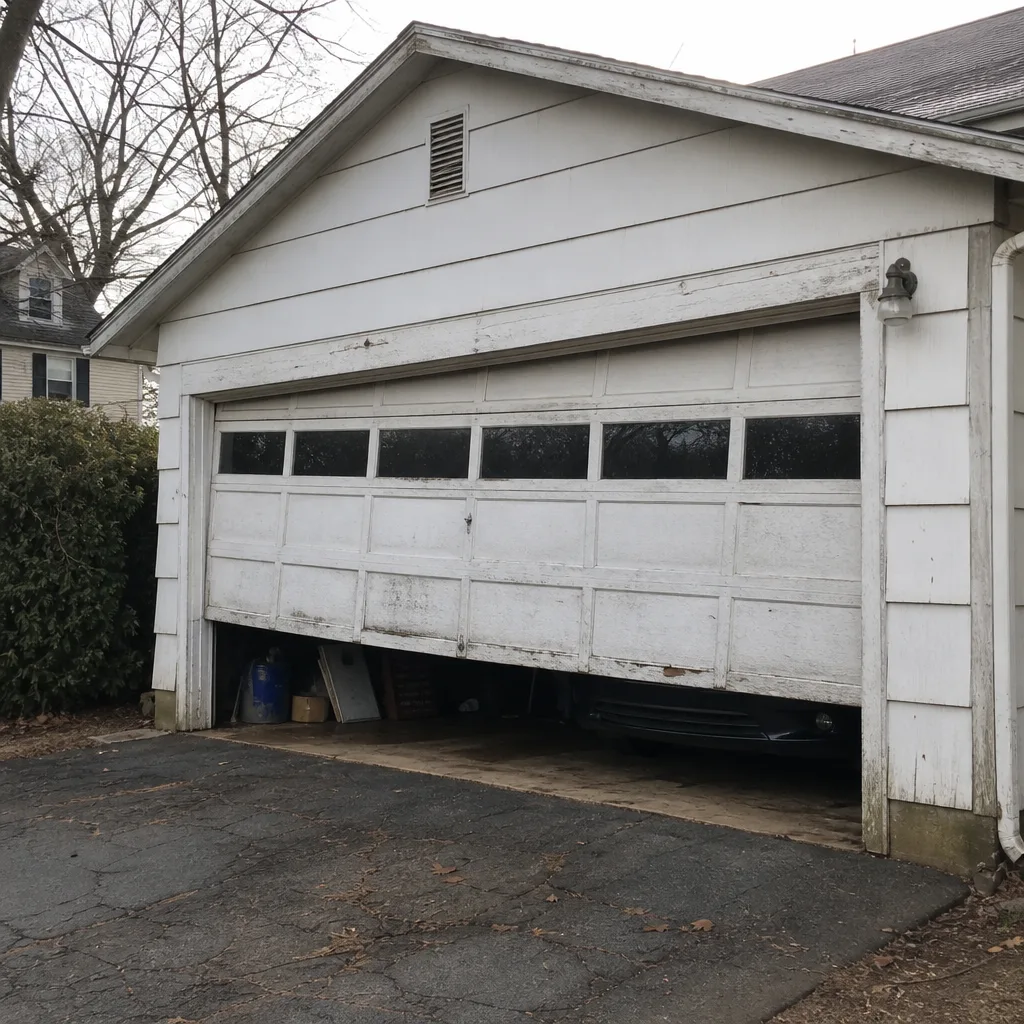
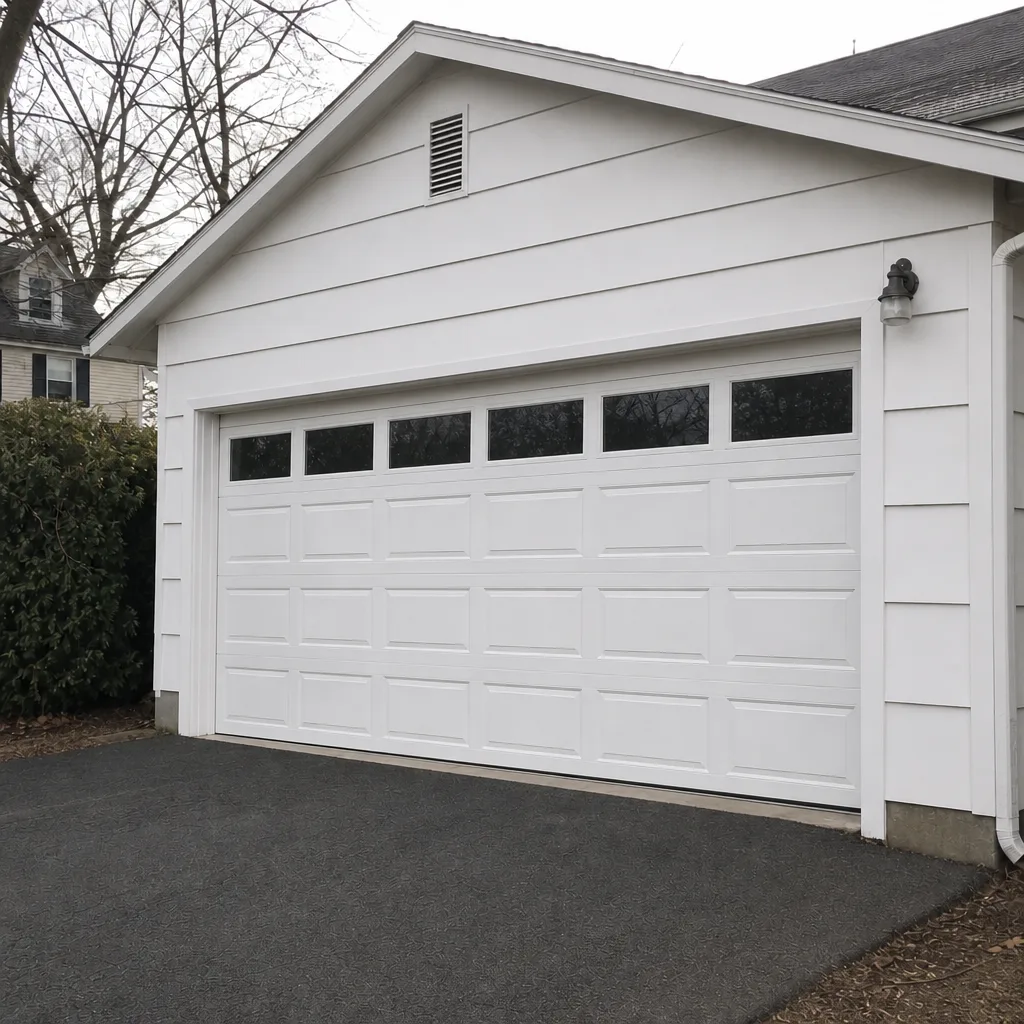
See the difference
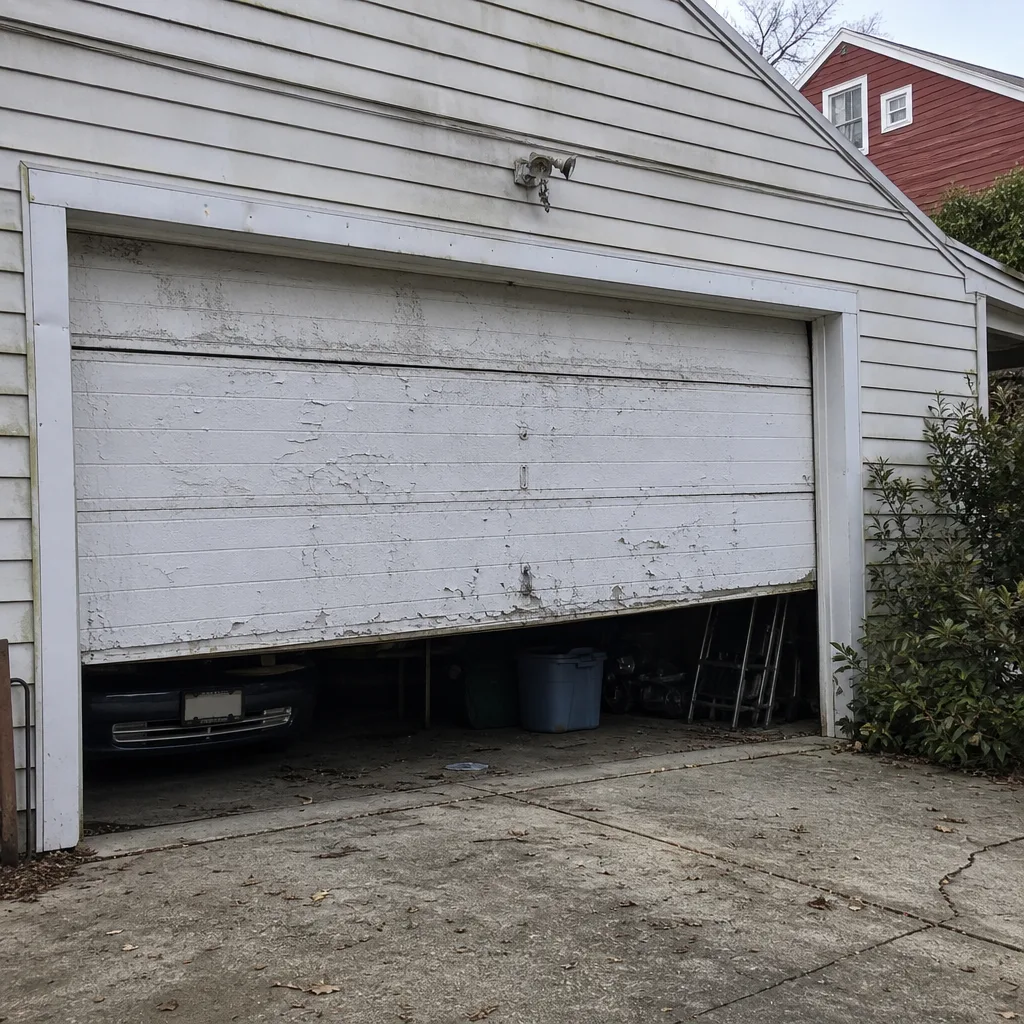 Before
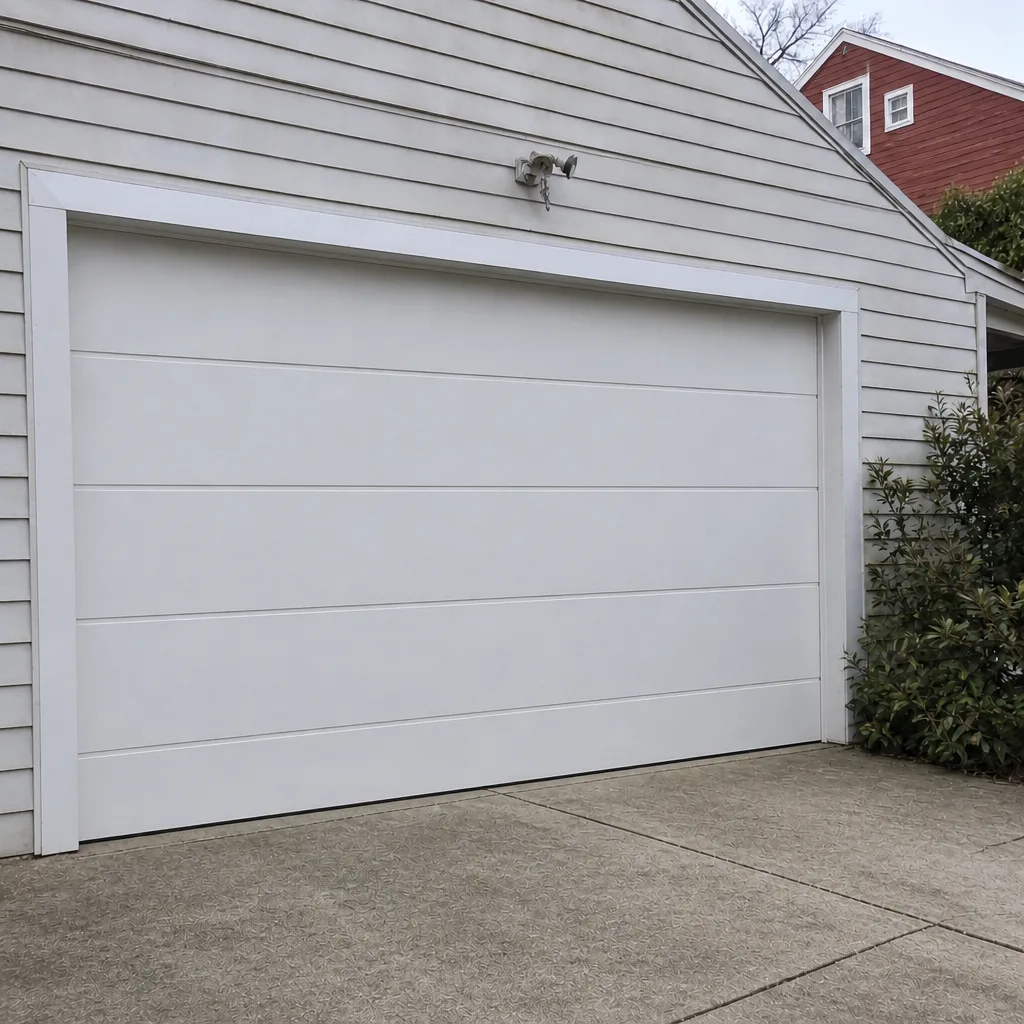 After
 Before
 After
 Before
 After
When to Call a Professional
Call when the door is holding a broken spring or cable, sitting off its track, bowed, stuck open, or making a burning smell from the opener. Those are the cases where waiting risks injury, further damage, or leaving the house open to the street. Call when you can’t safely tell what’s wrong and the door is partway open or hanging. Call when the opener keeps reversing, the remote won’t work, or the door is noisy and you want it checked before a season change. And call when you’re planning ahead: for a lock install, an annual service, or a new door when the old one is beyond repair. New Haven Garage Door Repair Co offers free estimates in New Haven. Call (866) 476-7578.
Frequently Asked Questions
Emergency garage door service is part of our regular offering in New Haven, so call (866) 476-7578 and describe the situation. If the door is holding a broken spring, off its track, stuck open, or you smell burning, that’s an emergency; if the door is secure and just needs the opener looked at, we can schedule it. Call for an exact quote – estimates are free.
Spring repair costs vary with the spring type and door size, and we quote per job after we see the door, so there’s no single number here. A written estimate sets the final price, and the price is quoted and agreed before any work starts. Call (866) 476-7578 for an exact quote – estimates are free.
No, not after the estimate is agreed. We put the price in writing before any work starts, and that written estimate is the price. If we find something that changes the job once we’re on site, we’ll tell you before doing the extra work. Call (866) 476-7578 for an exact quote – estimates are free.
The local pro who performs the work is licensed and insured as their state requires, and our technicians have up to 9 years of experience. We handle the doors and openers from brands like LiftMaster, Chamberlain, Genie and Raynor, and we do spring repair in-house as a core service. Call (866) 476-7578 for an exact quote – estimates are free.
Keep people and pets away, don’t force the door, and don’t keep cycling the opener. Secure the opening from the inside with a barricade if the door can’t close, engage the manual lock, then call. If the door is dead weight or hung up, leave it exactly as it is and describe it on the phone. Call (866) 476-7578 – estimates are free.
Yes. A disconnected door has nothing but gravity holding it, and it can drift under wind load, so engage the manual lock or brace it low across the inside before a nor’easter or any outage. If the door has no lock, plan to have one installed before the next storm. Call (866) 476-7578 for an exact quote – estimates are free.
The Bottom Line
A garage door emergency is easier to handle when you’ve prepared for it before it happens. Test your manual release once, learn your rail type, photograph your door and opener labels, know which failures are urgent and which can wait, and secure a loose door with a lock or brace during an outage. Never force a door with a broken spring or cable, and never try to repair the springs, cables, or drums yourself. The systems in New Haven homes are familiar to us, and one call covers the repair, the opener, the spring, or a new door when the old one’s done. When your door fails, call (866) 476-7578 for a free estimate. We’ll get it back to working order.
Written by the team at New Haven Garage Door Repair Co.