Last updated November 21, 2026
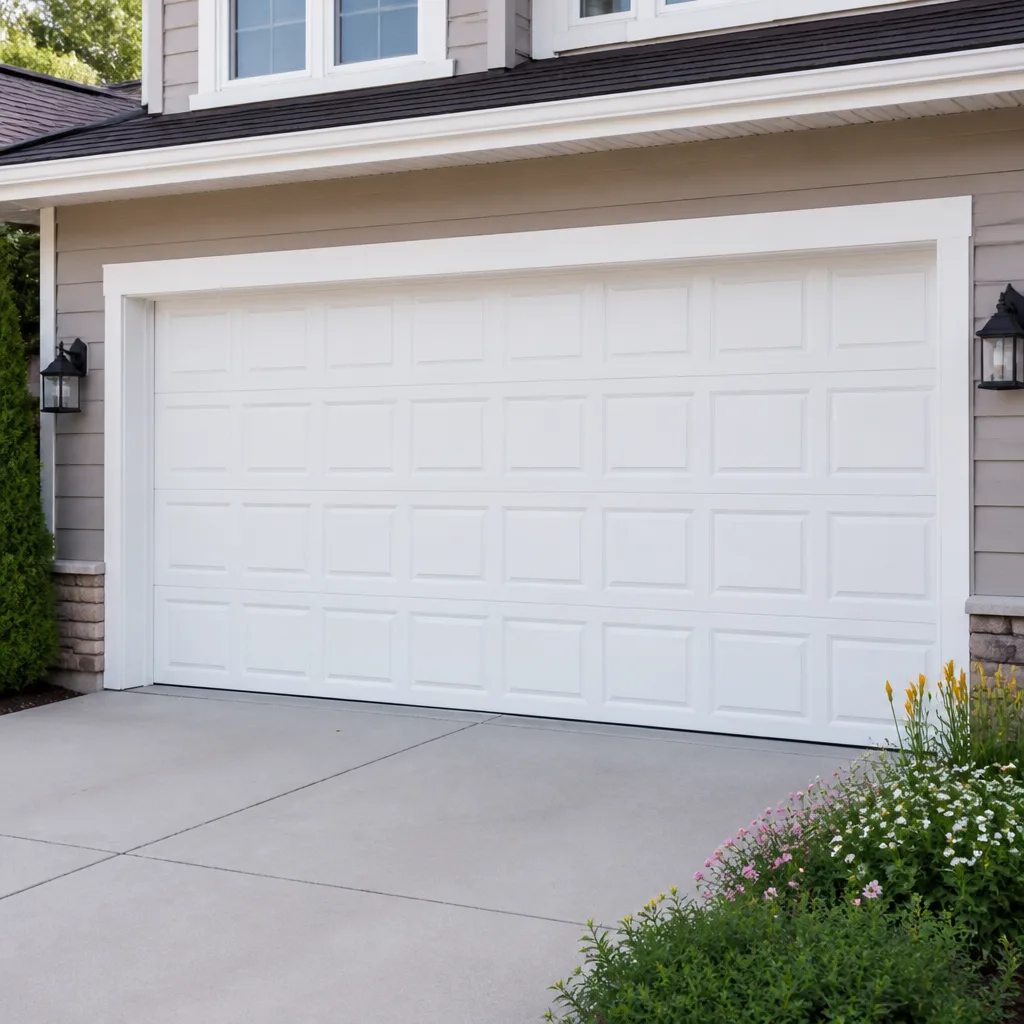 Raised-panel steel
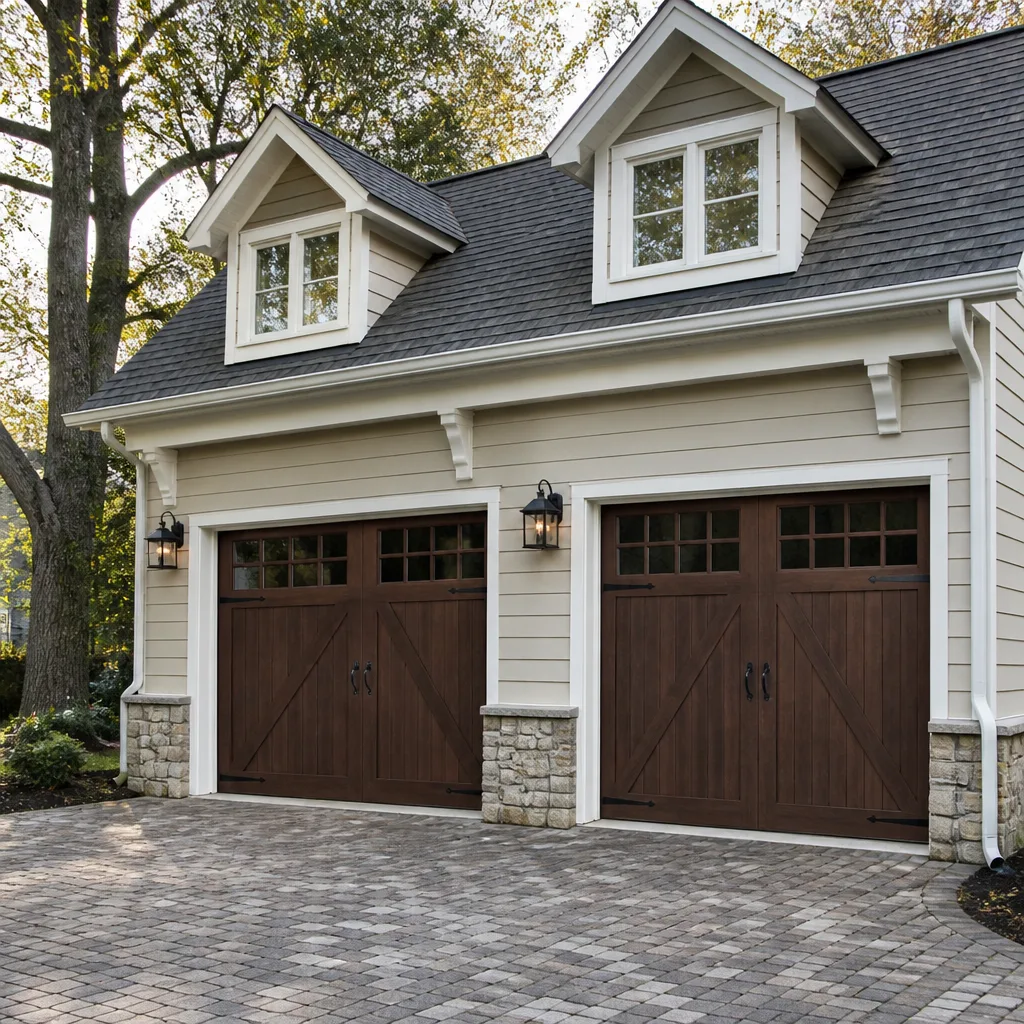 Carriage house
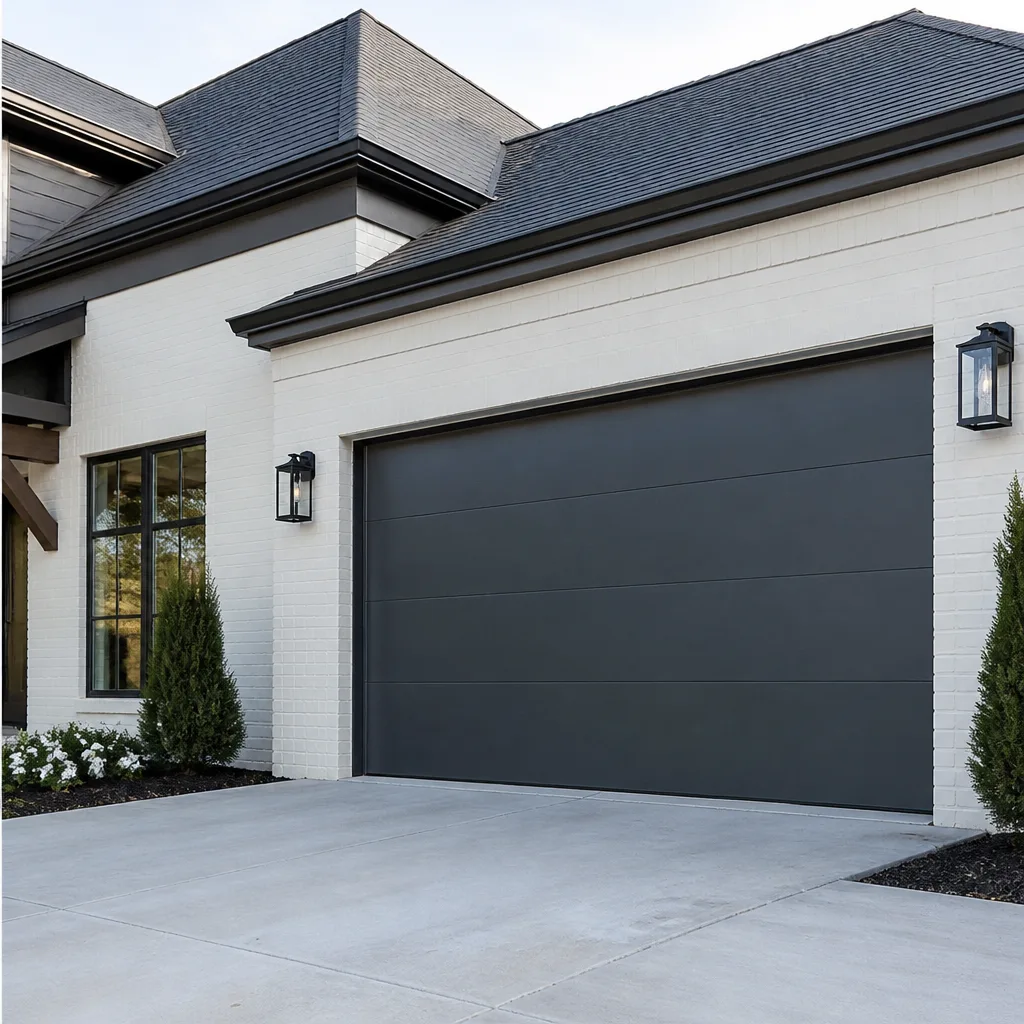 Modern flush
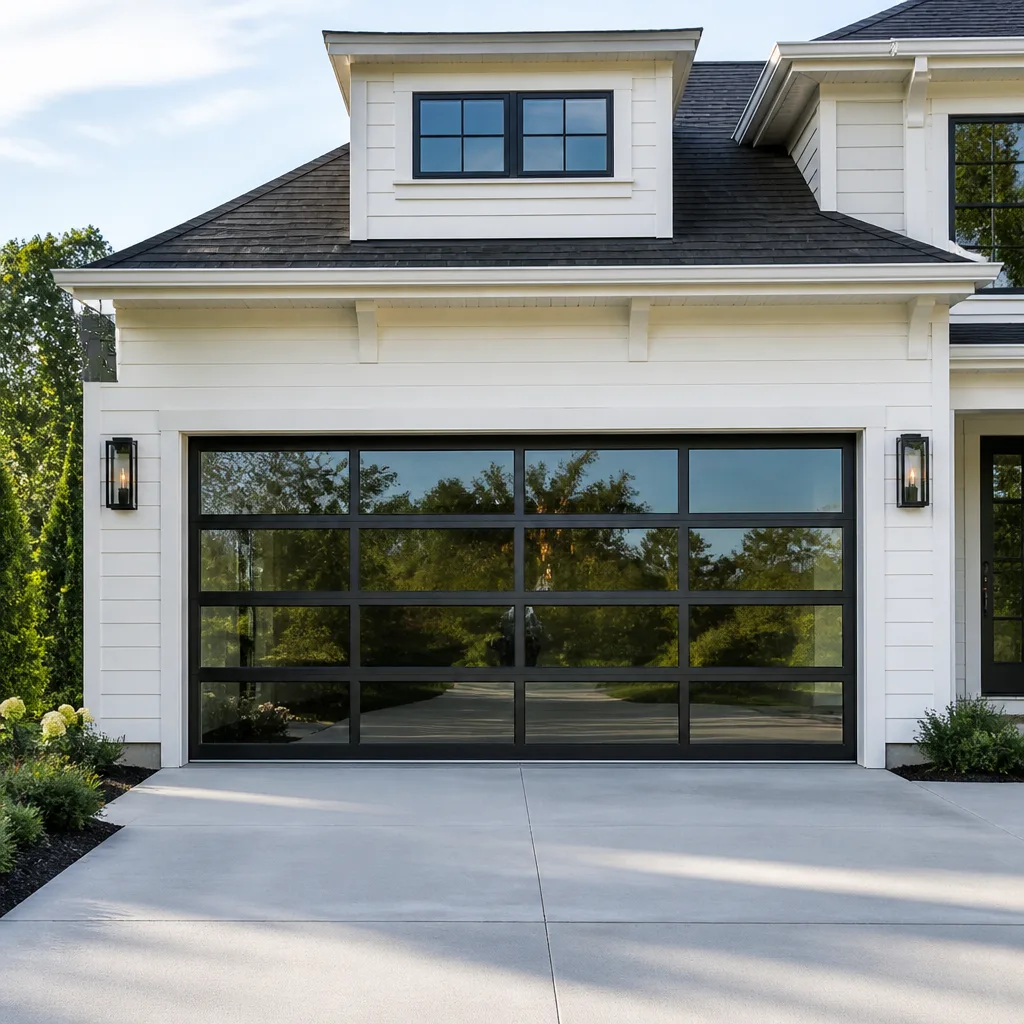 Full-view glass
 LiftMaster openers
 Chamberlain openers
Full 25-point door and opener safety check with every visit - springs, cables, rollers, tracks, and your LiftMaster or Chamberlain opener included
You get a price before we start. It does not change when the pro arrives.
Get your free estimateThe Complete Guide to Garage Doors in New Haven
Most garage door advice you’ll find online was written for a climate that isn’t yours. New Haven has more pre-1960 attached garages than most Connecticut cities, and that original framing is why a door that works fine in a Glastonbury colonial will bind, crack, or fail within two winters here. The opening is rarely square, the header is often shallow, and the door was never designed for the freeze-thaw cycle the harbor and the hills put it through. This guide maps every decision – material, mechanism, insulation, clearance – to the conditions New Haven homeowners actually face, so you can tell the difference between a door that needs a $200 fix and one that’s telling you it’s done.
Quick Answer
Garage doors in New Haven need to handle freeze-thaw cycling, summer humidity, and the tight clearances of older attached garages. In practice that means choosing materials that resist moisture at the bottom edge, matching the opener’s drive type to whether the garage is heated or detached, and repairing rather than replacing while the door’s panels, tracks, and springs still have service life left. The right call depends on the door’s age and condition, not on a fixed number of years. A free written estimate tells you which side of that line you’re on – call (866) 476-7578.
Styles & brands we work with
- Raised-panel steel
- Carriage house
- Modern flush
- Full-view glass
- LiftMaster openers
- Chamberlain openers
Table of Contents
- How New Haven’s Climate Affects Every Part of Your Door
- Clearance and Header Constraints in New Haven’s Older Homes
- Choosing Door Materials for New Haven Conditions
- Openers: Which Drive Type Holds Up Here
- Repair-First vs. Replace-First Economics
- Matching Door Style to New Haven Architecture
- Working With the Major Brands
- Seasonal Maintenance That Actually Matters
How New Haven’s Climate Affects Every Part of Your Door
New Haven sits between the harbor and the hills, and that position creates a specific pattern: wet springs, humid summers, and winters that swing above and below freezing repeatedly rather than staying cold. That freeze-thaw cycle is the single biggest driver of garage door wear in the city. Water gets into a seam, a bottom seal, or a crack in the paint, freezes overnight, expands, and widens the gap a little more each time. By the third or fourth cycle of a season, a hairline crack has become a structural problem.
The humidity matters too, especially in garages that aren’t conditioned. A garage attached to an older New Haven home often shares a wall with living space but has no supply register, so it runs damp for much of the year. That dampness attacks the weakest parts of any door:
- Bottom seals and weatherstripping are the first to go. The rubber hardens, cracks, and stops sealing, which lets water in behind the door.
- Steel skin rusts from the inside out where moisture collects at the bottom rail and along the vertical seams.
- Wood doors – common on older homes in East Rock and Westville – absorb moisture at the end grain and swell, then shrink when the air dries, which loosens joints and paint.
- Springs and cables face a slow corrosion cycle that shortens their working life compared with a dry climate.
What makes New Haven different from, say, an inland Connecticut town is the way the season cycles rather than the raw cold. Doors here get more wet-dry and freeze-thaw transitions per year, and transitions do more damage than steady temperatures. In our experience, the doors that fail fastest aren’t the oldest ones. They’re the ones where a small seal failure was never corrected, so the cycle had a way in.
This is the same reason we treat garage door repair as a diagnostic job first. The symptom – a door that sticks, a gap at the bottom, a rattle on the way down – usually points to a specific failure that the climate accelerated.
Clearance and Header Constraints in New Haven’s Older Homes
If you own or rent in a triple-decker in Fair Haven, a narrow lot home in Westville, or a brick colonial in East Rock, clearance is probably the constraint that matters most – more than material choice or opener brand. Older attached garages here were often built for the car of the era, and they show it:
- Low headroom. The distance from the floor to the ceiling is often tighter than a standard door needs, which rules out a conventional torsion setup and pushes you toward low-headroom hardware or a different track configuration.
- Shallow side clearance. Narrow garages leave little room for the horizontal track to run back, so the door has to be sized precisely and the tracks set carefully.
- Out-of-square framing. A header that’s settled over decades means the opening isn’t a true rectangle. A door installed to nominal dimensions will bind against one side.
- Off-center doors. Triple-deckers and older rowhouses often have a double door that isn’t perfectly centered, which changes how the springs need to be balanced.
This is where a lot of do-it-yourself installs go wrong, and where cheap installations cut corners. The door gets hung, it works for a season, and then the whole thing drags because nobody measured the actual opening. Before any install here, we measure the headroom, the side clearance, the backroom, and the square of the opening, and we check whether the existing framing can carry the door’s weight. If it can’t, that’s a conversation to have before the door is ordered, not after.
If you’re weighing options for an older opening, a repair or a right-sized replacement both start with the same measurement. Our repair service will tell you whether your current door fits the constraint or whether the opening is the real problem.
Choosing Door Materials for New Haven Conditions
The right material for a New Haven garage door is the one that handles moisture and temperature swings without needing constant attention. Here’s how the main options hold up:
- Steel (insulated). The most common choice for good reason. A steel skin with a polyurethane or polystyrene core resists moisture well, and the insulated core cuts down on condensation inside the garage. It does rust where the paint is compromised, so the bottom rail and seams need to be checked each year.
- Wood. Beautiful on a period home in East Rock or along Whitney Avenue, and the right look for a 1920s colonial. But wood demands real upkeep here – repainting or staining every few years, keeping the end grain sealed, and watching for swelling. Left alone through several freeze-thaw cycles, a wood door will crack and warp.
- Aluminum. Light and rust-resistant, which helps. It dents more easily, though, and can be noisy in a garage that’s not insulated.
- Composite and steel-backed wood-look. A practical middle path for homeowners who want the period look without the maintenance. Modern embossed steel panels can mimic a carriage-house style convincingly.
Insulation deserves its own mention, because it does two jobs here. It slows heat loss from an attached garage into the house, and – more importantly for door life – it reduces the condensation that forms on cold metal when warm, humid air hits it. In a detached garage with no climate control, an insulated door still helps by keeping interior temperature swings gentler. That reduces the freeze-thaw cycling the door itself experiences.
Brands matter less here than spec. A well-made door from Clopay or Amarr, correctly sized and installed, will last longer in New Haven than a premium door installed to the wrong clearance. When homeowners ask us which material to pick, the honest answer is usually “tell us how the garage is used and how much upkeep you want,” and the material follows from that.
Openers: Which Drive Type Holds Up Here
Opener choice in New Haven often comes down to one question: is your garage heated or attached, or is it a detached, unheated structure? The drive type that’s quiet and smooth in a conditioned garage can be the wrong pick for a cold, damp one.
- Belt drive. The quietest option and the right choice for an attached garage where the door is under or next to a bedroom. The tradeoff is a belt that can stiffen in a cold, unheated garage, so it’s best for conditioned spaces.
- Chain drive. Louder, but tough. A chain drive handles temperature swings and heavier doors well, which makes it a sensible pick for a detached garage with no heat and a door that has to work every day.
- Jackshaft (side-mount). Mounts on the wall beside the door and frees up ceiling space. Good for garages with very low ceilings or where the center track gets in the way.
- Screw drive. Fewer moving parts and generally reliable, though less common. A reasonable option for a garage that sees hard use.
The second decision is whether to go with a standard opener or a smart, app-connected one. This matters most in a detached or hard-to-reach garage, where being able to check whether the door is down from your phone is a real convenience. Brands like Chamberlain and LiftMaster have made this straightforward, and Craftsman openers are common enough here that parts and support are easy to sort out. We handle garage door opener repair on both legacy and smart systems, because the troubleshooting is different for each.
One thing to check on any older opener in New Haven: the safety reversing system. On a pre-1990s unit it may be missing, failing, or wired incorrectly. That’s a straightforward fix and worth doing before anything else on the opener list.
Repair-First vs. Replace-First Economics
The repair-or-replace question isn’t about a fixed number of years. It’s about whether the door’s structure is still sound. A door that’s older but has intact panels, straight tracks, and a solid bottom rail is usually worth repairing. A door with rot in the bottom section, bent tracks from an impact, or a frame that’s pulling apart is usually telling you it’s time.
Here’s how we think through it:
- Repair first if the door is structurally sound and the problem is mechanical (springs, cables, rollers, opener) or a single damaged panel that can be replaced.
- Repair first if the door is a period style that’s hard to replace in kind – an original carriage-house door on a well-kept older home, for example.
- Replace if the door has multiple failing sections, persistent rot, or a frame that’s out of true. Patching those problems usually costs more over the next few winters than a new door.
- Replace if the door lacks a safety reverse system or the opener is at the end of its life alongside a failing door.
Spring repair is the clearest case of repair-first. A torsion spring is a wear part, and a broken one doesn’t mean the door is finished. We handle garage door spring repair as a core service rather than a referral, because it’s a safety-critical job that a generalist handyman shouldn’t touch. A torsion spring is under extreme tension, and the tools and technique needed to release it safely are not something to improvise. If your spring has snapped, don’t run the door and don’t try to raise it by hand; call a trained technician.
For a new installation, the calculus is different. It’s a measured, ordered, and scheduled job, so the timeline runs on how quickly the right door can be sourced and fitted to your clearance. We’ll measure, give you a written price, and set a date – no same-day promise on a project that has to be built.
Matching Door Style to New Haven Architecture
New Haven has a mix of architectural periods, and the door that looks right on one home looks pasted-on at the next. The goal isn’t a custom showpiece. It’s a door that sits comfortably in its block without calling attention to itself.
- Colonial and Tudor (East Rock, Westville). A raised-panel steel door in a classic carriage style, or a wood-look composite, fits these homes best. Keep the detailing restrained.
- Triple-deckers and rowhouses (Fair Haven, The Hill). Simple, flat or short-panel doors read better than ornate ones. The garage is often secondary to the building, and an understated door sits right.
- Mid-century and ranch. A clean, low-profile door with horizontal lines. Window inserts, if used, should be minimal.
The over-customizing trap is real. Elaborate hardware, oversized windows, and heavy trim can look out of place on a modest older home and add cost without adding durability. A good rule of thumb: match the door’s level of detail to the house, not above it. A Clopay or Amarr carriage-style door in a standard color usually does the job in East Rock, and a plainer door in a period-appropriate color is the right call in Fair Haven.
Color matters in a way homeowners underestimate. On older homes, the door usually reads best in a shade drawn from the house’s trim or the roof, not a contrasting accent. When in doubt, sample a few colors against the house before ordering.
Working With the Major Brands
Brand familiarity changes how a repair goes. Each major manufacturer builds its doors and openers to slightly different tolerances, uses different spring specifications, and has its own quirks in the field. A technician who recognizes the brand’s behavior diagnoses faster and orders the right parts the first time. We work on equipment from eight major brands – LiftMaster, Chamberlain, Genie, Clopay, Amarr, Wayne Dalton, Craftsman, and Raynor – and that matters most when a door is failing in a way that doesn’t fit the usual pattern.
For example, a Wayne Dalton door with a specific track system behaves differently under a low-headroom constraint than a standard setup. A LiftMaster or Chamberlain opener gives you smart-home features and a specific safety reverse design. Genie and Craftsman units have their own logic boards and common failure points. Knowing the brand isn’t a selling point on its own. It’s a shortcut to the right diagnosis.
When it’s time to replace, the brand choice is usually about your opening and your budget rather than a brand loyalty. A well-built Clopay or Amarr door sized correctly will serve a New Haven garage well. The install matters more than the name on the panel.
Seasonal Maintenance That Actually Matters
Most garage door maintenance advice is generic and most of it doesn’t apply in a climate with real freeze-thaw cycles. Here’s what’s actually worth doing in New Haven:
- Check the bottom seal and weatherstripping each fall. This is the first line of defense against water intrusion. If it’s cracked or hard, replace it before the freeze sets in.
- Look at the paint on the bottom rail and seams. Any bare metal is an entry point for rust. Touch it up in the fall.
- Test the safety reverse once a month. Put an object in the door’s path and confirm it reverses. If it doesn’t, stop using it and get it fixed.
- Listen for changes in sound. A door that suddenly sounds different – a rattle, a groan, a snap – is telling you something. Have it checked before a small problem becomes a spring or track failure.
- Don’t force a sluggish door. If it binds or runs slow, the problem is mechanical, and forcing it makes it worse.
- Leave spring work to a trained technician. This bears repeating. A torsion spring can seriously injure someone who releases it incorrectly.
That’s the whole list. It’s short because the rest of the generic advice – quarterly lubrication schedules, seasonal tune-up contracts – rarely earns its cost for a homeowner in a mild-winter, high-humidity climate like New Haven’s. The bottom seal, the paint, and the safety reverse are the three things that actually protect the door.
Common Mistakes to Avoid
- Buying a door to nominal dimensions without measuring the opening. In older New Haven homes, the opening is rarely a true rectangle. An unmeasured install will bind within a season.
- Ignoring the bottom seal. It’s a cheap part that protects everything above it. Letting it fail is how moisture gets into the door’s structure.
- Treating a spring failure as a reason to replace the door. A snapped spring is a wear-part failure, not a door failure. A structurally sound door is usually worth repairing.
- DIY spring repair. A torsion spring is under extreme tension. This is the one job on the list that can send you to the emergency room.
- Choosing the quietest opener for a detached garage. A belt drive in an unheated space can stiffen in the cold. Match the drive type to whether the garage is conditioned.
- Over-customizing on a modest older home. Elaborate hardware and windows add cost and freshness risk without adding durability. Match the detail level to the house.
- Choosing an installer on price alone. An install that skips the clearance check will fail in two winters. A written price from a technician who measured the opening is worth more than a lower bid.
See the difference
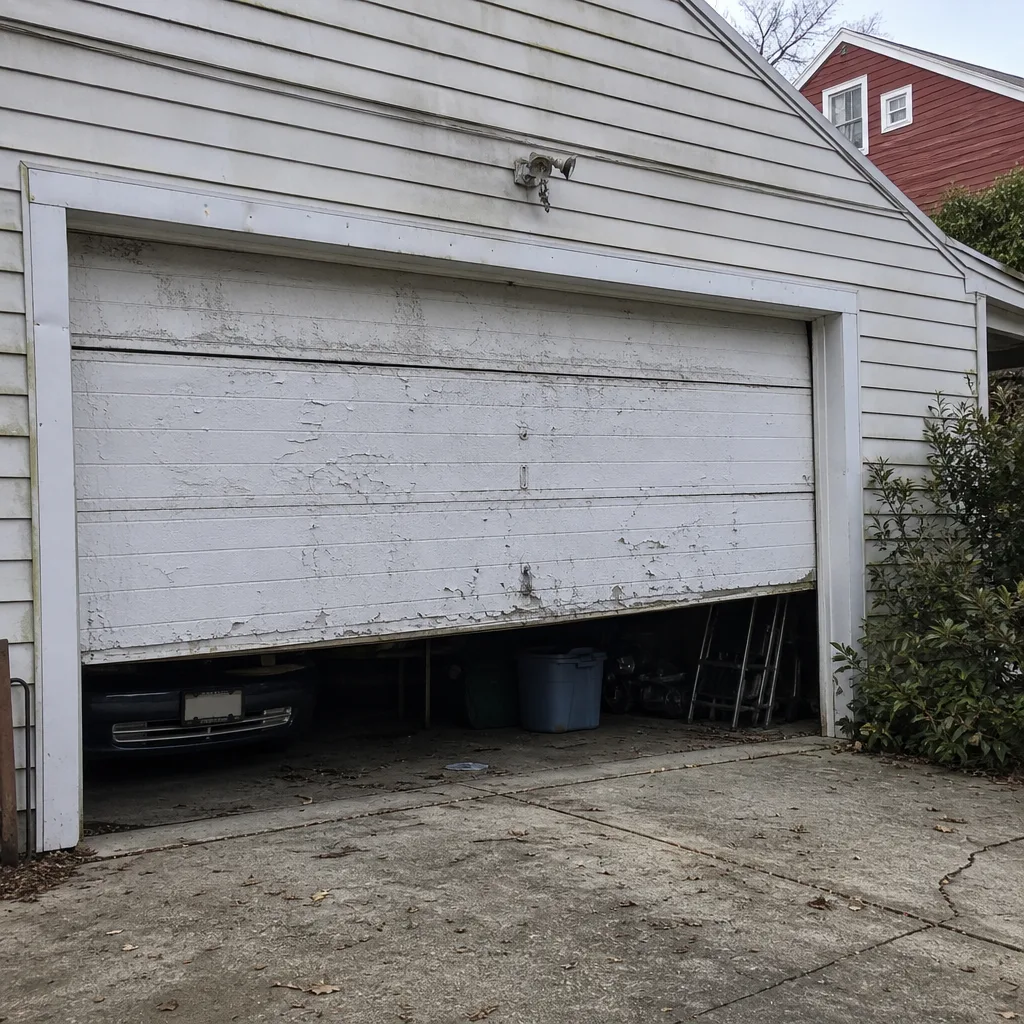 Before
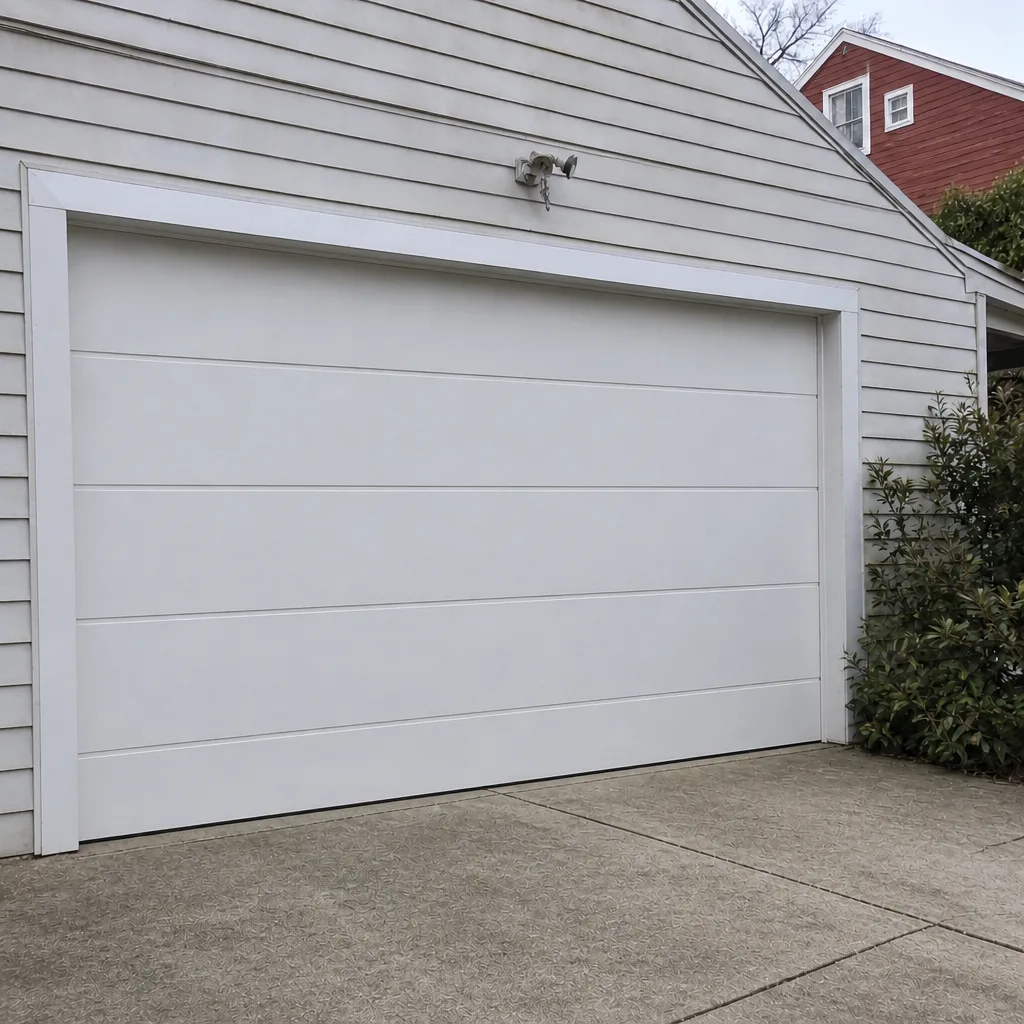 After
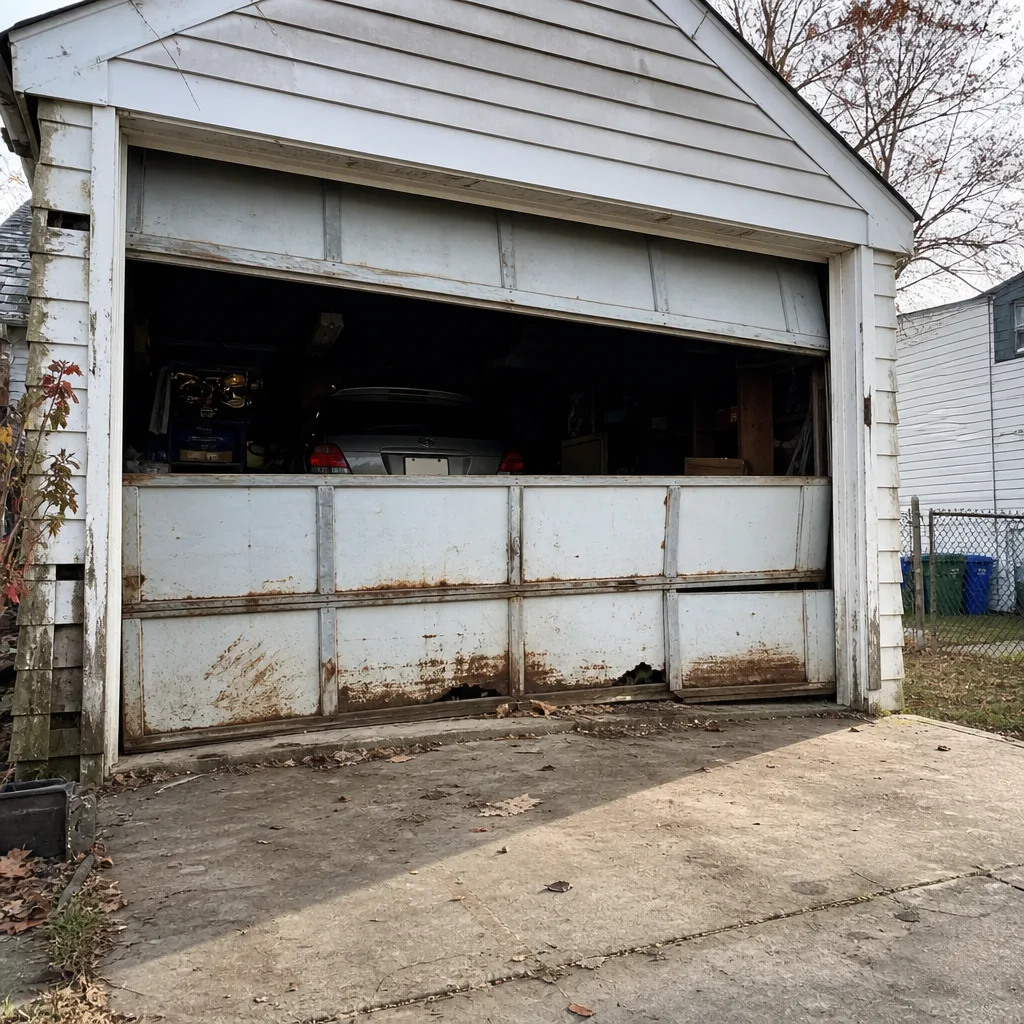 Before
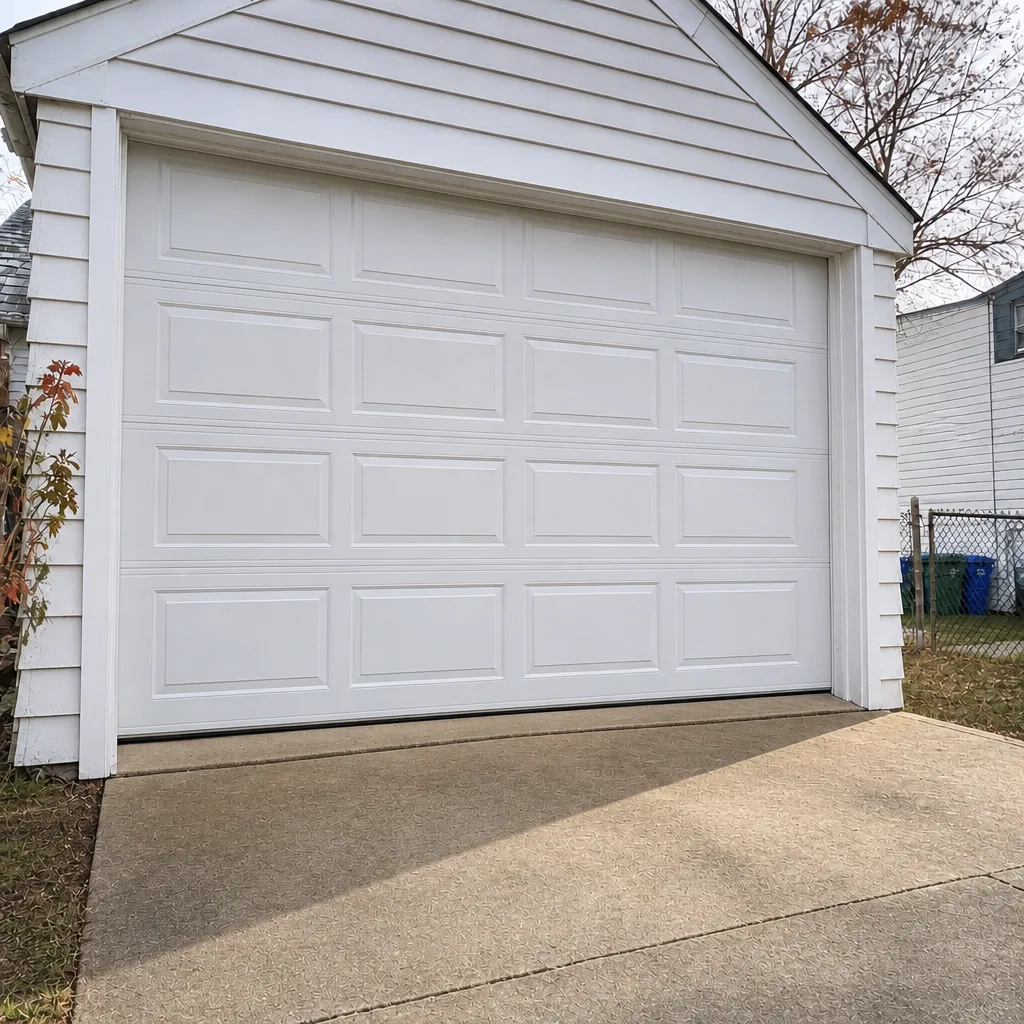 After
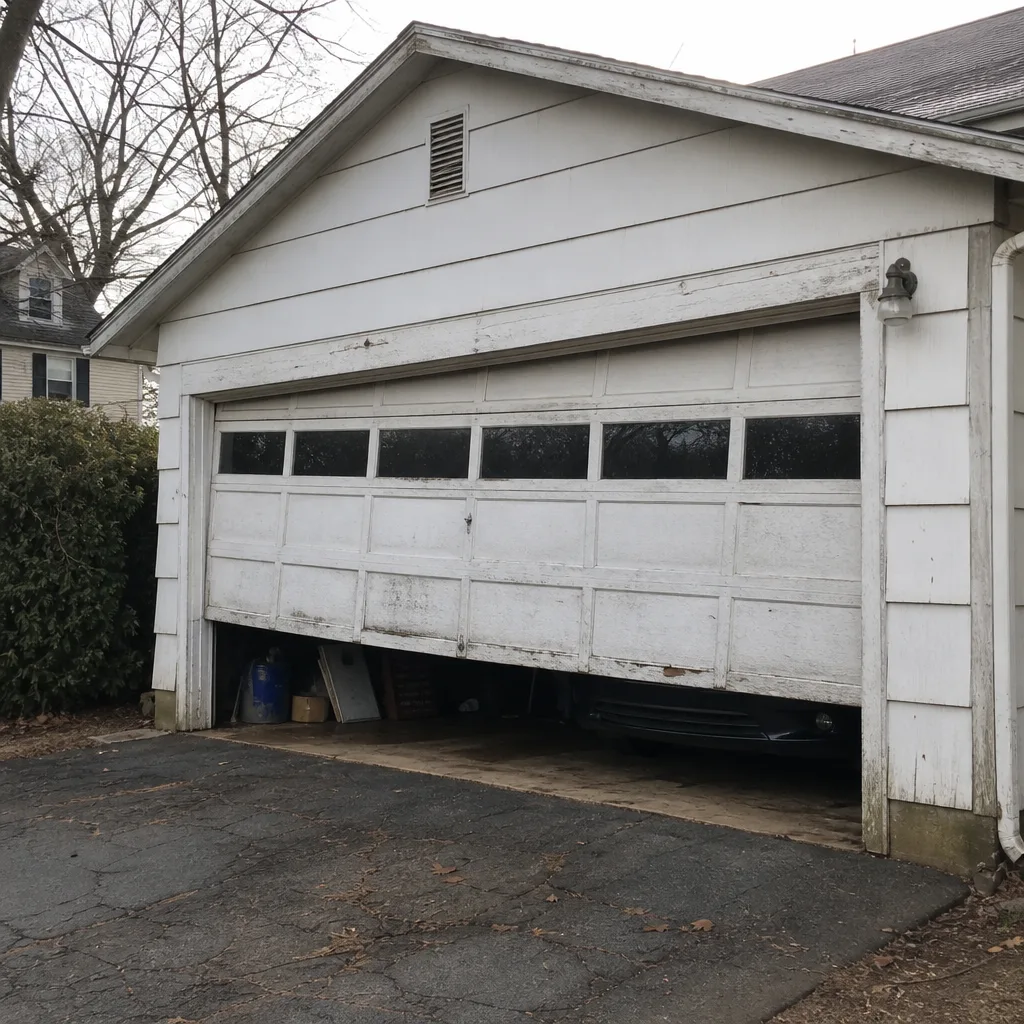 Before
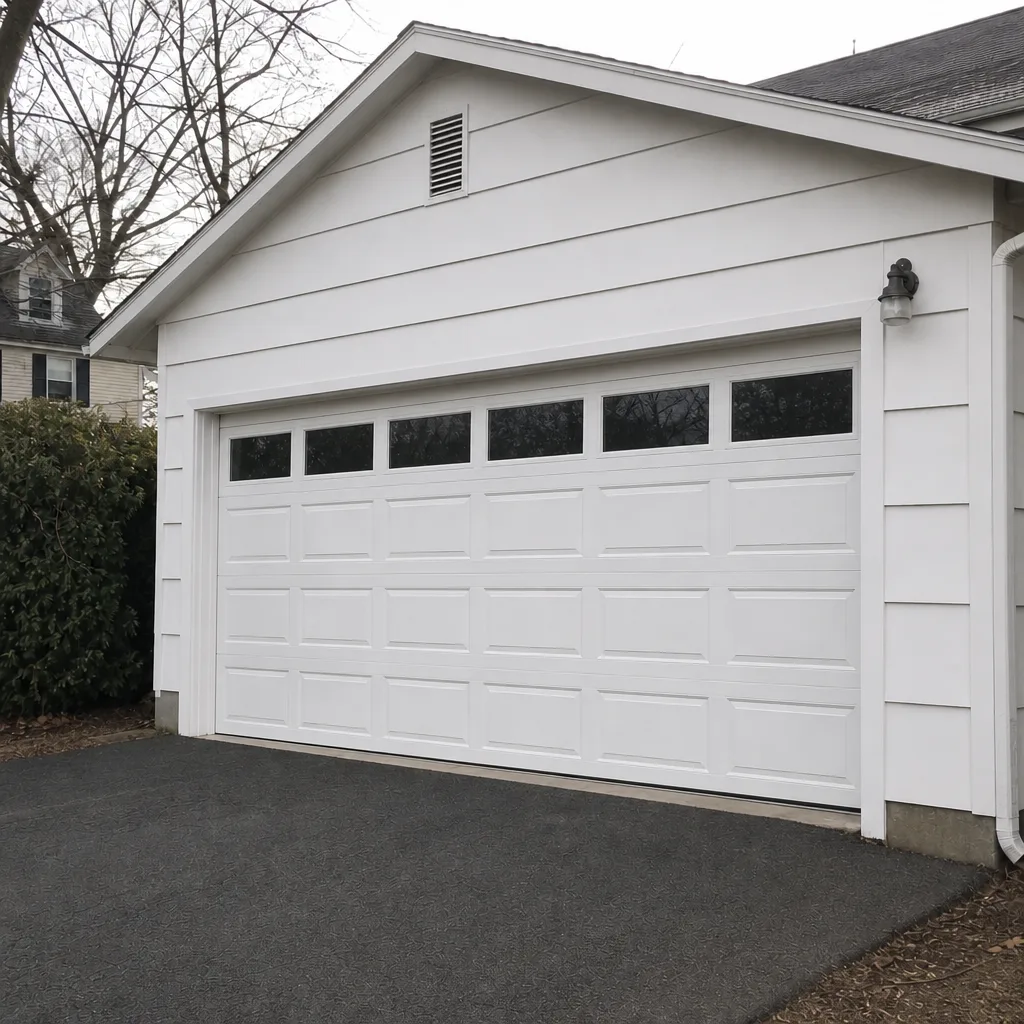 After
When to Call a Professional
Most garage door questions are answerable over the phone, and a free estimate is the fastest way to know which side of the repair-and-replace line you’re on. Call us when:
- A spring has broken or the door won’t lift. Stop using the door and call; don’t force it.
- The door is off its tracks or has been hit and won’t close evenly.
- The opener runs but the door doesn’t move, or the safety reverse fails.
- The bottom seal is torn, water is getting in, or the bottom rail shows rust or rot.
- You’re comparing quotes for a new install and want a measured, written price before you commit.
New Haven Garage Door Repair Co offers free estimates in New Haven – call (866) 476-7578. Our technicians have up to 9 years of experience, work on equipment from all eight major brands, and quote the price before any work starts.
Frequently Asked Questions
Garage door repair in New Haven typically runs in the low hundreds for a single mechanical fix like a roller, cable, or opener component, and higher when a spring is replaced, especially if a matched pair is changed together. The final price depends on the door, the failure, and the parts needed. Call (866) 476-7578 for an exact quote – estimates are free.
Emergency garage door service is part of our core offering, not a special exception. If your door fails, call (866) 476-7578 and we’ll book the earliest slot, including Sunday if that’s what it takes. Don’t run a door with a broken spring or force one that’s off-track.
No. We quote the price and you agree to it before any work starts. If we find something additional that needs attention, we’ll tell you and get your approval before touching it – the invoice matches the written estimate for the work we agreed to.
Repair first if the door is structurally sound and the problem is mechanical or a single panel. Replace if the door has multiple failing sections, persistent rot, or a frame that’s out of true. A free estimate tells you which side you’re on – call (866) 476-7578.
Yes. We work on equipment from LiftMaster, Chamberlain, Genie, Clopay, Amarr, Wayne Dalton, Craftsman, and Raynor, and we diagnose by how each brand actually behaves in the field rather than guessing. Call (866) 476-7578 and tell us the brand – we’ll tell you what we see.
The freeze-thaw cycle here does more damage than steady cold, because each transition widens the small cracks and gaps that water gets into. Older attached garages with shallow headers and out-of-square openings compound it. Keeping the bottom seal and paint in good shape is the single most effective way to slow that down.
The Bottom Line
Garage doors in New Haven live harder lives than doors in most of the country, and the decisions that matter most here are clearance, material, and opener drive type – not brand or style. Measure the opening before you buy. Protect the bottom seal and paint. Repair a structurally sound door and replace one that’s telling you it’s finished. And leave the springs to a trained technician. If you’re weighing a repair, a replacement, or just want a straight answer on what your door needs, the team at New Haven Garage Door Repair Co can help – call (866) 476-7578 for a free estimate.
Written by the team at New Haven Garage Door Repair Co.